How Many Days Are Needed In Bryce Canyon?
How many days do you really need at Bryce Canyon? A planning answer based on park geography, tour durations and seasonal closures.
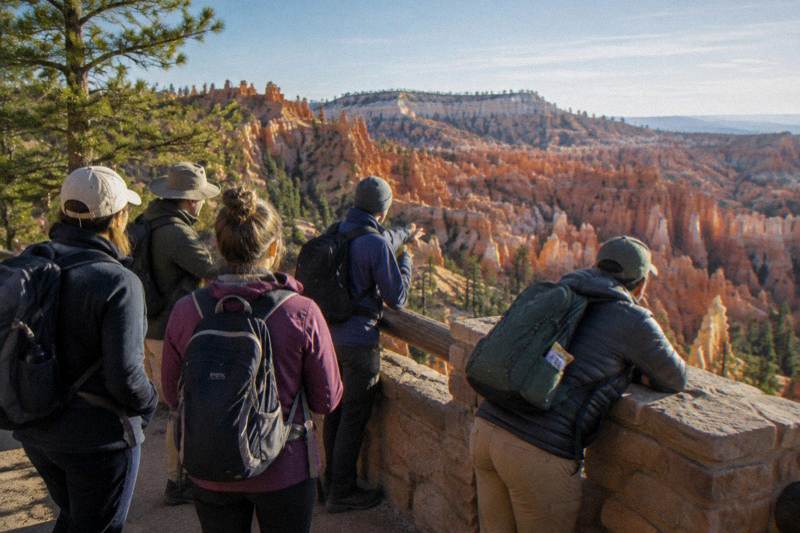
The question of how long to stay at Bryce Canyon has a deceptive answer. The park's famous amphitheater, the bowl of hoodoos on every postcard, is concentrated in the first three miles of the main road, so a determined visitor can see the headline viewpoints in half a day. The catch is that seeing and experiencing are different verbs at 8,000 feet, and the park's best features, its trails, its night sky and its southern scenic drive, reward a second and third day. The park service keeps the gates open 24 hours a day year round with no timed entry, so the constraint is never access. It is stamina, daylight and how much of the canyon you want under your boots rather than behind a railing.
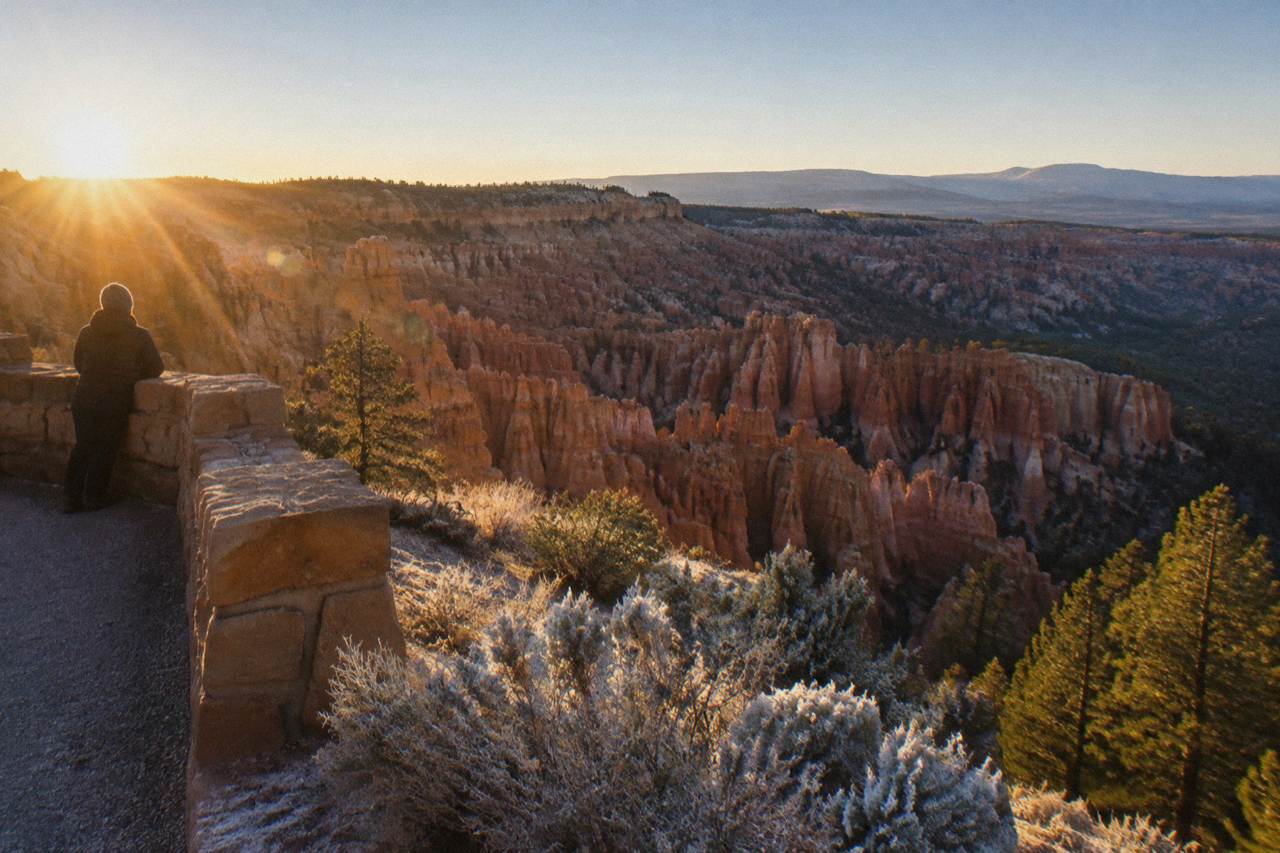
There is also a scheduling dimension that first-time visitors tend to underestimate. Bryce Canyon is not a park you drift through; the light changes the amphitheater hour by hour, sunrise at Sunrise Point and Bryce Point, sunset at Inspiration Point or Paria View where the park service suggests arriving about 1.5 hours before sundown. A visitor with one day gets one lighting condition. A visitor with two or three gets the hoodoos as different objects entirely, pink at dawn, glaring white at noon, amber in the last hour. That alone is the quiet argument for the extra night.
Most visitors need one to three days at Bryce Canyon. One long day covers the amphitheater viewpoints and one short hike; two days add the southern scenic drive and a full trail like the Queen's and Navajo combination loop; three days open up sunrise, stargazing and area rides such as the Red Canyon horseback tour. Few casual travelers need more than three unless pairing Bryce with Zion, 78 miles away.
That one-to-three range comes straight from the park's geography. Bryce, Inspiration, Sunset and Sunrise Points, the four overlooks the National Park Service itself flags as the park's core, all sit within the first three miles of an 18-mile main road. The park service describes the Queen's and Navajo combination loop as the most popular and most recommended walk for first timers, and it can be finished in a morning. What a single day cannot absorb is everything else the park is known for: roughly 100 astronomy programs a year, a 4-day summer Astronomy Festival, and a southern drive that runs another 15 miles to Rainbow Point at 9,115 feet.
The shuttle, free with admission, runs April through mid-October and tightens the one-day math in summer, when parking at the amphitheater fills early. Travelers pairing Bryce with Zion on a single Las Vegas day trip, a 13 to 14 hour commitment on products like the Vegas: Bryce and Zion Luxury Boutique Scenic Tour with Lunch, effectively give Bryce a few timed stops rather than a day of their own. That is a legitimate way to see the rim if Las Vegas is your base, but it is not the same as a day spent inside the park at your own pace. Board the shuttle at the station in Bryce Canyon City or the visitor center, buses run about every 15 minutes, and the park lets you stow two bikes on the front rack if you are combining pedal power with the ride.
The honest planning table looks like this:
| Days | What fits | What you skip |
|---|---|---|
| Half day | Amphitheater viewpoints, a rim walk between Sunrise and Sunset Points | All trails below the rim, the southern drive at leisure |
| One day | Queen's and Navajo combination loop plus the four main overlooks | Rainbow Point and the southern scenic drive, night programs |
| Two days | Day one amphitheater and hiking, day two the 18-mile drive south to Rainbow Point | Stargazing sessions and area rides only if rushed |
| Three days | Two hiking days, the southern drive, a stargazing session and an area activity such as horseback or a helicopter flight | Little of the park proper |
A useful rule of thumb when you build your own version of that table: every item that involves darkness, sunrise, or leaving the car for more than an hour wants its own half-day block. The full moon hikes the park runs, 1 to 2 miles over 2 to 3 hours with limited tickets and no flashlights, cannot be squeezed after a full hiking day by anyone who wants to enjoy either. Sunrise requires being at the rim before dawn. Stargazing sessions end late. These are the experiences that push the day count from one toward two and from two toward three, and they are also the ones visitors most often say justified the trip.
What One Day At Bryce Canyon Honestly Covers
A single well-planned day covers all four amphitheater overlooks, the Queen's and Navajo combination loop, and the visitor center, provided you start early. It does not comfortably cover the 18-mile southern scenic drive, any night-sky program, or a second major hike. Arrive before mid-morning in summer or use the shuttle, since amphitheater parking fills and oversize vehicles over 23 feet are restricted there in shuttle season.
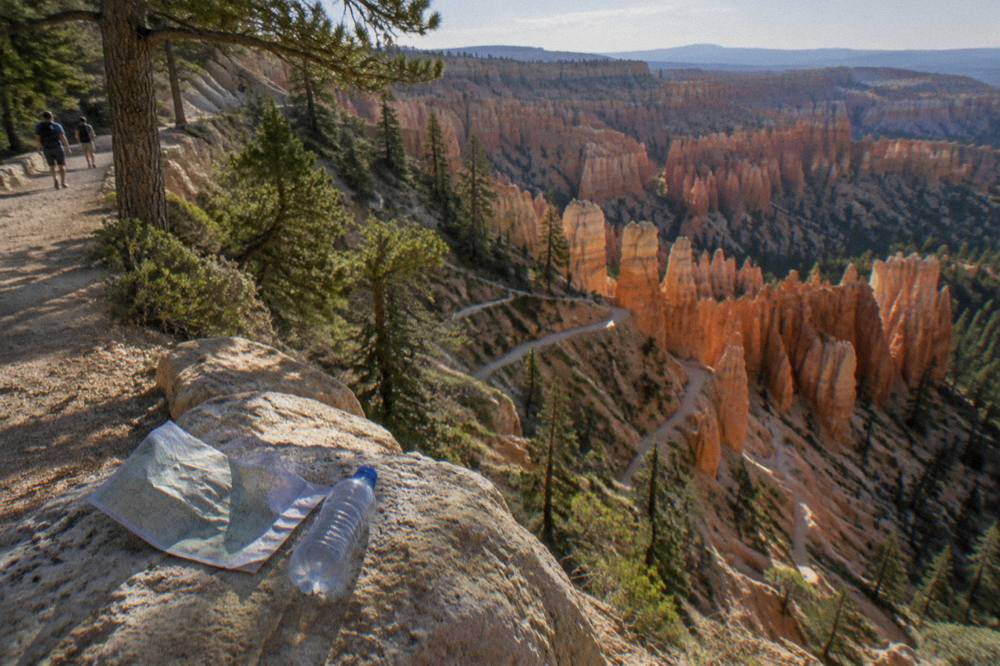
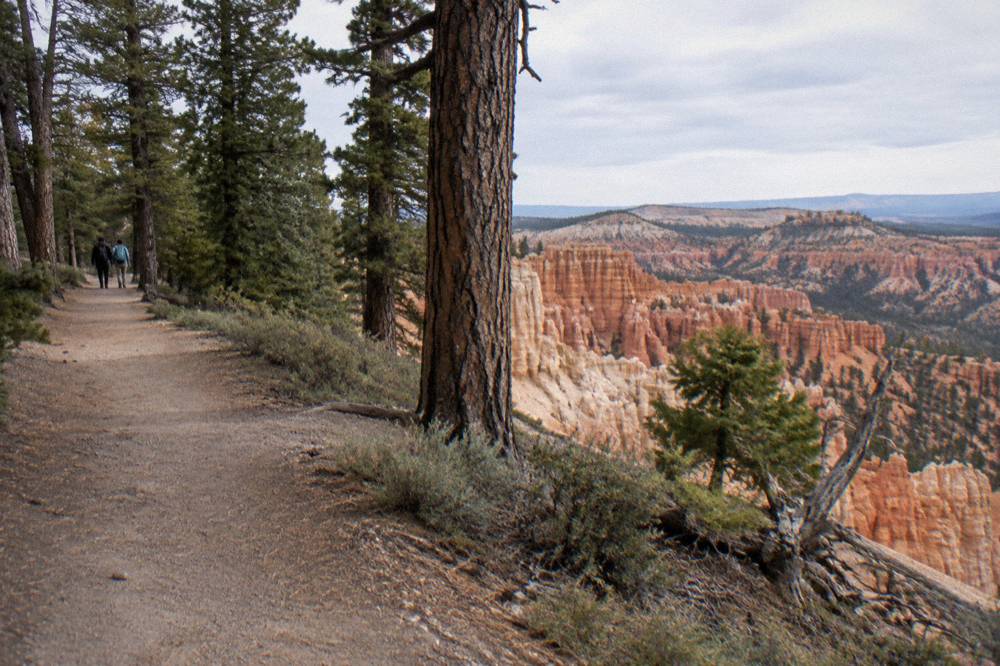
The reason one day works at Bryce when it would not at Zion or Grand Canyon is compression. Four of the five signature viewpoints sit within a three-mile stretch, and the Rim Trail stitches them together, with a half-mile wheelchair-accessible section between Sunrise and Sunset Points. Descend Queen's Garden at Sunrise Point, climb the Navajo Loop back to Sunset Point, and the park service's own day-hike guidance says you have done the recommended first-timer route.
One warning from the current conditions report: the Wall Street section of the Navajo Loop is closed until further notice per the National Park Service alert of 9/29/2026, and it closes for winter by default in any case. Plan the loop's two-footbridge side or ask at the visitor center which sections are open before you commit. Trail conditions at Bryce change with rain and snow, and the park posts alerts on its conditions page, current trail and road status, which is worth a look the evening before.
Altitude quietly eats one-day itineraries. The visitor center sits at 7,894 feet and trails top 9,000, where the park service notes effective oxygen is about 75 percent of sea level. Every amphitheater hike starts with a descent, which means every return is uphill, and the park recommends about a quart of water per person every one to two hours of hiking. Visitors who ignore that find their single day shortened by early afternoon fatigue rather than by anything scenic. The practical sequencing that follows from this is simple: hike in the morning while legs and temperature cooperate, drive overlooks in the afternoon when the light is harsh anyway and the trails feel least forgiving.
Budget an hour for the visitor center as well, not for the exhibits alone but because it is where the current ranger program schedule is posted and where rangers can tell you which trail sections opened that day. Program schedules are weather-dependent, with summer programs cancelled when lightning is within 10 miles and winter programs cancelled in snowstorms or windchill of 10 degrees Fahrenheit and below, so the posted board is more current than anything you planned from home.
Guided products can rescue a tight day. The Scenic Tour of Bryce Canyon, a 3-hour small group park tour from Bryce Canyon City at from $84.81 per person, rated 4.9 across 1,215 reviews, compresses the overlooks into a single morning so your remaining daylight goes to one hike. The full-day alternative, the Bryce Canyon Full Day Small Group Tour & Hike, runs 6 to 8 hours from the Bryce Canyon Shuttle stop with a medically trained naturalist guide and park entry fees included, from $427 per person. Five reviews at 5.0 is a small pool, but the format is the point: it converts a two-day independent plan into one guided day, with snacks and a medically trained guide thrown in. Note that lunch is not included, and non-US residents still face the separate $100 nonresident fee, so pack accordingly.
Why A Second Day Makes Bryce Canyon Dramatically Better
Two days restructure the trip from a checkpoint visit into an actual park experience. Day one handles the amphitheater and a real hike; day two takes the southern scenic drive to Rainbow Point and Natural Bridge, stops at overlooks the crowds skip, and leaves an evening free for a stargazing session. Bryce Canyon is a Gold Tier International Dark Sky Park, and the night sky is arguably its second headline attraction.
The southern 15 miles of the main road are what one-day visitors abandon. Bryce Point's southern overlooks, Agua Canyon, Natural Bridge and Rainbow Point, at 9,115 feet the park's high point reachable by car, all live past mile three. The park service notes snow levels near Agua Canyon run well above those at the visitor center because it sits nearly 1,000 feet higher, so the southern drive is also where weather changes first. With two days you can drive it in morning light, hike the one-mile Bristlecone Loop at Rainbow Point, and still be back at the amphitheater for the afternoon.
The second evening is where the dark sky pays off. The park runs about 100 astronomy programs a year, best near the new moon, and telescope programs run on summer evenings at Sunset Point. Commercial options exist for travelers whose schedule does not line up with ranger programs: the Bryce Canyon Stargazing Adventure, 1 hour 30 minutes from $59.04 per person with hotel pickup, rated 4.5 across 69 reviews, runs at a private dark-sky site at Bryce Canyon City rather than inside the park. The park service's own astronomy pages explain why this works, Bryce Canyon's Gold Tier dark sky designation covers the surrounding region, not just the boundary line.
Two days also de-risk the weather. Afternoon thunderstorms are routine in July and August, and ranger programs cancel when lightning is within 10 miles; snowstorms in October are, in the park service's words, not unusual. A second day gives you a spare window if the first afternoon washes out. Anyone who has watched a July lightning cell parked over the amphitheater at 2 p.m. understands the arithmetic: with one day, that storm costs you your only hike; with two, it costs you an afternoon.
The second night also unlocks lodging economics that shape the day count. The park's own lodge typically closes November through March, Sunset Campground closes for winter and North Campground runs year round, so winter two-day visitors plan around Bryce Canyon City lodging rather than staying inside the boundary. Staying close turns a two-day visit into two unhurried halves instead of one overlong push.
What A Third Day Adds Around Bryce Canyon
Day three at Bryce is mostly spent outside the park boundary, and that is not a flaw. The area around Bryce Canyon City carries the region's adventure roster: the 3-hour Red Canyon horseback ride through Dixie National Forest, a 1-hour ATV and RZR ride, helicopter flights over the park from Bryce Canyon Airport, and the new 24-mile Shared Use Path. None of these can happen inside the park itself, by regulation.
The regulatory frame matters and is widely misunderstood. Off-highway vehicles of every kind are prohibited on all park roads and areas under the Superintendent's Compendium, and helicopters may not launch or land inside the boundary. So the third-day menu is honest about geography: the horseback riding tour in Red Canyon, from $130 per person with 252 reviews at 4.7, runs through Red Canyon and Losee Canyon in Dixie National Forest; the guided ATV and RZR tour, from $145 per group of up to two with 412 reviews at 4.7, rides Dixie National Forest and private land with rim views; helicopter flights depart Bryce Canyon Airport and fly over the formations. Inside the park proper, Canyon Trail Rides holds the concession for 2-hour and 3-hour guided rides into the amphitheater along the Peekaboo Loop, typically April through October 31.
Day three is also the natural slot for a slower trail. Fairyland Loop and the Under-the-Rim Trail's front sections are multi-hour commitments that punish a fixed one-day schedule, and the park service currently advises that Under-the-Rim has deteriorated sections requiring strong wayfinding. A new option appeared in autumn 2026: the final 2.7-mile segment of the Shared Use Path was completed, finishing a paved 24-mile route that connects Red Canyon to the Bryce Point area for cyclists and walkers. Bikes and pedal-assist e-bikes are permitted on park roads and that path only, not on the Rim Trail or overlooks, so a third-day ride is a road-and-path affair rather than a trail one.
The third day also suits travelers who arrive mid-trip and need a recovery rhythm. Hiking two amphitheater loops on back-to-back days at altitude leaves most people sore, and the area activities, an hour on an ATV, a ninety-minute stargazing session, a 15-minute helicopter flight from $175 per person, give the legs a rest without giving up the scenery. Families with mixed hiking appetite tend to land here naturally: one hike day, one drive day, one activity day is a shape that survives both toddlers and teenagers.
For travelers basing the whole trip out of Las Vegas, roughly 270 miles away, three days at Bryce usually means folding in Zion instead, and the multi-day products handle that: the 3-day Grand Canyon, Bryce, Zion, Antelope Canyon and Monument Valley tour from $799.99 per person, 614 reviews at 5.0, is built exactly for that math. Camping-oriented travelers have the Bindlestiff 3-day option from $875 per person, 462 reviews at 4.8, with tent and equipment provided and park entry fees included.
How Season And Tour Choice Change The Day Count
Season shifts the answer more than distance does. In winter, the shuttle stops, the southern drive can close at mile marker 3 after storms, and snow concentrates every visit into the amphitheater, making one or two days sufficient. In summer, long daylight, the shuttle and full program schedules make two to three days the comfortable default. Booking guided tours effectively buys back time you would otherwise spend on logistics.
The winter version of Bryce is a smaller park. The park service states that after storms the main road temporarily closes at mile marker 3 so plows can clear the southern drive, closures that typically last a day or more, while the amphitheater viewpoints in the first three miles are prioritized for plowing. Fairyland Point road and Paria View road close to vehicles for the whole winter. What remains, snow-dusted hoodoos, ranger snowshoe hikes when depth and staffing permit, and possible full-moon snowshoe hikes when snowpack tops 16 inches, fits inside two relaxed days. Temperatures argue for the shorter winter visit too: average January highs sit at 37 degrees Fahrenheit with lows of 15, and the park notes it drops below freezing nearly every night from October through May.
Summer inverts the calculation. Daylight stretches past 12 hours, the shuttle runs 8 a.m. to 8 p.m. at peak, and roughly 100 astronomy programs plus the Astronomy Festival fill the evenings. Historic monthly snowfall averages of 17 to 18 inches in January and February versus none in July mean the trails themselves are dry and fast, so ambitious hikers fit more into each day even as the program calendar pulls evenings into the itinerary. Summer high temperatures, per the park's weather table, run from the high 60s to low 80s Fahrenheit, mild by desert standards, which is why the constraint is storms rather than heat.
| Season | Realistic day count | Main constraint |
|---|---|---|
| December to February | 1 to 2 | Road closures at mile marker 3 after storms, cold, short daylight |
| March to April | 2 | Spring storms can bring heavy snow; mud on trails |
| May to June | 2 to 3 | Full shuttle service, astronomy programs, best hiking conditions |
| July to August | 2 to 3 | Afternoon thunderstorms and lightning cancellations |
| September to October | 2 | Shuttle through mid-October, October snowstorms possible |
Tour products compress days in a way worth counting explicitly. A 3-hour park tour covers the overlooks a first-timer would spend half a day driving; a full-day guided hike replaces two independent hiking days; a Las Vegas day trip with lunch, 13 hours from $219 per person with 1,224 reviews at 4.7, replaces two park days and a hotel night for travelers who cannot spare more time. The 4-hour to 6-hour private guided hike and picnic, from $699 per group of up to 4, does the same for families who want the trail to themselves, with lunch, snacks and trekking poles included. The trade is depth for efficiency, and it is a fair trade at a park as compact as Bryce.
Whether you stretch Bryce Canyon to three days or compress it into one, the park's compactness is on your side. Readers comparing a guided day against an independent drive can start with how to choose a Bryce Canyon tour, while anyone pairing parks should read the Zion and Bryce Canyon tour guide before locking an itinerary. This site, Bryce Canyon National Park Tours, keeps the full roster with prices and review counts for every product mentioned here.
Common Questions About Days Needed In Bryce Canyon
How Many Days Are Needed In Bryce Canyon?
One to three days. One day covers the amphitheater overlooks and the Queen's and Navajo combination loop; two days add the southern scenic drive and an evening sky program; three days add area activities like the Red Canyon horseback ride or a helicopter flight over the park.
Can You See Bryce Canyon In Half A Day?
Yes, the rim only. The four main overlooks sit within three miles of the entrance, and the half-mile accessible Rim Trail section between Sunrise and Sunset Points takes minutes. What half a day cannot include is any trail below the rim or the southern drive to Rainbow Point.
Is Two Days At Bryce Canyon Enough?
For almost everyone, yes. Day one handles the amphitheater and a full hike, day two the 18-mile scenic drive and a stargazing session. Only travelers adding backcountry routes like Under-the-Rim, which the park service currently flags for deteriorated sections, need more time inside the park itself.
Does The Season Change How Many Days I Need?
It does. Winter concentrates everything into the first three miles because the road can close at mile marker 3 after storms, so one or two days suffice. Summer adds roughly 100 astronomy programs a year and full shuttle service, which comfortably fills two to three days.
Can A Tour Replace A Second Day At Bryce Canyon?
Partly. A 3-hour small group park tour from $84.81 per person compresses the overlooks into a morning, and the full day small group tour and hike from $427 per person covers a guided hike plus interpretation in 6 to 8 hours. You trade independent pacing for structure, not sightseeing.
Should I Split My Time Between Bryce Canyon And Zion?
Usually yes if you have three or more days total. Zion's east entrance is 78 miles from Bryce, and multi-day tours from Las Vegas combine both plus Grand Canyon from $799.99 per person. With only one or two days, pick one park rather than racing both.