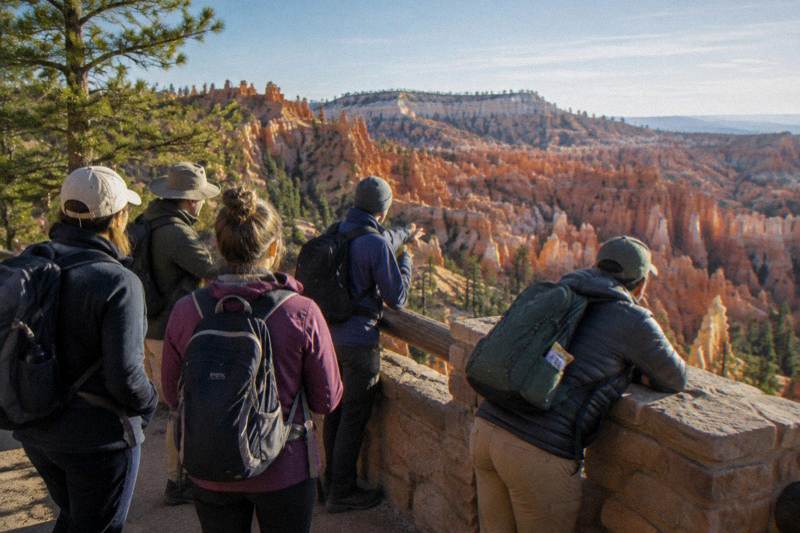
Is It Worth Staying At Bryce Canyon Lodge?
An honest look at whether Bryce Canyon Lodge is worth booking: what staying inside the park gets you, when the lodge closes, how it compares with Bryce Canyon City, and what winter does to the plan.
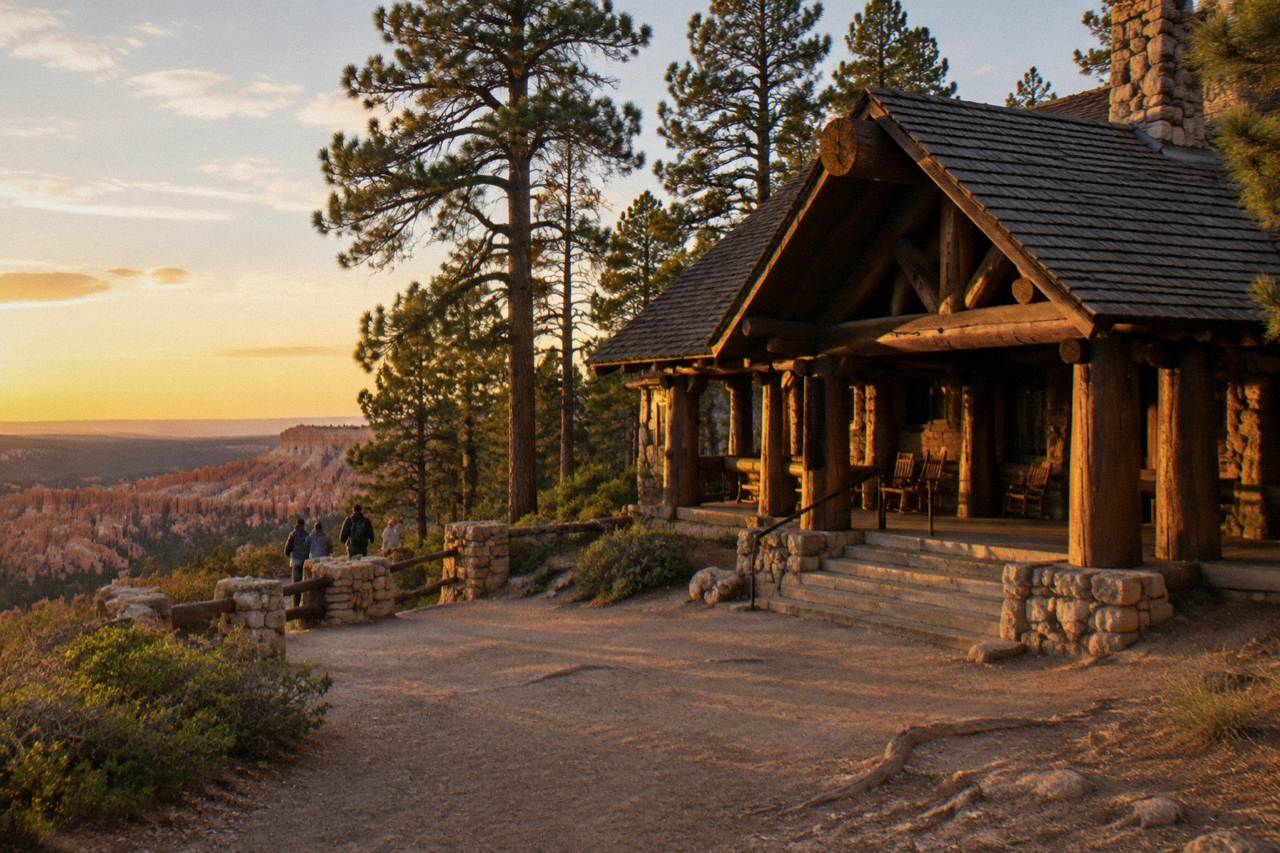
Bryce Canyon Lodge is the only lodging inside the national park boundary, and that single fact drives its entire value proposition. The park service notes the lodge typically closes for the winter season from November through March, which removes it from consideration for a large slice of the year. For the months it is open, guests sleep roughly 200 yards from the rim of the Bryce Amphitheater while everyone else queues for parking. This page weighs what the lodge actually delivers, what it cannot deliver, and which travelers come out ahead.
The honest framing: the lodge is a location purchase, not a luxury purchase. Reviews and operator listings on this site repeatedly describe visitors structuring whole days around avoiding the Amphitheater parking crunch, and the lodge simply deletes that problem. The trade is a limited booking window, a seasonal closure, and a premium on being woken by mule deer rather than an alarm clock.
Yes, if your dates fall between roughly April and late October and your priority is sunrise, the Rim Trail, or evening dark-sky time at the Amphitheater. No, if you are visiting between November and March, because the lodge typically closes for the entire winter season, or if you need restaurants, pools and room variety. Booking windows are tight and the surrounding alternatives are five minutes away.
The core arithmetic is about time and light. Bryce Canyon's most photographed hour is sunrise at Sunrise Point or Bryce Point, and its most remarkable natural feature is a Gold Tier International Dark Sky overhead. Both are best experienced at odd hours, when the 18-mile scenic drive and the Amphitheater parking lots are empty. Lodge guests walk to those moments.
Everyone else drives in. The park sits at elevations averaging about 8,000 feet, the Visitor Center sits at 7,894 feet, and the difference between stepping outside in slippers versus rallying a rental car at 5 a.m. at altitude is not small. The park service itself recommends arriving early in peak months, and the shuttle exists largely because parking at miles 1 to 3 overflows.
What the lodge is not: a resort. The park service's lodging page describes the lodge and its surroundings in modest terms, and the building is a historic structure with the constraints that implies. Guests who arrive expecting a spa itinerary are the ones who leave disappointed. Guests who arrive expecting to be first onto the Rim Trail tend to write the reviews that make the case.
If your visit is tour-centered rather than lodging-centered, a different logic applies. The 3-hour small group park tour from Bryce Canyon City and the guided sightseeing tour that starts in Fairyland Canyon both deliver the park's highlights with a guide, from $84.81 and from $109 per person respectively, and neither requires you to sleep anywhere in particular. The trio below shows how those in-park guided options stack up for a lodge-based or city-based stay alike.
What Staying Inside The Park Actually Gets You
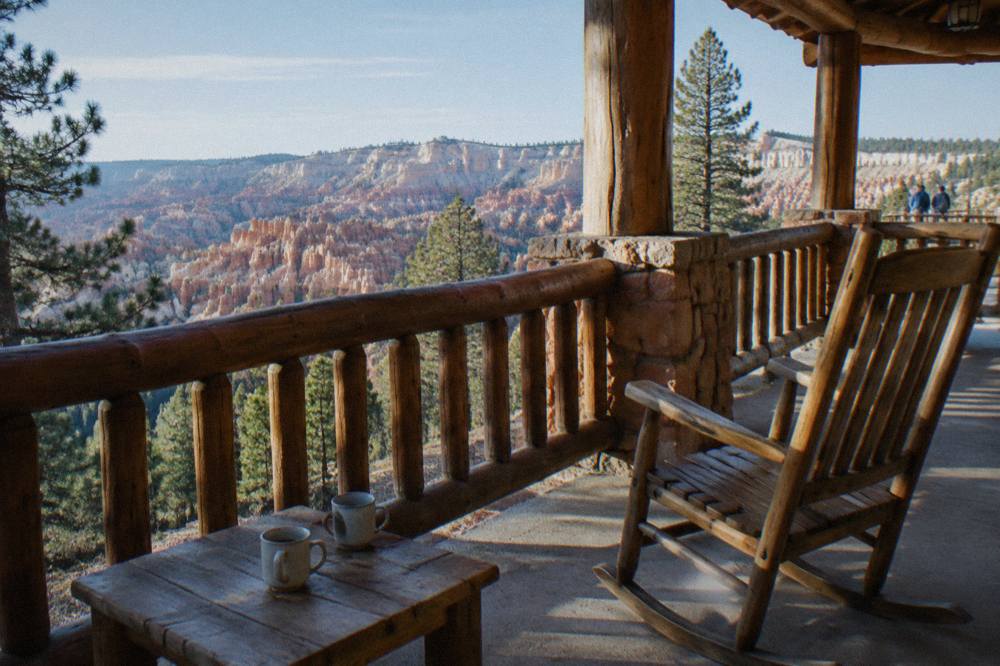
Three things: walkable access to Sunrise, Sunset and Inspiration Points along the rim; freedom from the Amphitheater parking crunch and the shuttle schedule; and first light on trails that fill by mid-morning in summer. The lodge sits inside Bryce Canyon National Park near the rim, so everything in the first three miles of the main road is on foot.
The Bryce Amphitheater concentrates most of the park's hiking in the first three miles of the scenic drive: Bryce, Inspiration, Sunset and Sunrise Points. The lodge anchors that zone. The Rim Trail between Sunset and Sunrise Points is the park's only half-mile wheelchair-accessible trail section, and it is effectively the lodge's front garden. A guest can do the popular Queen's Garden and Navajo Loop combination, the park service's most recommended first-timer route, starting at dawn without a vehicle.
The parking reality is worth spelling out. During shuttle season, oversize vehicles 23 feet and longer are restricted from Amphitheater-area parking at miles 1 to 3 entirely, a sign of how tight that zone gets. The free shuttle, running about every 15 minutes from Bryce Canyon City and the Visitor Center, is the park's own answer to congestion, and it operates April through mid-October, ending October 18 in the 2026 season. Lodge guests use the shuttle by choice, not necessity.
There is also the matter of the day's back end. The park is open 24 hours a day year-round, with no timed entry and no advance reservation required to enter. Sunset at Inspiration Point or Paria View, where the park service suggests arriving about 1.5 hours before sunset, is a short stroll or a short drive for lodge guests, and after dark the sky does what a Gold Tier dark sky does.
One caution for hikers with the lodge booked: the Wall Street section of the Navajo Loop is closed until further notice per a park service alert of September 29, 2026, and it closes for winter by default in any case. Plan the classic loop via the open Navajo side or check current conditions before promising yourself that specific slot canyon of switchbacks.
When The Lodge Is Closed And What That Means
Bryce Canyon Lodge typically closes for the winter season from November through March. In those months, staying inside the park is not an option at all, and the question becomes which motel or cabin in Bryce Canyon City or Tropic you book instead. Winter visitors still get the park, open 24 hours, often with snow.
The closure is longer than many travelers expect and it reshapes the whole decision. A November or February trip cannot be a lodge trip, full stop. The surrounding town of Bryce Canyon City and nearby Tropic carry the winter demand, and both sit minutes from the entrance on Highway 63.
Winter itself is a real season here, not a quiet echo of summer. Average monthly snowfall at the headquarters area runs about 17 inches in January, 18 in February and 17 in March, with roughly 100 inches falling across a typical year. After storms, the main park road can close temporarily at mile marker 3 so plows can clear the southern drive, closures that typically last a day or more, while the Amphitheater viewpoints in the first three miles stay prioritized for plowing.
The Fairyland Point road and Paria View road close to vehicles for the entire winter, remaining accessible on foot, skis or snowshoes. The Wall Street side of the Navajo Loop and the Rim Trail between Inspiration and Bryce Points are winter-closed as well. None of this makes winter a bad time to visit, ranger-led snowshoe hikes with free loaner equipment run when snow depth and staffing permit, and full-moon snowshoe hikes happen November through March when snowpack tops 16 inches. It just makes the lodge irrelevant to the plan.
For a winter trip, guided products still run or resume on their own calendars, and the park service winter page is the source that tracks road and trail status. The stargazing sessions near Bryce Canyon City operate at a private dark-sky site independent of the lodge calendar, and the hour-and-a-half Bryce Canyon Stargazing Adventure, from $59.04 per person with hotel pickup listed, at 4.5 across 69 reviews, is a natural anchor for a winter night when the lodge is dark. Its live listing carries current season availability.
Staying At The Lodge Versus Bryce Canyon City
Bryce Canyon City sits at the park entrance on Highway 63, minutes from the fee station, with most lodging open year-round, restaurants and the shuttle's Stop 1. The lodge wins on location and quiet; the town wins on winter availability, price range, food choice and flexibility. For a one-night summer stop, the town is often enough; for two nights focused on the rim, the lodge earns its keep.
| Factor | Bryce Canyon Lodge (inside park) | Bryce Canyon City (at entrance) |
|---|---|---|
| Season | Typically closed November through March | Most properties open year-round |
| Sunrise access | Walk to Sunrise Point | Short drive or early shuttle in season |
| Food | Lodge dining, seasonal | Several restaurants along Highway 63 |
| Transit | On the rim already | Shuttle Stop 1, April through mid-October |
| Booking pressure | High in summer, limited rooms | Wider range, easier late availability |
| Best fit | Two-plus rim-focused nights | Winter trips, one-night stops, budgets |
The comparison is honest only if you name the real distance. Bryce Canyon City is not far; the shuttle exists precisely to move its guests into the park efficiently, running about every 15 minutes and free with park admission. A traveler staying in town who boards the first bus of the morning is doing something close to what the lodge guest does on foot, minus the walk.
The difference compounds at the edges of the day. The last shuttles run at 6 p.m. or 8 p.m. depending on the season window, well before the best dark-sky hours, and before a 5 a.m. sunrise in June. After shuttle hours, town guests drive back in, which is allowed since the park never closes, or they book a guided night activity with transport. That is one reason the stargazing products matter to this question: the stargazing session with hotel pickup solves the after-shuttle-hours problem for guests staying anywhere, lodge included.
Summer adds a second consideration: heat management in reverse. Bryce sits high enough that June highs average in the mid-70s Fahrenheit and July and August in high 70s to low 80s, but the July-August rainy season brings frequent afternoon thunderstorms and lightning, and ranger programs cancel when lightning is within 10 miles. A lodge guest can nap through a storm and walk back out; a town guest is more likely to write off the afternoon entirely.
For travelers weighing lodging against simply showing up with a guide, the site's Bryce Canyon guided tours overview covers the in-park options, and the one day itinerary guide shows how much a single well-structured day can hold without anyone sleeping inside the boundary.
What Kind Of Visitor Gets The Most From The Lodge
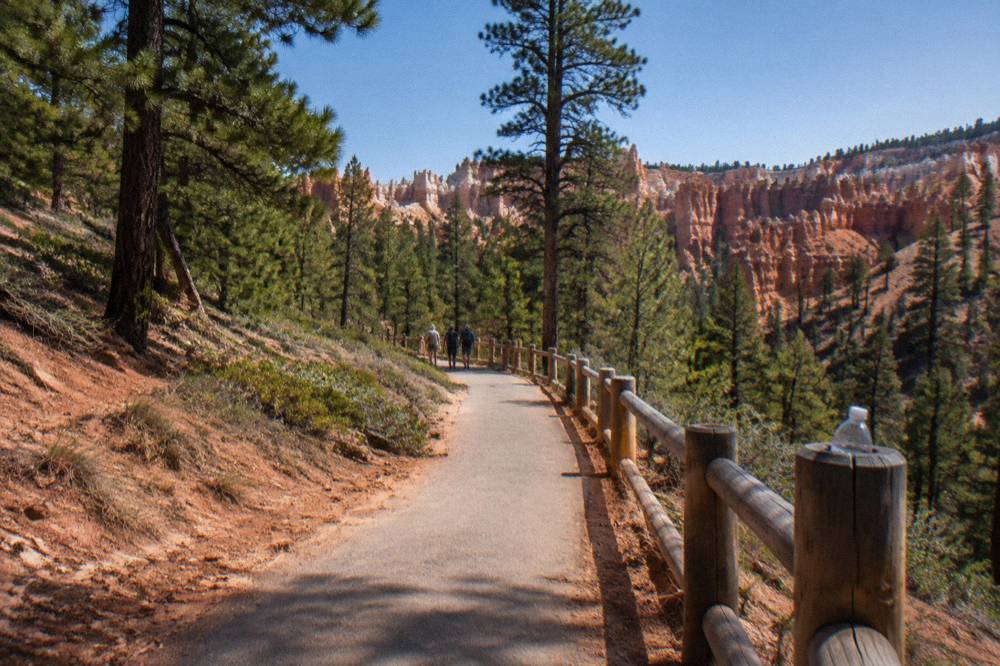
Photographers, hikers targeting early trailheads, families with young children who cannot drive themselves, and anyone chasing night skies benefit most. Visitors on a one-night pass between Las Vegas and Zion, or travelers who tour with guides all day, benefit least, because they are rarely at the property during the hours that justify it. The lodge pays for the margins of the day, not the middle.
The photographer case is the clearest. Sunrise light on the Amphitheater hoodoos changes by the minute, and the park service names Sunrise Point and Bryce Point as the sunrise spots. A lodge guest can be standing at the rail before the sun clears the horizon, walk back for breakfast, and return for the day. Reproducing that from Las Vegas, about 270 miles away, means a 2 a.m. departure.
The hiker case is almost as strong. Trails here start with a descent, which means every return is uphill, at 8,000-plus feet, where effective oxygen is about 75 percent of sea level. The park service advises drinking about a quart of water every one to two hours of hiking. Starting the Queen's Garden and Navajo combination loop at dawn, from a room minutes away, is a materially easier day than starting it at 10:30 a.m. after fighting for parking.
The weaker cases are real too. Multi-day tour passengers, like those on the 3-day Las Vegas loop covering Zion, Bryce, the Grand Canyon, Antelope Canyon and Monument Valley from $799.99 per person, sleep where the itinerary puts them, typically outside the park, and their Bryce hours are guided and daylight hours. A guest who has booked the full-day small group tour and hike, from $427 per person with a naturalist guide and park entry fees included, spends six to eight hours with the guide and needs a bed far more than a location.
Families split down the middle. Young children and the 3-hour scenic drive's overlooks pair beautifully with a lodge base, but the room configurations and dining formality can chafe; the site's family tours guide covers options where the guide carries the day instead.
| Visitor type | Lodge verdict | Why |
|---|---|---|
| Sunrise photographer | Strong yes | Walk to Sunrise Point pre-dawn, no drive |
| Multi-day hiker | Yes | Early trailhead starts, midday storm refuge |
| Dark-sky enthusiast | Yes, with a caveat | Rim access after shuttle hours; telescope tours depart nearby |
| One-night Las Vegas pass-through | Usually no | Awake hours spent driving and touring, not at the rim |
| Winter visitor | Not possible | Lodge typically closed November through March |
| Guided-tour-only visitor | Rarely | Guides own the itinerary; lodging location matters less |
Nights At The Lodge And The Dark Sky Question
Bryce Canyon is a Gold Tier International Dark Sky Park, designated in 2019, and the lodge puts you inside the boundary when the sky performs. Roughly 100 ranger-led astronomy programs run each year, best near the new moon, but many are seasonal and weather-dependent, so a guided stargazing session is the reliable nightly option.
The park's own astronomy offering is genuinely unusual: about 100 programs a year, telescope sessions at Sunset Point on summer evenings, and limited-ticket Full Moon Hikes of one to two miles where flashlights are not allowed. The catch is scheduling. Night Sky Telescope Programs generally run Thursdays through Saturdays in June and July, weather-dependent, and the annual four-day Astronomy Festival happens once a summer. A lodge guest staying two random nights may or may not land on a program.
That gap is what the commercial stargazing products fill. The Bryce Canyon Stargazing Adventure runs nightly on its own calendar from a private dark-sky site at Bryce Canyon City, with high-powered telescopes, laser pointers, guides and hot beverages, hotel pickup listed, from $59.04 per person, 4.5 across 69 reviews. A no-pickup version from $59 per person, 4.4 across 63 reviews, and a late-night session from $106.28 per person round out the options. For lodge guests these are a short ride away; the point is that the dark sky is not contingent on the lodge.
The astronomy page is worth checking against your dates on the park service astronomy site, because program schedules post at the Visitor Center and shift with staffing. What does not shift: the new-moon week is the best stargazing window all month, a fact the park service states plainly, and it is the single smartest date lever for a lodge booking aimed at the night sky.
Booking Realities: Rooms, Windows And Alternatives
The lodge's summer rooms sell out far ahead, the property is one historic building with limited inventory, and cancellation policies live on the operator's booking page. If the lodge is full or closed, Bryce Canyon City, Tropic and Panguitch absorb demand in that order of proximity, and the experience loss is smaller than the price of the room suggests.
We compared the listings and the park's own pages, and the practical pattern is consistent: decide dates first, because the lodge's November-to-March closure is absolute, then book the room before booking anything else, then arrange tours around it. Summer weekends inside the park are the scarcest commodity in the region.
Travelers who miss the lodge window often assume they have missed Bryce. They have not. The Scenic Tour of Bryce Canyon, a 3-hour small group tour from $84.81 per person, 4.9 across 1,215 reviews, covers the park's overlooks with a guide from a meeting point at 450 N Arpt Rd in Bryce Canyon City, and free cancellation is listed. It runs on the operator's calendar, not on lodging availability.
The guided sightseeing alternative, also 3 hours from $109 per person, 4.9 across 945 reviews, starts in Fairyland Canyon and visits the Natural Bridge, Inspiration Point and the Cathedral, with the park entrance fee included in the price, which matters for international visitors facing the separate $100 nonresident fee. Guests of any lodging, lodge included, can pair one of these morning tours with an evening stargazing session and capture the two best light windows of a Bryce day without hiking a mile.
For trip planners assembling the full picture, Bryce Canyon National Park Tours breaks down every guided category on the site, and the entrance fees and passes guide explains which listings bundle park admission and which bill it separately, a difference that can move the real cost of a stay by $100 per nonresident adult or more.
The final honest word on worth: the lodge is a bet on the edges of the day. Two nights in June, with a sunrise walk, a storm passed over on the veranda, and a telescope session a few minutes away, is close to the ideal Bryce Canyon experience the marketing promises. The same room on a November date does not exist, and on a packed tour itinerary it is an expensive bed in a beautiful place you will only see at check-in.
Common Questions About Staying At Bryce Canyon Lodge
Is It Worth Staying At Bryce Canyon Lodge?
Yes for April-to-late-October trips built around sunrise, the Rim Trail and the night sky, since the lodge puts you inside the park within walking distance of Sunrise and Sunset Points. No for winter trips, because the lodge typically closes November through March, and no for packed guided itineraries where you barely use the room.
When Is Bryce Canyon Lodge Closed?
The lodge typically closes for the winter season from November through March, per the park service's lodging information. The park itself stays open 24 hours a day year-round; winter visitors stay in Bryce Canyon City, Tropic or farther afield.
Can You See The Amphitheater From The Lodge?
The lodge sits inside the park near the rim close to the Bryce Amphitheater zone that holds Sunrise, Sunset and Inspiration Points, and the connecting Rim Trail between Sunset and Sunrise Points is paved and wheelchair accessible. Check the operator's listing for exact room types and views.
Do I Still Need The Shuttle If I Stay At The Lodge?
Not for the Amphitheater. The shuttle mainly serves Bryce Canyon City and the Visitor Center, running about every 15 minutes from April through mid-October. Lodge guests can walk the first three miles of the park and use the shuttle or drive for the southern scenic drive overlooks.
What Happens After The Shuttle Stops Running At Night?
The park never closes, so you can drive or walk back in, and the guided stargazing sessions near Bryce Canyon City run in the evening with hotel pickup listed on the featured session. Ranger telescope programs are seasonal, generally June and July evenings, weather permitting.
Is The Lodge The Only Place To Stay Near Bryce Canyon?
No. Bryce Canyon City sits at the entrance with year-round lodging and restaurants, and Tropic and Panguitch are short drives away. The lodge's advantage is location inside the park, not exclusivity of access.