Is The Drive From Las Vegas To Bryce Canyon Scary?
A direct answer to whether the Las Vegas to Bryce Canyon drive is scary, with route segments, seasonal hazards, and tour options that remove the driving entirely.
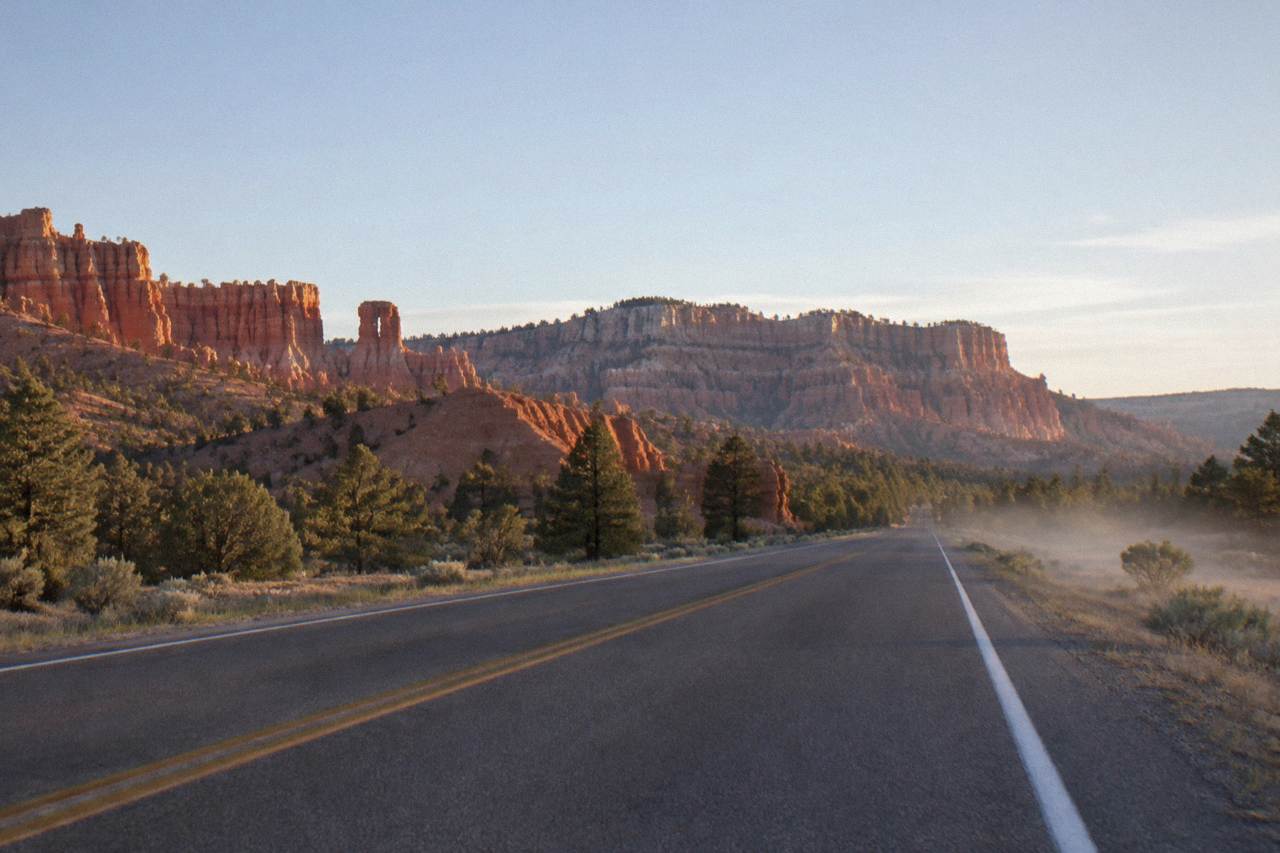
For most drivers, no. The route covers roughly 270 miles, and the large majority of it is flat interstate across the Mojave Desert, followed by wide, well-paved two-lane highway through southern Utah. The genuinely demanding parts are short: the climb onto Utah's plateau country on state routes 9, 89, 12 and 63, mountain weather on the high ground near Bryce, and long gaps between services after dark.
That is the honest summary from comparing the route, the National Park Service's own road and weather guidance, and the experiences drivers describe in guest reviews. Fear of this drive usually comes from three specific worries: emptiness (long stretches with no gas or phone signal), elevation (the last hour climbs onto the Paunsaugunt Plateau), and unfamiliar mountain roads in snow season. Each of those is real but manageable, and none of them makes the route comparable to genuinely white-knuckle drives like a mountain pass with drop-offs.
The route also explains why so many visitors book a Las Vegas day trip instead of renting a car. A guided product such as the Vegas: Bryce & Zion Luxury Boutique Scenic Tour with Lunch from National Park Express puts a professional driver on those plateau roads for 13 hours while passengers ride in a Mercedes Sprinter with WiFi, water, and a deli-style picnic lunch included. That tour runs from $219 per person and free cancellation is listed. It exists precisely because the drive intimidates a meaningful number of travelers, and it is one of the strongest answers to the question this article asks.
Before the segment-by-segment breakdown, here are the three bookable ways to skip the driving altogether, all of them small group day trips from Las Vegas with free cancellation listed:
The rest of this article walks the route mile by mile, names the segments where drivers should slow down and pay attention, explains how the seasons change the risk math, and lays out what a guided alternative costs compared with a rental car and a tank of gas.
What Makes The Las Vegas To Bryce Canyon Drive Feel Intimidating
Three things: isolation, elevation, and the final mountain approaches. Drivers leave the Las Vegas sprawl and enter roughly 200 miles of high desert where towns shrink to a single gas station, cell coverage drops in and out, and after nightfall the road is dark in a way city drivers rarely experience. The last hour climbs toward the park, where elevations average about 8,000 feet and reach 9,115 feet, and the weather changes fast.
Isolation is the factor that surprises people most. This is not a scary road in the sense of guardrails and cliffs. It is a remote road. Between the Interstate 15 towns and the villages around Bryce, services thin out considerably, and the National Park Service's guidance for the area is blunt about winter: the main park road itself can close temporarily at mile marker 3 after snowstorms so plows can clear the southern drive, with closures typically lasting a day or more. A driver arriving in a storm may find the last miles of their trip gated.
Elevation is the second factor, and it compounds. The visitor center at Bryce sits at 7,894 feet, and trails within the park reach 9,115 feet. What that means for driving is that snow can fall on the final approach in months when Las Vegas is still running air conditioning. October snowstorms at Bryce are, in the park service's own words, not unusual, and below-freezing nights are common from October through May.
The third factor is simply unfamiliarity. Drivers from flat, humid regions read about switchbacks and mountain grades and picture something worse than what exists. State Route 12 and the final approach on Route 63 are well engineered, well signed, and in good repair. The correct mental model is a scenic rural highway, not an alpine pass. If you want a full comparison of how a guided day trip stacks up against taking the wheel yourself, the tour versus self-drive comparison on this site works through the costs and trade-offs in detail.
How Long Is The Drive From Las Vegas To Bryce Canyon
The distance from Las Vegas to Bryce Canyon is about 270 miles, the same ballpark as the drive from Salt Lake City, and the park service lists both airports at roughly that mileage in its official directions. Published driving estimates hover around four hours without stops, but no figure in the official sources this article drew from commits to a firm minute count, so treat any exact number as an estimate rather than a fact.
The practical reality is longer. Almost nobody drives Las Vegas to Bryce Canyon without stopping, and the route invites stops: Zion's east entrance sits just 78 miles from Bryce, Cedar City is about 80 miles, and St. George about 125 miles, all per the park service's distance table. A realistic day with fuel stops, food, and a viewpoint pause or two runs well past the bare wheel time, which matters for planning a one-day visit. The one day Bryce itinerary on this site assumes exactly that kind of compressed timing.
Here is how the drive breaks into segments, with the character of each one:
| Segment | Character | What drivers notice |
|---|---|---|
| Las Vegas to St. George via I-15 | Roughly 125 miles of desert interstate | Fast, flat, heavily traveled, full services |
| St. George to Zion east entrance area | Interstate then state routes, entering canyon country | Traffic near Springdale, then the Zion tunnel approach |
| Zion area to Hatch or Panguitch on US-89 | Two-lane highway through small towns | Lighter traffic, longer gaps between services |
| US-89 to Bryce on SR-12 and SR-63 | Climb onto the Paunsaugunt Plateau | Grades, curves, big elevation gain toward the rim |
Two practical notes on that last row. First, the plateau climb is where snow and ice first appear in cold months, because you gain thousands of feet of elevation in a short distance, ending at rim elevations around 8,000 feet. Second, the town of Bryce Canyon City sits at the park boundary, and lodging, fuel, and food cluster there, so the isolated stretch ends right as the driving gets most interesting.
Which Segments Of The Route Demand The Most Attention
The segments worth real caution are the I-15 descent from the Virgin River Gorge area, the two-lane stretches of US-89 at night, and the plateau climb on SR-12 and SR-63 in winter. None of these involve cliff-edge roads. The hazards are speed differentials, wildlife at dusk, gusty crosswinds on the plateau, and ice on the high ground when Las Vegas is still warm.
Start with the interstate. I-15 between Las Vegas and St. George carries a steady stream of freight trucks and long-haul drivers, and the Virgin River Gorge section has grades and curves that demand attention at freeway speed. Drivers who handle regular interstate traffic will find nothing exotic here, just sustained vigilance.
The middle of the route is where fatigue, not terrain, becomes the risk. US-89 through the small towns of southern Utah is a polite two-lane road, but after dark it is genuinely dark, deer and livestock appear near the right of way, and passing opportunities are limited. Drivers who leave Las Vegas late in the day should plan to finish this stretch before full dark or accept a slower pace.
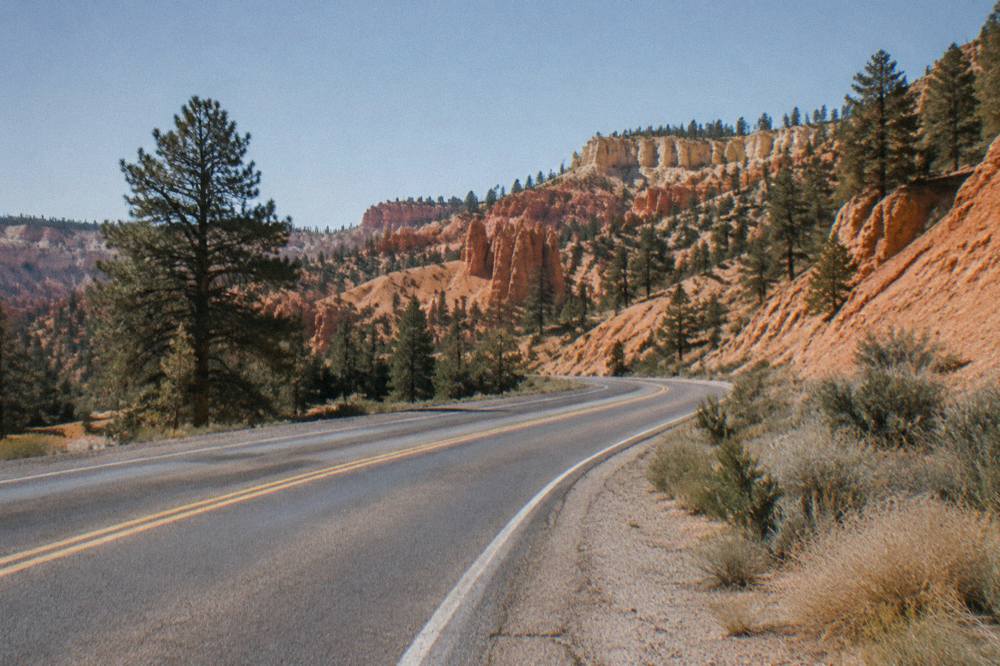
The final climb is the part that generates the most pre-trip anxiety, and it deserves precision. SR-12 from US-89 toward Bryce, and SR-63 into the park, rise onto the plateau in a series of moderate grades and curves. The road is paved, signed, and maintained. What makes it demanding is weather: snow at elevation, and crosswinds on exposed plateau sections. The park service's winter driving guidance notes that after snowstorms the main park road can temporarily close at mile marker 3, and the Amphitheater viewpoints in the first three miles are prioritized for plowing. For current road status, the park points drivers to its conditions and alerts page and the Utah traffic site.
Once you have arrived and parked, by the way, you can hand the in-park driving to a local operator too: the 3-hour Scenic Tour of Bryce Canyon from Bryce Canyon Scenic Tours runs from $84.81 per person with water and snacks included, and it is rated 4.9 across 1,215 reviews, with free cancellation listed.
One more segment deserves a mention because it confuses people: the approach through Zion if you route that way. The Zion to Bryce connection is only 78 miles from the east entrance, but it includes the historic Zion-Mount Carmel Tunnel, which has its own vehicle size rules and can back up in peak season. It is scenic, not scary, but it rewards a driver who is not already tired.
When Is The Las Vegas To Bryce Canyon Drive Most Difficult
Winter, weekends after dark, and summer thunderstorm afternoons. From roughly November through March, snow and ice on the high plateau make the final climb the hardest part of the route, and the park itself warns that October snowstorms are not unusual. July and August bring frequent afternoon thunderstorms with lightning to the high country, which adds slick roads and sudden visibility loss.
The park service's weather data makes the seasonal pattern plain. Average monthly highs at Bryce run from the 30s Fahrenheit in deep winter to around 80 in July, and lows fall below freezing nearly every night from October through May. That means a driver leaving a mild Las Vegas afternoon can hit ice within the final hour of the drive for much of the year. The coldest, snowiest months are December through February, and spring storms can still deliver heavy snow in March and April.
Darkness and timing matter almost as much as season. Weekend traffic leaving Las Vegas on a Friday afternoon adds congestion to the early interstate miles, and arriving at Bryce after sunset means missing the scenery that justifies the drive. A common and sensible pattern is to leave Las Vegas early, clear the interstate before midday, and reach the plateau in daylight.
Skipping The Drive: Las Vegas Tours That Do It For You
A guided day trip from Las Vegas takes the wheel off your hands, with prices between $219 and $321.99 per person, and free cancellation on every option. The Vegas: Bryce & Zion Luxury Boutique Scenic Tour with Lunch runs from $219 per person over 13 hours with hotel pickup; the Small Group Bryce Canyon and Zion Day Tour runs from $321.99 per person over 14 hours with breakfast, boxed lunch and all entrance fees for US residents included.
We compared the listings, and the trade-offs come down to inclusions and group size. The boutique tour from National Park Express, from $219 per person with 1,224 reviews at 4.7, carries passengers in a Mercedes Sprinter with WiFi and includes hotel pickup, water, a granola bar, and a deli-style turkey sandwich picnic. Its sibling listing, from $234 per person with 2,711 reviews at 4.7, adds US-resident park admission for Bryce and Zion to the same 13-hour day. The 14-hour Adventure Photo Tours option, from $321.99 per person with 233 reviews at 4.8, uses an SUV or mini-coach and adds breakfast and a boxed lunch. MARVIT TOURS covers the pair of parks in 12 to 14 hours from $263.99 per person with 155 reviews at 4.6, though lunch is excluded on that one.
| Tour | Length | Price | Reviews | Meals and fees |
|---|---|---|---|---|
| Vegas: Bryce & Zion Luxury Boutique Scenic Tour with Lunch | 13 hours | From $219 per person | 4.7 across 1,224 reviews | Picnic lunch included; park fees for US residents not included |
| Vegas: Bryce & Zion Luxury Boutique Tour, WiFi | 13 hours | From $234 per person | 4.7 across 2,711 reviews | Lunch included; Bryce and Zion admission included for US residents |
| Small Group: Bryce Canyon and Zion Day Tour | 14 hours | From $321.99 per person | 4.8 across 233 reviews | Breakfast, boxed lunch, all entrance fees included |
| Zion and Bryce Canyon Small Group Tour | 12 to 14 hours | From $263.99 per person | 4.6 across 155 reviews | Admission fees included; lunch excluded |
Note the fee fine print, because it matters for non-American travelers: several listings state that non-US residents pay an additional national park entrance fee, listed at $100 per park per person on some products, unless they hold an eligible pass. The park service confirms that nonresidents age 16 and over owe the $100 nonresident fee on top of standard entry, including when traveling inside a commercial tour group, and that the $250 nonresident annual pass covers the holder plus up to three nonresident adults in a tour group.
If a single long day sounds punishing, a multi-day option splits the drive across several mornings. The Las Vegas: Grand Canyon, Antelope, Bryce and Zion 3-Day Tour from Empire Vacations runs from $590 per person with 257 reviews at 4.7 and includes two nights of hotel accommodation plus entrance to all four parks.
The full details on the boutique day trip, including its listing on this site, are worth reading before booking, and Check availability if the 13-hour format fits your dates. For a wider survey of options, the Las Vegas to Bryce tours guide covers the full roster. And per this site's mission of honest reporting, no tour on this page promises weather or road conditions; what they promise is a professional driver, so the scary parts of the route become someone else's job.
Tips For Drivers Who Want To Make The Trip Themselves
Fuel before the two-lane miles, finish the plateau climb in daylight, check park alerts before the final hour, and carry more water than feels reasonable. The drive is very doable in a normal sedan in fair weather; the failures that do occur usually trace to an empty tank after dark, an ice patch in April, or arriving at a gated road nobody checked ahead for.
The practical list is short. Leave Las Vegas with a full tank and refuel at the interstate towns rather than gambling on plateau stations. Watch the weather forecast for elevation, not for the desert floor. Read the park's alerts page the morning you drive, because the road-closure-at-mile-marker-3 pattern after storms is exactly the kind of thing it announces. In winter months, carry chains or confirm your rental allows them, and know that oversize vehicles over 23 feet face parking restrictions in the Amphitheater area during shuttle season.
For the stretch between the parks, a self-guided audio product turns the windshield time into commentary: the Self-Guided Audio Driving Tour in Zion & Bryce Canyon from GuideAlong costs from $26.99 per group of up to 8 and covers 195-plus points with offline GPS playback, rated 4.6 across 25 reviews with free cancellation listed. The cheaper Travel with Action version, from $16.99 per group of up to 4 and rated 4.3 across 89 reviews, does the same for the Bryce segment alone.
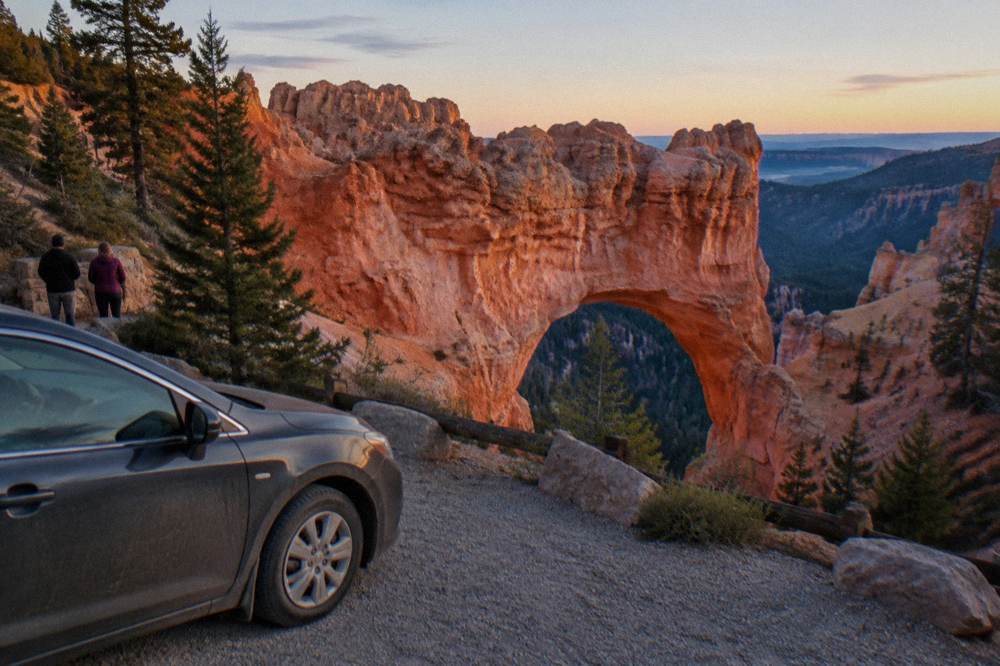
Finally, decide honestly whether you want to drive at all. Plenty of travelers find that a night in Las Vegas followed by a 13-hour day-trip wheel stint is more intimidating than the same miles as a passenger, and the numbers above show the passenger option starts at $219 per person. This Bryce Canyon National Park Tours article exists because the question in its title gets asked constantly, and the honest answer has two halves: the drive is far tamer than its reputation, and nobody is obligated to make it themselves.
Common Questions About The Las Vegas To Bryce Canyon Drive
Is The Drive From Las Vegas To Bryce Canyon Scary?
For most drivers, no. The route is about 270 miles, mostly interstate and well-paved two-lane highway. The demanding parts are the isolation, the climb onto the high plateau near the end, and winter weather. In fair weather a normal driver in a sedan manages it comfortably.
How Far Is Las Vegas From Bryce Canyon?
About 270 miles, per the National Park Service's official directions, which list Las Vegas and Salt Lake City airports at roughly the same distance. Published drive estimates sit around four hours without stops.
Is The Road To Bryce Canyon Open In Winter?
The park is open 24 hours all year, but after snowstorms the main park road can close temporarily at mile marker 3 so plows can clear the southern drive, typically for a day or more. The Amphitheater viewpoints in the first three miles are prioritized for plowing. Check the park alerts page before the final hour of any winter drive.
Can I Visit Bryce Canyon From Las Vegas Without A Car?
Yes. Small group day trips from Las Vegas run from $219 per person for a 13-hour boutique tour to $321.99 per person for a 14-hour small group tour, all with free cancellation listed, and multi-day tours from $590 per person cover Bryce plus other parks.
Is The Drive From Zion To Bryce Canyon Difficult?
No. The two parks sit about 78 miles apart, the drive from Zion's east entrance being a scenic two-lane connection that climbs onto the plateau. If you route through Zion, expect the Mount Carmel Tunnel and peak-season traffic near Springdale.
What Is The Scariest Part Of The Las Vegas To Bryce Drive?
Dark two-lane miles on US-89 at night and icy grades on the SR-12 and SR-63 plateau climb in cold months. Neither involves cliff-edge roads; both are managed by fueling early, driving in daylight, and checking conditions before the final hour.