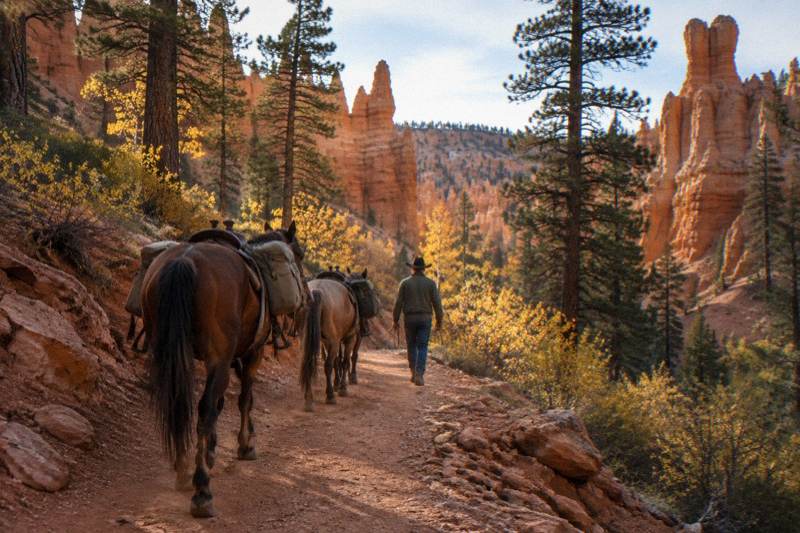
Can I Ride My Own Horse In Bryce Canyon?
Yes, with conditions: private stock is allowed on designated trails at Bryce Canyon, but reservations via Recreation.gov have been required since April 1, 2024, and overnight pack trips are not permitted.
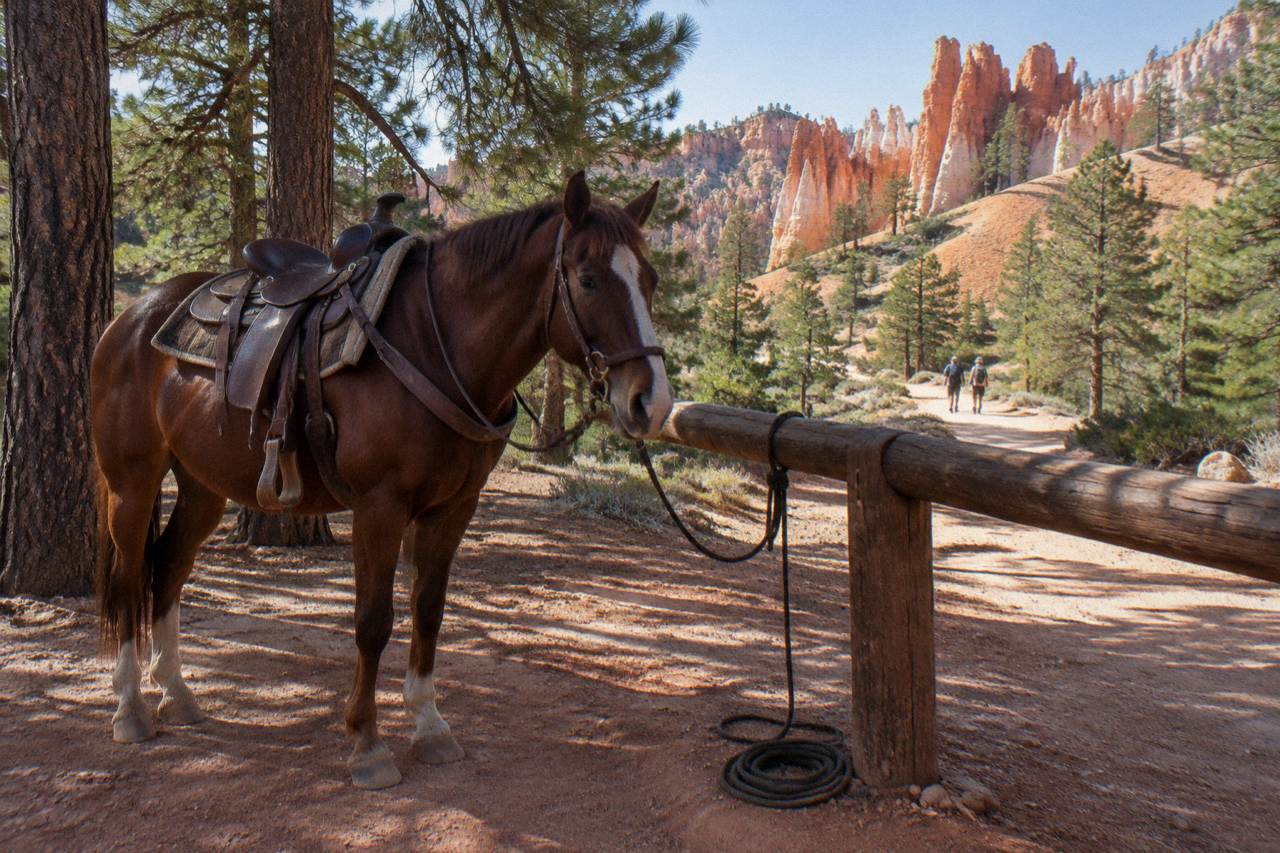
Yes, you can bring your own horse or mule to Bryce Canyon, but only under a permit system: since April 1, 2024, private stock reservations must be made through Recreation.gov, riding is limited to designated trails, and overnight pack trips are not allowed at all. The park's horse page states the rules plainly, and the concessioner Canyon Trail Rides runs the guided rides for everyone who arrives without a horse.
The short answer surprises a lot of riders. Bryce Canyon is one of the few national parks where private stock is genuinely welcome on trails inside the boundary, yet it is also a park where the logistics are tight: the riding season, the snow, the trail conditions and the reservation requirement all narrow the window. The park sits at elevations averaging about 8,000 feet, with trails reaching 9,115 feet, and the concessioner's guided rides typically run only April through October 31 because of weather. Private riders face the same calendar whether they like it or not.
What changed most recently is paperwork. Before April 2024 a rider could show up and ride; now the park service requires a reservation through Recreation.gov for private stock use, a shift designed to manage impact on the dedicated horse trails and the Peekaboo Loop, which carry both concessioner rides and private strings. The park service also states flatly that there are no overnight pack trips, so any private ride here is a day ride, full stop. Riders used to multi-day strings in the Grand Canyon or the Wind Rivers will need to adjust expectations.
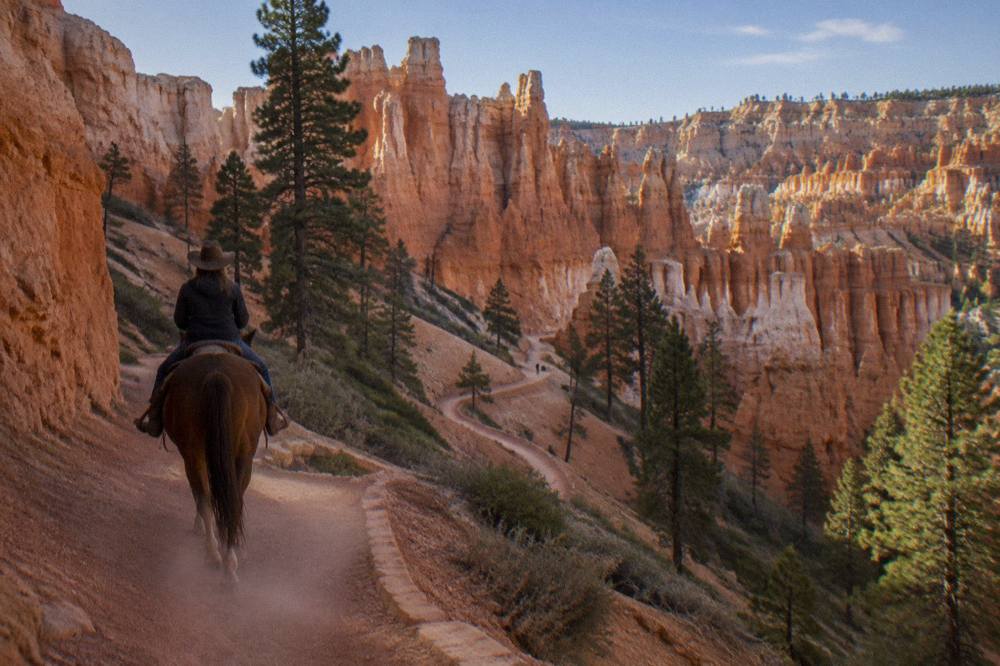
For context on everything else horse-related in and around the park, the companion guide to Bryce Canyon horseback ride options covers the guided side in depth. This article stays on the private-stock question: the permit, the trails, the costs, and the honest comparison with simply booking a guided ride.
How The Private Stock Reservation System Works
Every private ride inside Bryce Canyon now starts with a Recreation.gov reservation, a requirement in place since April 1, 2024, according to the park service's horse page. There are no overnight pack trips, no exceptions for local riders, and no walk-up option at the trailhead. Riders who show up without a reservation will be turned back at the trail.
The park service moved to the reservation model to spread stock use across the season and protect the dedicated horse trail. The system mirrors how the park handles its popular Full Moon Hikes, which are also limited-ticket and reserved through Recreation.gov in phases. Practical implications are straightforward: book before you trailer, print or download the confirmation, and check the park's alerts page the day you ride, because conditions change fast at this elevation.
Two operational details matter more than riders expect. First, Wall Street, the lower section of the Navajo Loop Trail, has been closed until further notice per a park service alert dated September 29, 2026, after recent rains, and it closes for the winter season by default anyway; any route plan that touches it needs a rewrite. Second, the main park road can close temporarily at mile marker 3 after winter storms so plows can clear the southern drive, which means the Amphitheater area stays reachable while the southern scenic drive may not be. A rider hauling a trailer in April or late October should plan around both.
The reservation question and the fee question get confused constantly, so it helps to keep them separate in your head:
| Item | What it covers | Where it comes from |
|---|---|---|
| Private stock reservation | Permission to ride your own horse or mule on designated park trails | Recreation.gov, required since April 1, 2024 |
| Park entrance fee | Vehicle entry, $35 per private vehicle, good for 7 days | Fee station, credit or debit only |
| Nonresident fee | Extra $100 per person, non-US residents age 16 and over | Applies even inside commercial tour groups |
| Overnight pack trips | Not offered | Park policy, no permit path exists |
Note the cash point as well: the park does not accept cash at fee stations, so a rider arriving with a truck, a trailer and a wallet of bills will need a card. The nonresident fee deserves its own mention because it catches international riders off guard; the park service states it applies to nonresidents entering as part of commercial tour groups too, unless covered by an Annual or America the Beautiful pass, and the $250 nonresident annual pass covers the holder plus up to three nonresident adults traveling in a commercial tour group.
Before you commit to hauling your own animal across the country, it is worth asking whether the math favors a guided ride instead. The question of what horseback riding costs at Bryce Canyon has a full answer elsewhere on this site, but the short version is that the in-park concessioner and the outfitters just outside the boundary both price by the rider, not by the string.
Is booking a guided ride easier than bringing your own horse? For almost everyone, yes: the concessioner holds the permits, the guides know the trail conditions, and the planning burden drops to showing up on time.
Which Trails Are Open To Private Stock
Private horses and mules ride the park's dedicated horse trail and the Peekaboo Loop, the same network the concessioner uses, rather than the general hiking trails. The park service's horse page defines the riding surface, and its rules elsewhere are strict about where animals may go: pets, for comparison, are limited to paved surfaces only. Stock is not a loophole around trail closures.
The geography rewards understanding before you ride. Most visitor activity concentrates in the Bryce Amphitheater, the first three miles of the 18-mile main road, where Bryce, Inspiration, Sunset and Sunrise Points line the rim. The horse trail drops from the rim into the hoodoos and connects with the Peekaboo Loop below, a route that gives riders the under-the-rim experience the park is famous for without sharing tread with hikers on the Queen's Garden or Navajo Loop paths.
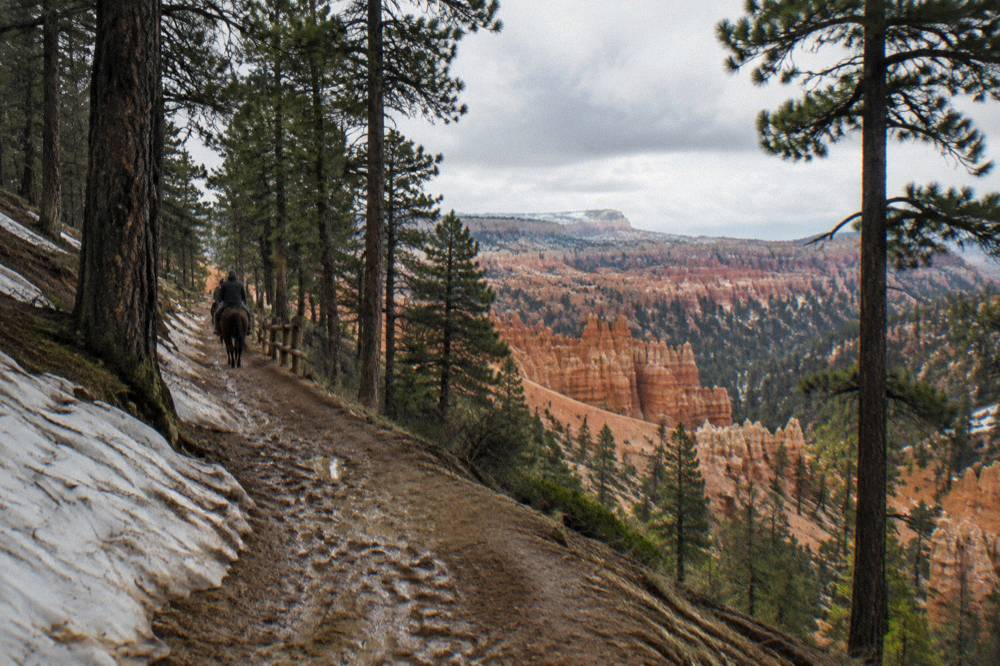
Conditions underfoot are the real variable. The park's conditions page carried an advisory through late 2026 noting that trails were open but muddy after the rains that closed Wall Street, and the Under-the-Rim backcountry trail has deteriorated sections where hikers proceed at their own risk. Mud at 8,000 feet in October is not the same as mud at sea level: it can freeze overnight, since temperatures drop below freezing nearly every night from October through May. A horse that handles slick rock in Utah's canyon country will still notice a frozen, churned-up horse trail in the morning shade.
Seasonality deserves a plain statement. The concessioner typically operates April through October 31, weather permitting, and while private riders hold their own permits, the practical riding window is roughly the same. Snowfall averages about 100 inches a year at park headquarters, with historical monthly averages of 17 inches in January, 18 in February and 17 in March, and even April averages 8 inches. Anyone planning a spring ride should build flexibility into the dates rather than assuming the trail will be dry.
Riders should also know what the park prohibits outright, because the compendium is enforced. Off-highway vehicles of every kind, ATVs and UTVs included, are banned on all park roads and areas, which is why the motorized outfitters all operate on forest land outside the boundary. Drones may not launch or land inside the park. Horses are the one animal-powered exception to the park's general caution about the backcountry, but only on the designated tread.
The Concessioner Alternative Inside The Park
Canyon Trail Rides, the park's licensed concessioner, runs 2-hour and 3-hour guided horse and mule rides into the Amphitheater along the dedicated horse trail and the Peekaboo Loop, typically April through October 31. Bookings go through the operator's own site, and within 7 days of a ride the operator asks customers to call 435-834-5500 directly.
This is the option that removes every planning layer described above. No reservation system of your own to navigate, no trailer, no conditioning question about whether your horse handles 8,000 feet. The concessioner's animals work this trail all season, the guides ride it daily, and the route is the same under-the-rim Peekaboo Loop network that private strings use. The park service phone line for general information is 435-679-8665 if you want to confirm operations before committing travel dates. The full index of guides sits on Bryce Canyon National Park Tours.
What the concessioner experience cannot give you is the solitude of a private string. Concessioner rides are group rides by design. For riders whose real goal is a quiet morning in the pines with their own animal, no guided product substitutes for it, and the permit system exists precisely to make that private experience possible in a managed way.
Weather cancellations follow park policy on ranger programs, which are cancelled when lightning is within 10 miles in summer or when windchill hits 10 degrees Fahrenheit or below in winter. Stock rides follow similar judgment calls; the operator states weather permitting, and that phrase does real work in a park where July and August bring frequent afternoon thunderstorms. Morning slots are the conservative choice in monsoon season.
Riding Outside The Park At Red Canyon
The most popular guided ride near Bryce Canyon does not enter the park at all: a 3-hour horseback tour through Red Canyon and Losee Canyon in Dixie National Forest, departing from Bryce Canyon City, from $130 per person, with 252 reviews at 4.7 on the live listing. It needs no park permit, no entrance fee and no Recreation.gov reservation.
That ride, operated by Rubys Inn Adventures, is the featured product on this site for good reason: it delivers the red rock riding experience without touching the national park's permit system at all. The listing includes a trail horse with saddle, saddlebags for small personal items, a knowledgeable guide, basic maneuvering instruction and a water bottle, with gratuities excluded. Dixie National Forest's Red Canyon section sits along the corridor most visitors drive anyway, its orange sandstone formations often mistaken for the park itself by travelers passing through on the way to the rim.
For riders who want to bring their own horse and skip the permit conversation entirely, forest land is the genuinely flexible alternative. National forest rules for stock use differ from national park rules, and the outfitters operating from Bryce Canyon City, including Ruby's ATV operation with its guided rides running April 1 through October 18, work that land precisely because the park prohibits their vehicle types inside. The same logic applies to horses: the forest offers more route freedom, while the park offers the Amphitheater's hoodoos under a tighter permit.
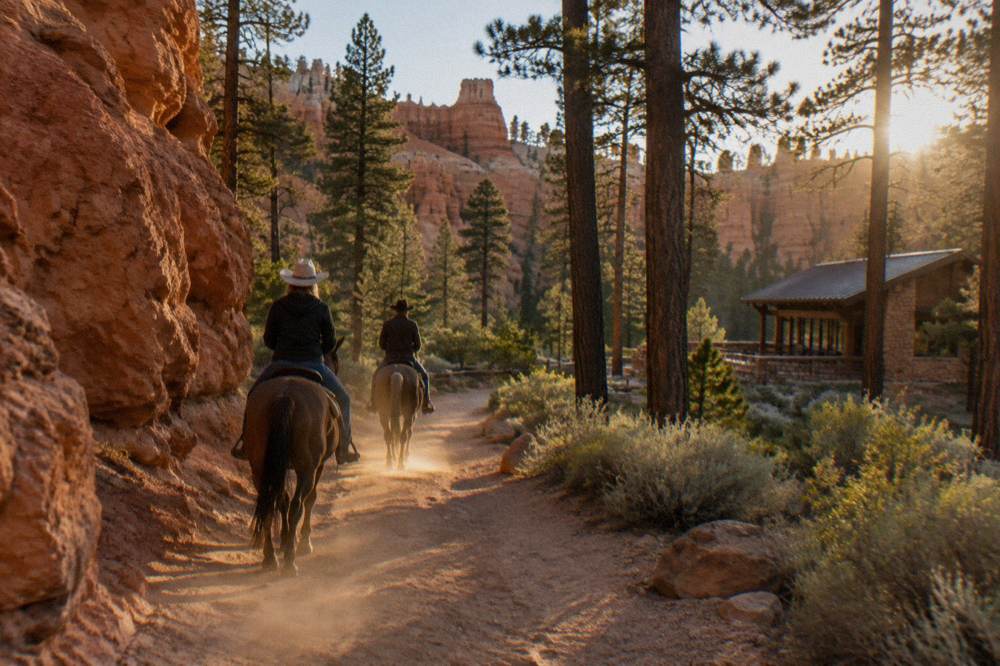
The comparison between the main near-park riding and motorized options comes down to what you want from the seat:
| Experience | Location | Duration | Price as listed | Rating and reviews |
|---|---|---|---|---|
| Horseback tour in Red Canyon | Dixie National Forest, from Bryce Canyon City | 3 hours | from $130 per person | 4.7 across 252 reviews |
| Guided ATV/RZR tour | Dixie National Forest and private land, from Bryce Canyon City | 1 hour | from $145 per group up to 2 | 4.7 across 412 reviews |
| UTV sunset and stars tour with smores | Bryce Canyon City departure; listing names the park as a stop | 2 hours 30 minutes | from $149 per person | 4.9 across 36 reviews |
One honest note on the third row: the UTV listing names Bryce Canyon National Park as an itinerary stop, but off-highway vehicles are prohibited on park roads and in park areas under the Superintendent's Compendium, so treat that listing's park reference with caution and read the itinerary on the operator's page before booking.
If horses are the point of your trip rather than one activity among several, the guided forest ride and the permitted in-park string are the two experiences worth building a day around. For everything ride-adjacent, from weight questions to seasonal timing, the site's coverage of horse weight limits at Bryce Canyon answers the questions outfitters get asked most.
For travelers pairing the ride with other booked experiences, the sunset UTV option is the natural companion piece, ending under some of the darkest sky in the region.
Costs, Camping And Practical Planning
Budget a $35 per-vehicle entrance fee, the Recreation.gov reservation for your string, and no lodging for your horse inside the park, because overnight pack trips do not exist here. North Campground is open year-round and Sunset Campground runs roughly mid-April to October, but the park's camping offer is for people, not stock.
Hauling adds its own math. Las Vegas and Salt Lake City airports each sit about 270 miles from the park, and the driving question gets its own treatment in the site's piece on the drive from Las Vegas to Bryce Canyon; with a trailer, add generous margin for the climb onto the Paunsaugunt Plateau. Cedar City is 80 miles out and St. George 125, which makes those the sensible fuel-and-rest stops for anyone towing.
Where to keep a horse overnight is the question the park does not answer with an in-park solution, and riders generally look to the Bryce Canyon City area, where the riding outfitters are based. Confirm stabling arrangements directly with local operators before you commit dates; nothing in the park's published materials promises stock accommodation, and inventing an assumption here ruins trips. The same practical caution applies to water: the park's day-hike guidance tells hikers to drink about one quart per liter every one to two hours at this elevation, where effective oxygen is about 75 percent of sea level, and horses working the climbs need corresponding care.
Timing, finally, is the lever that controls everything else. May through September are the park's most popular months, the shuttle runs April through mid-October, and the concessioner's season ends October 31. A private ride in late September hits the overlap of open trails, functioning services and thinner crowds. June through August brings afternoon thunderstorms; October brings the possibility of snow and below-freezing nights.
For visitors who would rather hand the planning to someone else entirely, the small-group motorized option from Bryce Canyon City covers a full off-road hour without any of the haul-your-own logistics.
Common Questions About Riding Your Own Horse In Bryce Canyon
Can I Ride My Own Horse In Bryce Canyon?
Yes, with a reservation made through Recreation.gov, a requirement since April 1, 2024. Riding is limited to designated trails, the dedicated horse trail and the Peekaboo Loop, and overnight pack trips are not permitted anywhere in the park.
Do I Need A Permit Or Just A Reservation?
The park requires the Recreation.gov reservation for private stock use. You also pay the standard entrance fee, $35 per private vehicle, and non-US residents age 16 and over pay an additional $100 nonresident fee unless covered by an eligible pass.
Can I Camp Overnight In The Park With My Horse?
No. The park service states there are no overnight pack trips, and the campgrounds accommodate people, not stock. Riders needing overnight stabling should contact operators in the Bryce Canyon City area directly before finalizing dates.
When Is The Riding Season?
The concessioner typically operates April through October 31, weather permitting, and private riders face effectively the same window. Snow can fall in any month from October through May, and the Wall Street trail section is closed until further notice under an NPS alert dated September 29, 2026.
Can I Rent A Horse Instead Of Bringing My Own?
Yes. Canyon Trail Rides, the park concessioner, runs 2-hour and 3-hour guided rides into the Amphitheater, and outside the park a 3-hour guided ride through Red Canyon in Dixie National Forest departs from Bryce Canyon City, from $130 per person.
Are ATVs Or UTVs Allowed On The Park's Horse Trails?
No. All off-highway vehicles are prohibited on park roads and in park areas under the Superintendent's Compendium. Motorized tours operate on Dixie National Forest land and private property outside the boundary, never inside the park.
If you are weighing the private-string route against simply booking a seat, the trio below reprices the decision: the Red Canyon horseback ride, the ATV hour and the sunset UTV tour cover the full spread of ways to ride the country around Bryce Canyon.