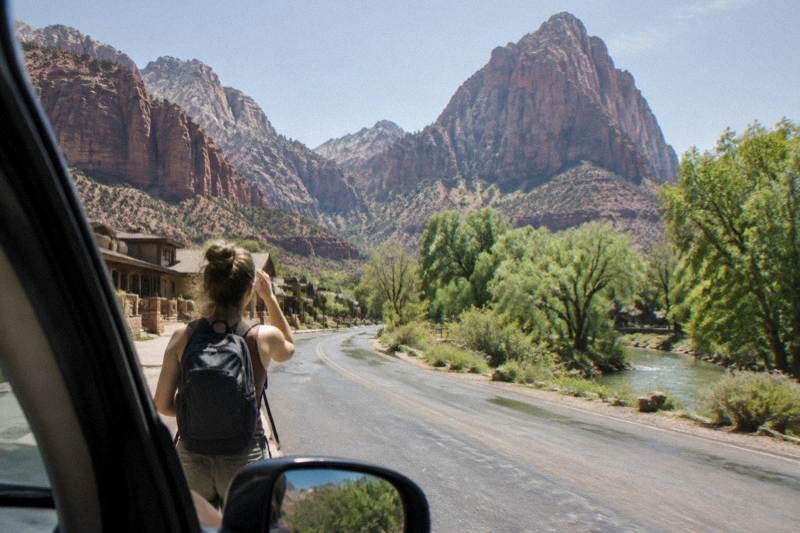
How Far Apart Are Zion And Bryce?
Zion National Park's east entrance sits 78 miles from Bryce Canyon, a short desert hop that thousands of travelers combine into one trip. Here is how the distance, the road and the tour options actually work.
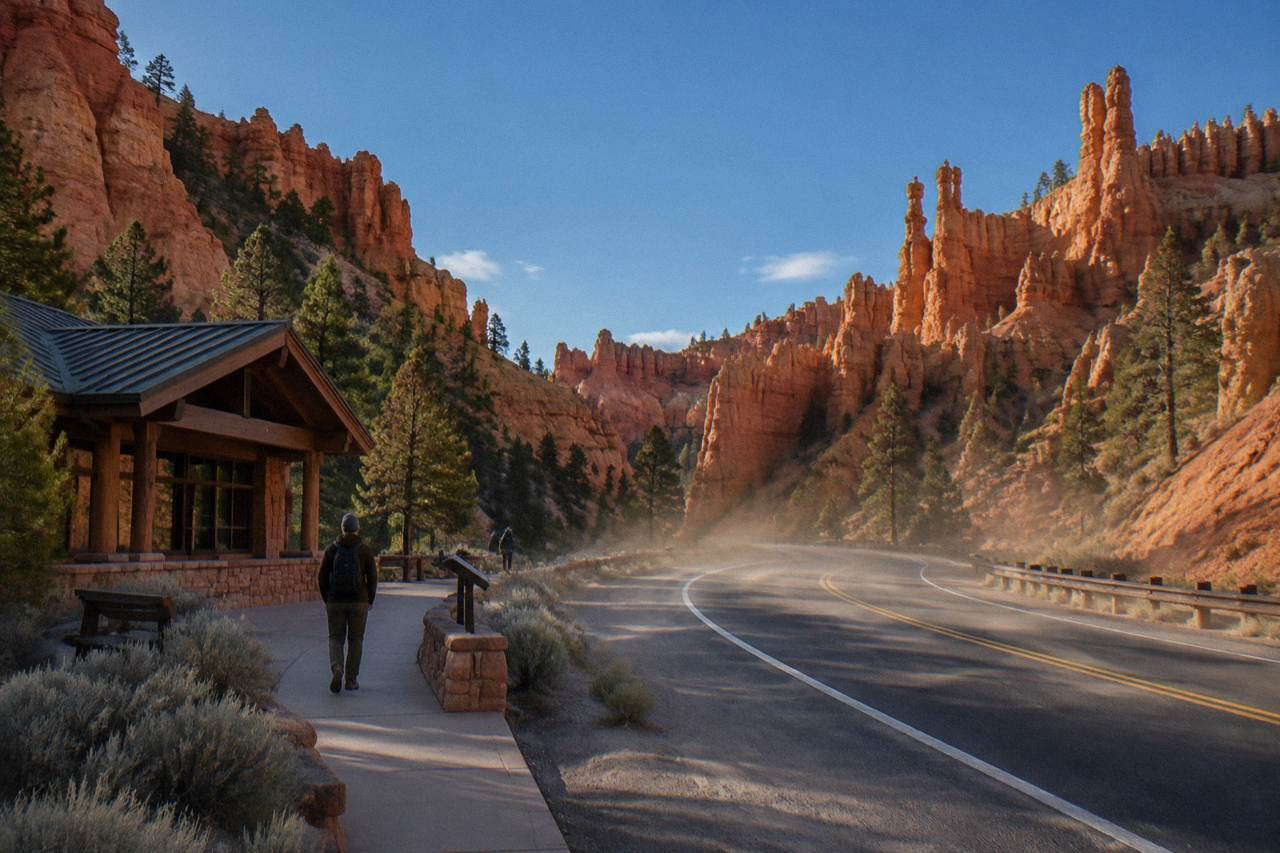
Zion National Park and Bryce Canyon are 78 miles apart, measured from Zion's east entrance to Bryce Canyon, per the National Park Service's own distance table. That short span is the reason the two parks are so often combined: they sit on the same Colorado Plateau step, connected by state Route 9, US-89 and Scenic Byway 12. In practice the gap feels bigger than the number, because the route climbs from Zion's desert canyon country up to Bryce's high rim.
That climb is the detail most first-time visitors miss. Bryce Canyon's rim averages about 8,000 feet and reaches over 9,000 feet, according to the park's FAQ page. The 78 miles between the two parks therefore include a full change of ecosystem, temperature and even weather risk, from slickrock desert to high pine forest where snow can fall in October. The same afternoon can demand sunscreen in one park and a fleece in the other.
The National Park Service lists the figure plainly alongside its other regional distances on the Bryce Canyon frequently asked questions page: Zion's east entrance 78 miles, Capitol Reef 112, Grand Canyon North Rim 150, Arches 245. Those numbers matter for trip planning because Zion and Bryce are, by a wide margin, the closest pair of major parks in the region. Nothing else on the list is within even 100 miles of Bryce.
Because the two parks sit so close, an entire category of travel product exists to bridge them. The Las Vegas day trips that visit both parks in one long outing, the small group Zion and Bryce tour, and the self-guided audio driving tours that narrate the highway between them all exist because of this one number. We compared the main listings for this article, and the distance, not the scenery alone, shapes every one of them.
How Does The 78 Miles Break Down On The Ground?
The route runs from Zion's east entrance up US-89 to the town of Hatch, then follows Scenic Byway 12 to the town of Bryce Canyon City at the park's gate. Across those 78 miles, three roads carry almost all of the driving. Route 9 leaves Zion through the Zion-Mount Carmel Tunnel, US-89 runs north through the Sevier River valley, and Scenic Byway 12, an All-American Road, makes the final climb onto the Paunsaugunt Plateau. Each segment has a different character, and the middle stretch is the one people forget to plan for.
Route 9 leaves Zion through the Zion-Mount Carmel Tunnel, a 1.1-mile bore that still dictates traffic flow today. Vehicles too large for the tunnel's single-lane traffic pattern must be escorted, which produces waits in busy season, and the road after the tunnel switchbacks down through slickrock country to the east entrance checkerboard mesas. This segment alone is a scenic highlight, and many travelers pull over at the Canyon Overlook Trailhead parking just east of the tunnel.
US-89 is the workhorse stretch: two lanes, small towns, gas stations in Mount Carmel Junction and Panguitch, and long views of the Markagunt Plateau. Hatch and Panguitch are the realistic fuel and food stops, and Panguitch in particular is worth knowing about because Bryce Canyon City itself is small and fills up in peak season. The final run on Scenic Byway 12 climbs through red rock toward the plateau, passing the turnoffs for Red Canyon, where Dixie National Forest hoodoos preview what Bryce holds.
The practical takeaway: the 78 miles are not highway miles. They are two-lane mountain and valley miles with tunnel logistics, limited services and a serious elevation gain by the end. Travelers who budget for the drive as if it were an interstate segment are the ones who arrive at Bryce's gate rushed, which is exactly the wrong mood for a park whose whole appeal is standing still at a rim.
Can You Drive From Zion To Bryce Canyon In One Morning?
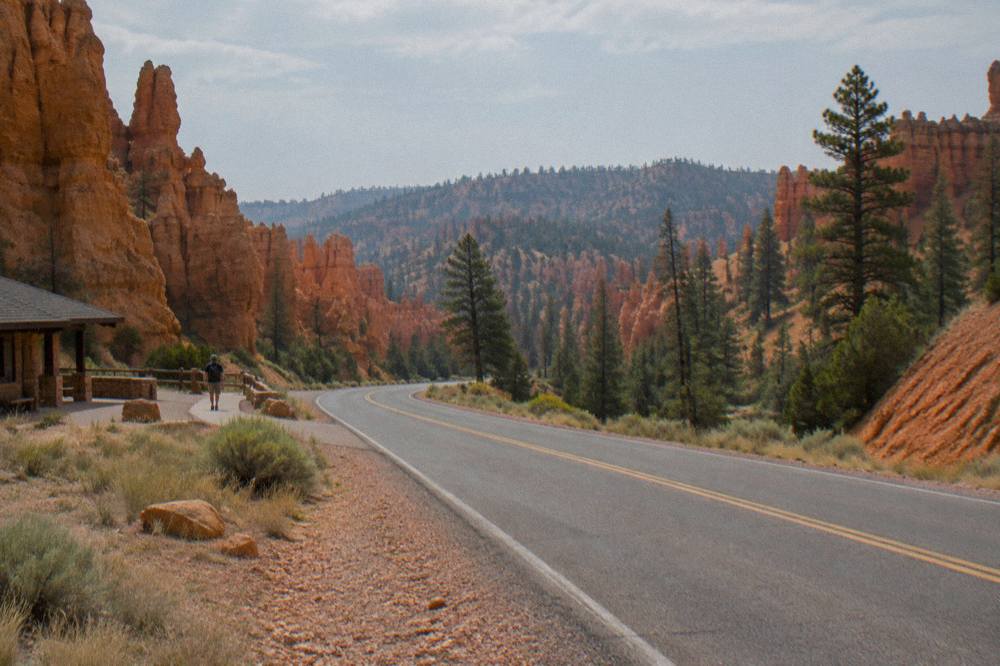
Yes, the 78 mile drive between Zion and Bryce Canyon is routinely done in a single morning, and many visitors plan exactly that kind of day: watch sunrise inside Zion Canyon, then head north on the connecting highway, and you can be standing at Bryce's rim by early afternoon with plenty of daylight left. The National Park Service publishes no official drive-time figure for the route, and this article will not invent one; what the facts do establish is the distance and the road types, both of which point to a relaxed half-day transfer rather than a dash. Build in stops for fuel, photos and the tunnel, and the morning plan still works comfortably.
The obstacles that actually cost time are known quantities. The Zion-Mount Carmel Tunnel can queue vehicles in summer. Panguitch is the last full-service town before the park. And Bryce's own logistics shift with the calendar: the free park shuttle runs spring through mid-October, with 2026 service ending October 18, and oversize vehicles over 23 feet are restricted from Amphitheater parking lots during shuttle season. Arrive outside those windows and the calculus changes.
Season matters at both ends of the 78 miles. Snowstorms in October are not unusual at Bryce's elevation, and after winter storms the main park road can close temporarily at mile marker 3 while plows clear the southern drive, per the park's winter operations page. Zion Canyon has its own seasonal rhythm, including shuttle-service gaps in late fall and early winter. A morning transfer is realistic in any season, but a winter one deserves a same-morning check of road alerts.
For travelers who would rather not drive the link at all, the combined-park day tours solve the problem completely. The small group Zion and Bryce tour from Las Vegas covers both parks in a 12 to 14 hour day from $263.99 per person, with hotel pickup, park admission fees and bottled water included, per its listing. It is one of several products built around the fact that the two parks are close enough to share.
If you are weighing the guided route against driving yourself, the comparison guide on choosing a Bryce Canyon tour walks through the trade-offs, and our Zion and Bryce Canyon tour overview covers the combined-park format in detail.
Which Park Should You Visit First, Zion Or Bryce Canyon?
Visit Bryce Canyon first, then finish with Zion. Most trip reports and operator itineraries follow this order because descending from Bryce's high rim down to Zion's desert floor gives your body an easier acclimatization sequence than the reverse, and because Zion rewards a full final day, it works best as the grand finale of the trip. Bryce's trails begin with a descent, which makes it a shorter-visit park: a morning at the Amphitheater viewpoints plus one hike covers the essentials. Zion demands more time and rewards saving the biggest day for last. The direction you choose shapes the whole trip's rhythm.
The altitude argument is not folklore. Bryce Canyon's rim averages about 8,000 feet, where effective oxygen is roughly 75 percent of sea level, and trails top out at 9,115 feet. Arriving there straight from Las Vegas at low elevation is fine for viewpoints, but hikers feel the difference on the climb back out of the Amphitheater. Spending a day or two at moderate elevation before tackling Bryce's trails is the standard advice, and doing Zion first accomplishes that naturally.
The itinerary logic points the same way. A common pattern is Las Vegas to Bryce first (the parks are equidistant from the city, about 270 miles each from the airport per the park's directions page), a night in Bryce Canyon City or Panguitch, sunrise at Bryce, then the 78 mile drive south to Zion with the tunnel as a finale. Reversed, the pattern ends with a long high-elevation drive after several tiring days, which is when mistakes happen.
There is a counterargument worth naming: crowd timing. Zion Canyon's shuttle and its marquee hikes are busiest midday, so some travelers drive Zion-to-Bryce to hit Zion at dawn on day one. Either direction works; the 78 miles are the same. What does not work is treating the two parks as interchangeable stops, because their seasons, elevations and hiking styles differ more than their proximity suggests. The Bryce Canyon versus Zion comparison unpacks those differences in full.
| Factor | Bryce Canyon | Zion National Park |
|---|---|---|
| Distance from Las Vegas airport | About 270 miles | About 270 miles |
| Typical rim or canyon elevation | Around 8,000 to 9,115 ft | Main canyon at low desert elevation |
| Signature terrain | Hoodoo amphitheaters seen from the rim | Narrow canyon walls seen from below |
| Shuttle | Free, spring through mid-October | Mandatory in main canyon most of the year |
| Best first stop | Sunrise or Sunset Point | Visitor Center shuttle boarding |
What Tours And Audio Guides Cover Both Parks?
Four formats bridge the 78 miles between the parks: Las Vegas day trips that visit both parks in a single day, multi-day small group loops, a self-driving audio bundle, and a commentary app that plays along the whole route, giving travelers several ways to experience both parks together. The small group Zion and Bryce tour from MARVIT TOURS is the flagship guided option from Las Vegas at from $263.99 per person across 155 reviews at 4.6, with hotel pickup, park admission fees and bottled water included, lunch excluded. Two boutique alternatives from National Park Express run the same basic day at from $219 and from $234 per person.
The self-drive tier is where the 78 mile distance becomes an asset. The Zion and Bryce self-driving bundle from Travel with Action costs from $24.99 per group, up to 4 people, and runs 8 to 9 hours of GPS-triggered commentary across both parks from 76 reviews at 4.2. Its sibling from GuideAlong, the GyPSy Guide audio drive, covers 195-plus points from from $26.99 per group of up to 8, at 4.6 across 25 reviews, with lifetime access and no expiry. Both put narration in your own car and skip the logistics of a group van entirely.
The multi-day tier treats the 78 miles as one leg of a bigger loop. The 3-day MaxTour from Las Vegas takes in Grand Canyon, Bryce, Zion, Antelope Canyon and Monument Valley from $799.99 per person with 614 reviews at 5.0, hotels and most meals included. Bindlestiff Tours runs a camping-oriented 3-day version from $875 per person, and Empire Vacations a budget hotel version from $590. Each stops at Bryce Canyon National Park on its itinerary, per the listings.
Which tier fits depends on one question: do you want to drive the 78 miles yourself? If yes, an audio tour turns the connecting roads into part of the experience for less than $30 total. If no, a guided day trip or a multi-day loop covers the distance, the parking and the park fees for you. The Las Vegas day trip guide compares the van options head to head.
| Tour | Format | Price as listed | Duration | Reviews |
|---|---|---|---|---|
| Zion and Bryce Canyon Small Group Tour (MARVIT) | Guided day trip from Las Vegas | From $263.99 per person | 12 to 14 hours | 4.6 from 155 |
| Vegas: Bryce & Zion Luxury Boutique Tour (National Park Express) | Guided day trip from Las Vegas | From $219 per person | 13 hours | 4.7 from 1224 |
| Zion and Bryce Self-Driving Bundle (Travel with Action) | Audio driving tour | From $24.99 per group (up to 4) | 8 to 9 hours | 4.2 from 76 |
| GyPSy Guide Zion & Bryce (GuideAlong) | Audio driving tour | From $26.99 per group (up to 8) | 6 hours to 1 day | 4.6 from 25 |
| 3-Day Grand Canyon, Bryce, Zion tour (MaxTour) | Multi-day from Las Vegas | From $799.99 per person | 3 days | 5.0 from 614 |
The self-driving bundle is the natural companion if you have a rental car and want the middle stretch of US-89 explained rather than just crossed.
Is The Road Between Zion And Bryce Canyon Difficult?
No segment of the 78 mile link requires mountain-driving experience, but two features shape the drive: the Zion-Mount Carmel Tunnel with its size restrictions and escorts, and Scenic Byway 12's climb onto the Paunsaugunt Plateau, which is steep but well engineered. Winter is the one condition that changes the answer. After storms, Bryce's main road can close at mile marker 3 until plows finish, and the park notes below-freezing nights nearly every night from October through May.
The tunnel deserves a specific warning for anyone in an RV or towing a trailer. Vehicles over a size threshold must be led through the single-lane tunnel by escort, which means waiting for scheduled escort slots and paying a fee, and this is managed at the tunnel itself. Standard passenger cars simply drive through. East of the tunnel, Route 9 descends through open switchbacks with pullouts, and the driving is straightforward in dry conditions.
Scenic Byway 12 between Hatch and Bryce Canyon City climbs steadily on easy curves toward the plateau. The road passes through Red Canyon, where two natural arches span the highway itself, a preview of hoodoo country that costs nothing to see from the car. In snow season the same road is plowed but can be icy in mornings; the park service points drivers to Utah's traffic site, udottraffic.utah.gov, for current conditions.
None of this qualifies as a scary drive by regional standards, and travelers who have read about Zion's other approaches, like the switchbacks into the park from the west, sometimes worry unnecessarily. The east-side route to Bryce is gentler than almost any road into a major park in Utah. The honest framing: it is a beautiful drive that asks for attention, not nerve, and the drive between the parks is widely judged worth it for the scenery alone.
How Many Days Do You Need For Zion And Bryce Canyon Together?
Plan on at least two days, one for each park, though three is the comfortable standard for combining them. Bryce Canyon can be covered in a single focused morning plus an afternoon, while Zion typically absorbs a full day on its own and still leaves some hikes undone, so a third day gives you breathing room without rushing either park. The 78 mile gap is what makes even the two-day version possible, since no other Utah park pair sits this close. The failure mode is the one-day version done independently, which spends most of its hours on roads rather than rims, and no amount of early starts fixes that.
A workable three-day shape: day one, drive to Bryce, afternoon at the Amphitheater viewpoints and a short hike; day two, sunrise at Sunrise or Bryce Point, then the drive south mid-morning, an afternoon in Zion Canyon, overnight in Springdale; day three, a full Zion day before returning toward Las Vegas or Interstate 15. This front-loads the high-elevation park while legs are fresh and gives Zion the deeper time it wants.
The one-day version is best left to the guided products, which is precisely why they exist. A van tour can sequence both parks, parking, fees and meals across a 12 to 14 hour day in a way an independent driver struggles to match, because the operator already knows the timing windows. The trade is literal: you spend the day on someone else's schedule in exchange for seeing both parks at all. For many Las Vegas visitors with a single free day, that trade is obviously right.
For readers planning the longer version, the question of how many days are needed in Bryce Canyon gets its own treatment, and the pace there is deliberately slower than Zion's. Between the two, elevation is the hidden budget item: at Bryce's altitude the same hike costs noticeably more effort than at Zion's floor, which is another reason not to cram both parks into one self-driven day.
What Changes Between The Two Parks Besides The Distance?
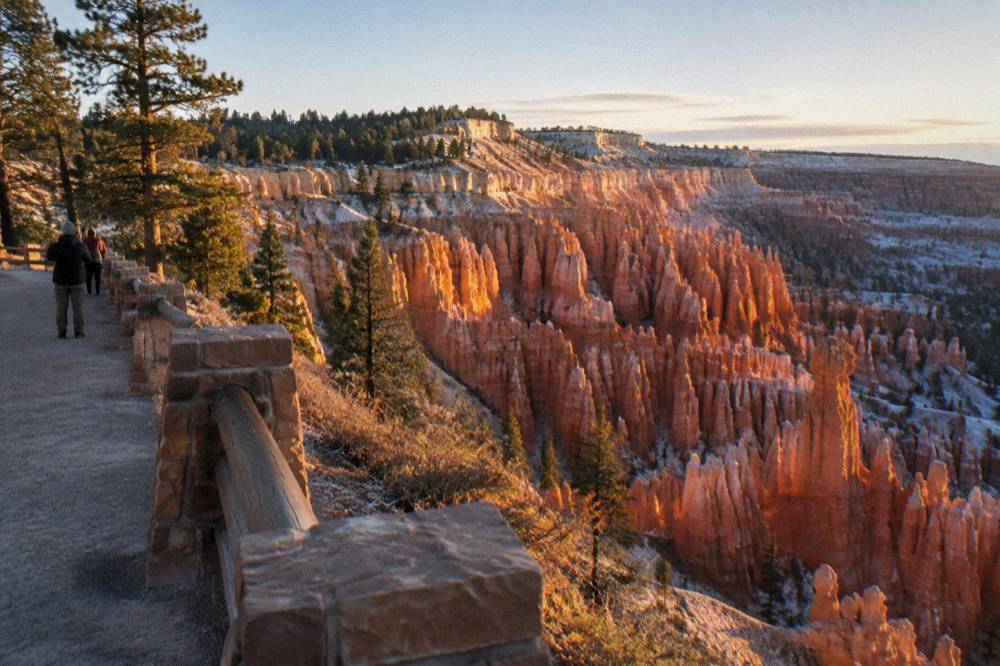
Elevation, season and even the night sky differ across the 78 miles: Bryce sits far higher, runs colder in every month, and holds a Gold Tier International Dark Sky Park designation, while Zion offers warmer temperatures and a narrower, deeper canyon world. The park service's own climate tables show Bryce's January average high at 37 F against summer highs mostly in the 70s and low 80s, with July and August afternoon thunderstorms. Zion, at its far lower elevation, runs warmer throughout.
The practical consequences show up in packing and planning. A trip that starts in Zion in shirtsleeves can end at Bryce in fleece and gloves on the same calendar day, and snow can fall at Bryce from October onward. Hikers notice the altitude most: Bryce's trails descend first and climb out last, and the park advises drinking about a quart of water every one to two hours on the trail. The morning at Bryce should be shorter and slower than instinct suggests.
The two parks also handle crowds differently. Zion Canyon requires shuttle use in the main canyon for most of the year, with the Zion shuttle system page detailing seasonal schedules, including a service gap from November 29 to December 25 in 2026. Bryce's shuttle is optional, free with admission, and runs spring through mid-October. Arriving at Bryce outside shuttle season means driving the rim yourself, which in the quiet months is a pleasure rather than a problem.
The night sky gap is the least expected difference and the one travelers most often regret missing. Bryce Canyon hosts roughly 100 astronomy programs a year and runs limited-ticket Full Moon Hikes, with the best stargazing in the week around the new moon. There are also commercial stargazing sessions at a private dark-sky site near Bryce Canyon City, from $59 per person, for visitors who want telescopes and a guide without the ticket lottery. The Bryce Canyon stargazing guide covers the options.
What Should Independent Drivers Know Before Linking The Two Parks?
Plan fuel, food and timing around three facts: Panguitch is the last full-service town before Bryce, the tunnel east of Zion can delay oversize vehicles, and Bryce's shuttle season ends in mid-October, after which you drive the rim yourself. None of these is difficult, but each one punishes the traveler who treats the 78 miles as a blank stretch of highway. A few minutes with the park's alerts pages before departure covers the rest, and the difference between a smooth link and a stressful one is usually just that check.
Fuel is the quietest risk. The stretch of US-89 between Mount Carmel Junction and Panguitch has long gaps with limited services, and Bryce Canyon City itself is small. Filling up at either end of that stretch removes the only genuine logistics worry on the route. Food follows the same pattern: the listings for the area's guided tours often include lunch precisely because the corridor has few spontaneous options.
Timing the arrival at Bryce matters more than timing the departure from Zion. The park is open 24 hours a day year-round with no timed entry, but the Amphitheater parking lots in the first three miles fill first, and oversize vehicles are restricted from them during shuttle season. Arriving by late afternoon not only secures parking but lines up with the park's own sunset advice: Inspiration Point or Paria View, reached about 1.5 hours before sunset. Sunrise shooters reverse the plan and sleep near the rim.
Finally, carry the entrance strategy in your head rather than discovering it at the gate. Bryce charges $35 per private vehicle, and non-US residents aged 16 and over pay an additional $100 nonresident fee unless admitted with an America the Beautiful pass; the $250 nonresident annual pass covers the holder plus up to three nonresident adults in a commercial tour group. Some tour listings include park admission and some exclude it, so the fee question belongs on your checklist before you book anything. The entrance fees and passes guide gives the full breakdown.
For drivers who want commentary across the whole corridor rather than a single park, the GyPSy Guide audio tour from GuideAlong covers 195-plus points between the parks, from $26.99 per group of up to 8, buy once and use forever.
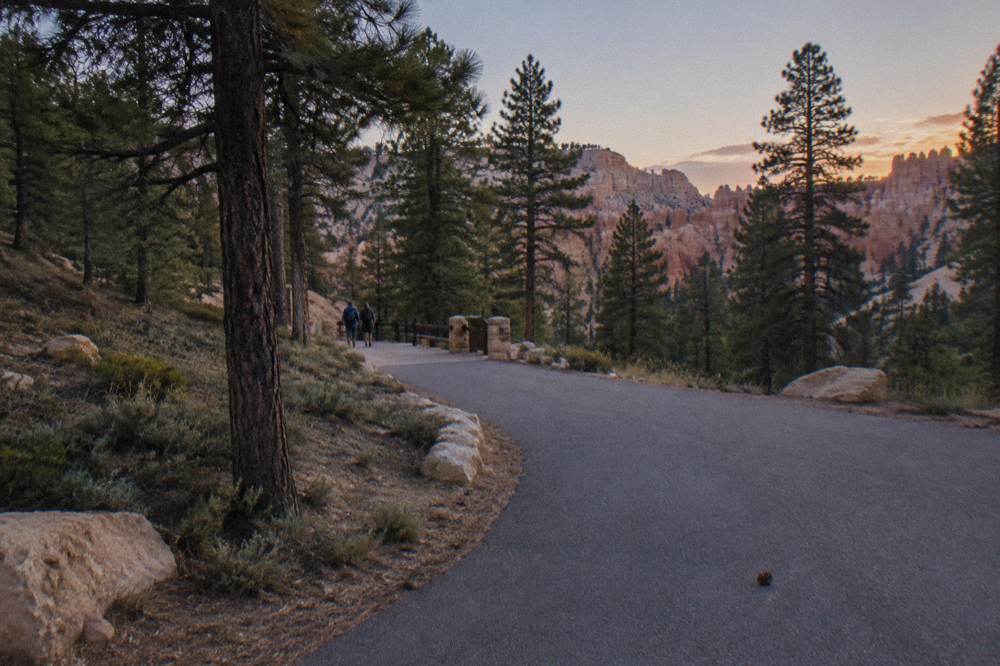
The pairing of these two parks is the single best argument for a southern Utah road trip, and the 78 miles between them is the number that makes it work. Whether you cross it in your own car with an audio guide narrating the plateau, or let a small group tour handle the driving from Las Vegas, the geography does half the planning for you: two world-class parks, one short link, one memorable climb. This article is part of the planning coverage at Bryce Canyon National Park Tours, where the tours that bridge the gap are compared side by side.
Common Questions About Zion And Bryce Canyon Distance
How Far Apart Are Zion And Bryce?
78 miles, measured from Zion National Park's east entrance to Bryce Canyon, per the National Park Service distance table. The route runs through the Zion-Mount Carmel Tunnel, up US-89 and along Scenic Byway 12, climbing from Zion's canyon country to Bryce's high rim.
Can You Visit Zion And Bryce Canyon On The Same Day?
Yes, and guided tours do it routinely. The small group Zion and Bryce tour from Las Vegas covers both parks in a 12 to 14 hour day from $263.99 per person. Doing it independently in one day is possible but rushed, since most of the daylight goes to the two park approaches rather than the parks themselves.
Which Park Is Closer To Las Vegas?
Neither, by the park service's figures: Las Vegas's airport and Salt Lake City's airport are each about 270 miles from Bryce Canyon, and Zion lies a similar distance from Las Vegas via I-15 and Route 9. The two parks are much closer to each other, 78 miles, than either is to a major airport.
Is The Drive Between Zion And Bryce Canyon Scary?
No. The route uses well-maintained two-lane roads, and the only feature that demands attention is the Zion-Mount Carmel Tunnel, which restricts and escorts oversize vehicles. In winter, snow and ice are possible on Scenic Byway 12 and Bryce's plateau roads, so check park alerts and Utah road conditions before departing.
Do I Need A Shuttle At Both Parks?
Zion Canyon requires shuttle use in the main canyon for most of the year. Bryce's shuttle is optional and free with admission, running spring through mid-October, ending October 18 in the 2026 season. Outside shuttle season at Bryce you simply drive the rim road yourself.
What Does It Cost To Enter Both Parks?
Each park charges $35 per private vehicle, good for 7 days at that park. Non-US residents aged 16 and over pay an additional $100 per person nonresident fee at Bryce unless admitted with a valid pass. Some guided tour listings include park admission and some exclude it, so check the inclusions line before booking.