Bryce Canyon Vs Zion: Which Park Should You Choose?
Bryce Canyon and Zion sit 78 miles apart in southern Utah, but they ask very different things of the people who visit them. Here is how the two parks compare on scenery, hiking, crowds, altitude and cost, and how a combo tour covers both.
Short answer
Zion offers sheer sandstone canyons, a mandatory shuttle in the canyon and the harder hikes; Bryce Canyon offers hoodoo amphitheaters at 8,000 to 9,115 feet, a drivable rim and easier walking. The parks are 78 miles apart, so many visitors combine them on one small group tour, from $263.99 per person from Las Vegas.
Bryce Canyon and Zion are the two parks most often argued over in southern Utah trip planning, and the argument usually ends with a compromise: see both. The National Park Service puts the distance between them at 78 miles from Bryce Canyon to the Zion east entrance, a short enough hop that tour operators run a combined day trip between them out of Las Vegas. The real question is not which park wins. It is which park fits your legs, your schedule and your tolerance for shuttles, and how much of each you can honestly see in the time you have.
This guide compares the two parks on the things that actually change a trip: the scenery, the hiking, the crowds, the altitude, the entrance fees and the logistics of combining them. It also names the specific combo tours you can actually book, because a comparison is only useful if it ends in a plan. For a wider look at the touring options, start with the guide to Bryce Canyon guided tours and the breakdown of Bryce Canyon tour prices.
Which Park Has The Better Scenery, Bryce Canyon Or Zion?
The honest answer is that they do not compete. Zion is a deep sandstone canyon system with walls that close in around you and a river running through the bottom; Bryce Canyon is a high rim of eroded limestone where you look down into amphitheaters of thousands of hoodoo spires. One park immerses you, the other overlooks. Visitors who pick a favorite are usually choosing between those two experiences, not ranking quality.
Zion's scenery is vertical and enclosing. The canyon floor sits beside the Virgin River, and the signature views come from looking up at walls like those along Angels Landing and the Narrows. The experience is built around being inside the rock.
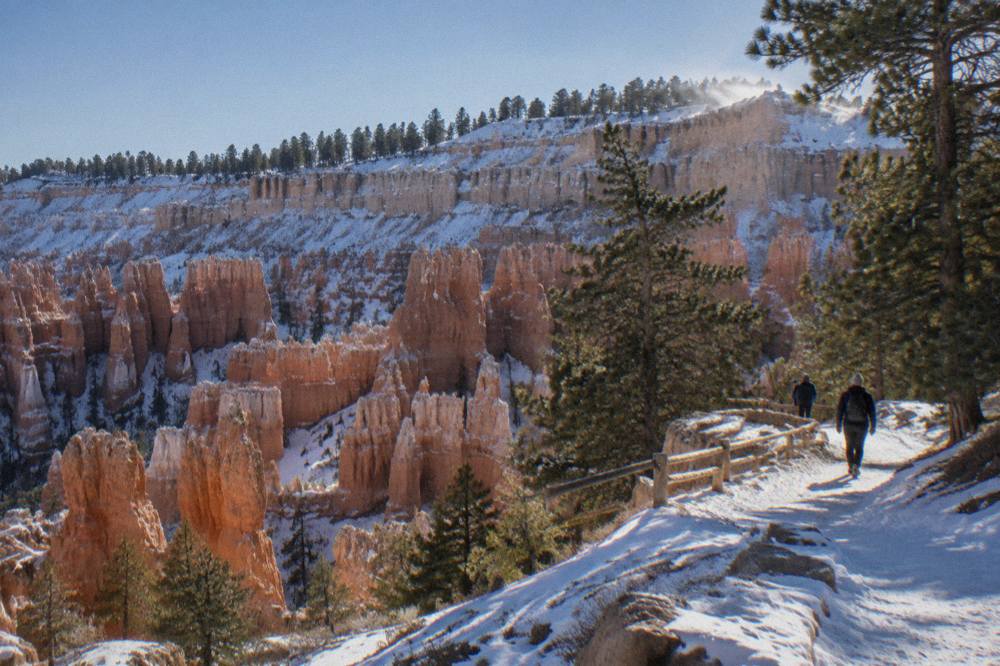
Bryce Canyon inverts that. The park sits on the eastern edge of the Paunsaugunt Plateau, and almost every viewpoint looks down into the Bryce Amphitheater, a natural depression filled with hoodoos, the irregular rock columns the park is named for. The first three miles of the 18-mile main road, Bryce, Inspiration, Sunset and Sunrise Points, concentrate most of the visits, and the rest of the scenic drive runs south through quieter overlooks toward Rainbow Point at the far end. If you want a deeper look at the formations themselves, the article on why the hoodoos are called hoodoos covers the geology.
The practical difference for a short visit is access. Zion Canyon's inner road is closed to private cars for most of the year and served by shuttle, so scenery arrives at shuttle pace. Bryce Canyon's overlooks sit on a drivable rim road, so a visitor with two hours can stop at four viewpoints under their own schedule. That is exactly what the 3-hour small group scenic tour of the park, from $84.81 per person and rated 4.9 across 1,215 reviews, is built around: Fairyland Canyon, Natural Bridge, Inspiration Point and the Cathedral in a single loop.
| Question | Bryce Canyon | Zion |
|---|---|---|
| Signature landform | Hoodoo amphitheaters viewed from the rim | Deep sandstone canyon with a river floor |
| How you see it | Overlooks down into the rock | From inside the canyon, looking up |
| Main road | 18-mile scenic drive, private cars allowed | Canyon road closed to private cars, shuttle served |
| Character | Open, high, exposed plateau edge | Enclosed, shaded, water shaped |
| Best viewpoint stop | Bryce Amphitheater points, first 3 miles | Canyon floor viewpoints reached by shuttle |
A fair comparison also admits the weather factor. Bryce Canyon averages 8,000 feet of elevation with snow possible in any month from October through spring, while Zion's lower canyon runs hot in summer. Neither park guarantees a view; both are subject to afternoon thunderstorms in July and August, when ranger programs at Bryce Canyon are cancelled for lightning within 10 miles.
Which Park Is Better For Hiking?
Zion has the famous hard hikes, Angels Landing and the Narrows, and a permit or lottery system for the first; Bryce Canyon has shorter, steeper trails that descend into the hoodoos, where every return climb is uphill at altitude. For casual hikers Bryce Canyon is easier to sample in half a day. For bucket list routes, Zion owns the two names people fly in for. Bryce Canyon's trails start around 8,000 feet, so effort per mile is higher there.
The Bryce Canyon hiking menu centers on the Bryce Amphitheater. The park service describes the Queen's Garden and Navajo Loop combination as the most popular and most recommended route for first-timers: descend through Queen's Garden from Sunrise Point, come back up the Navajo Loop to Sunset Point, and return along the Rim Trail. One important current note: the Wall Street section of the Navajo Loop is closed until further notice under a park alert issued in late September 2026, and it also closes for the winter season by default, so plan the loop around the other exit. The park's conditions page carries the current status.
Zion's hiking splits into two categories. The family-friendly walks, the Pa'rus Trail and the Riverside Walk, sit on the canyon floor and are paved or nearly so. The headline routes are a different proposition: Angels Landing requires a permit through a lottery run on Recreation.gov, and the Narrows means wading a river with rented gear for hours. Neither is a spontaneous add-on to a day trip.
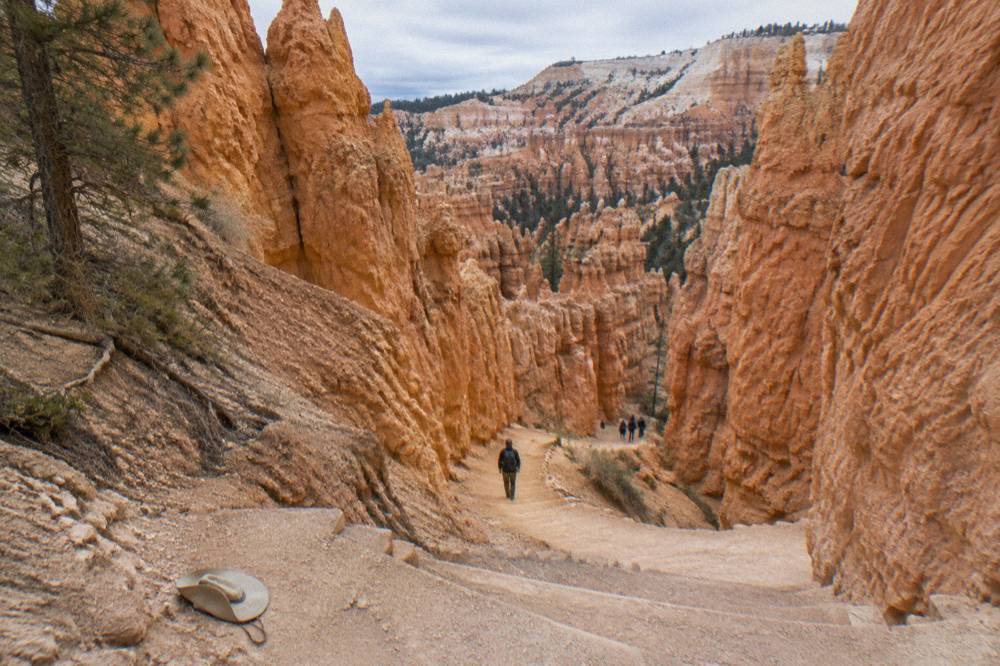
Altitude changes the math at Bryce Canyon. Effective oxygen at 8,000 feet is about 75 percent of sea level, and trails there begin with a descent, which means every hike finishes with a climb back up the rim. The park service suggests drinking about a quart, roughly a liter, of water every one to two hours of hiking. Guided hikes handle the pacing for you: the private guided hike and picnic from Cedar & Sage runs 4 to 6 hours on the Queen's Garden Loop, Sunrise Point, Sunset Point and Thor's Hammer, from $699 per group for up to four people with lunch, snacks, trekking poles and a 5.0 rating from 33 reviews.
If hiking is the point of the trip, a guided option beats self-navigation in both parks. In Bryce Canyon the full day small group tour and hike from Good Trip Adventures, from $427 per person, spends 6 to 8 hours with a medically trained naturalist guide and includes park entry fees, though it lists only 5 reviews so far. The full day private version, from $972.95 per person, adds lunch and a private guide, with an 18 review record at 5.0.
For hikers who want both parks without driving, the combo day tours below pair a Zion canyon stop with time at Bryce Point and the Amphitheater rim.
| Hiking factor | Bryce Canyon | Zion |
|---|---|---|
| Signature route | Queen's Garden plus Navajo Loop | Angels Landing, the Narrows |
| Permit needed | No permit for day trails | Angels Landing permit via lottery |
| Trail character | Descend into hoodoos, climb back out | Canyon floor walks or exposed climbs |
| Altitude effect | Trails at roughly 8,000 to 9,000 feet | Canyon floor thousands of feet lower |
| Time to sample it | Half a day covers the main loop | Full day plus shuttle time |
Which Park Has More Crowds And How Do You Escape Them?
Both parks peak in the same window, May through September, but the crowds behave differently. Zion's shuttle concentrates everyone at the same canyon stops, and its busiest trail is permit limited. Bryce Canyon's crowds thin dramatically past the first three miles of overlooks and drop further along the southern scenic drive, which self-drive visitors can reach at any time without a shuttle or reservation. Neither park uses timed entry.
Zion is one of the most visited national parks in the country, and its design funnels arrivals: ride the shuttle, get off at the stops, walk the same short list of trailheads. The permit system on Angels Landing is effectively a crowd control tool, and the canyon shuttle runs early to late through the summer season. If you go, go early; the guide on how early to arrive at Bryce Canyon National Park applies doubly at Zion's shuttle loading points.
Bryce Canyon spreads its visitors along a rim. The park service notes that most activity concentrates in the first three miles, Bryce, Inspiration, Sunset and Sunrise Points, while the 15 miles of southern scenic drive toward Rainbow and Yovimpa Points stay quieter. During shuttle season, oversize vehicles 23 feet and longer are restricted from Amphitheater parking between miles 1 and 3, with no restriction on the southern drive.
The shuttle at Bryce Canyon is free with admission, optional, and runs buses about every 15 minutes. A tour sidesteps the whole parking question, which is the single biggest crowd headache at both parks. The 14-hour small group Bryce and Zion day tour from Adventure Photo Tours, from $321.99 per person and rated 4.8 across 233 reviews, includes all entrance fees, breakfast, a boxed lunch, bottled water and hotel pickup from Las Vegas, so the group never circles a full lot.
How Different Are The Altitudes At Bryce Canyon And Zion?
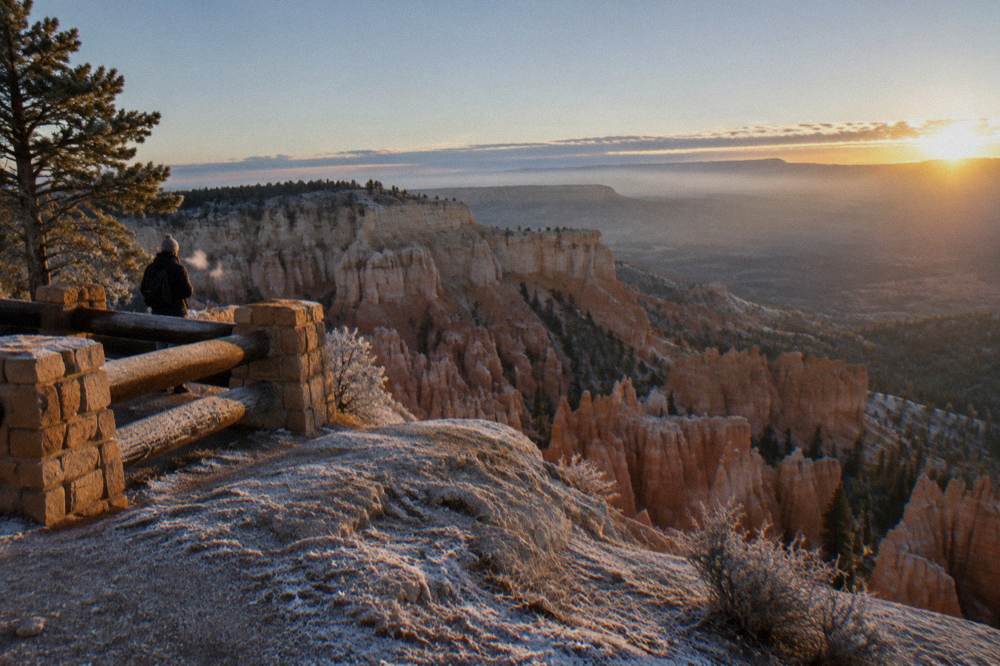
The gap is large enough to matter. Bryce Canyon averages about 8,000 feet and tops out at 9,115 feet at Rainbow Point, with the Visitor Center at 7,894 feet. Zion Canyon's floor sits thousands of feet lower, which is why Zion feels hot in July while Bryce Canyon can freeze any night of the year. Visitors combining both parks should plan hydration and pacing for the higher one.
The altitude at Bryce Canyon is not a footnote. The park service states that effective oxygen at 8,000 feet is roughly 75 percent of sea level, and its day hiking guidance asks for about one quart of water per one to two hours on trail. Summer highs on the rim sit in the 60s to low 80s Fahrenheit, but below freezing nights run from October through May. Snow in October is described as not unusual.
Zion's canyon floor, by contrast, bakes. Its summer temperatures regularly run well above the rim at Bryce Canyon, and the park service emphasizes early starts and water for the exposed walks there. That contrast is the core of the piece on whether Bryce is colder than Zion, and the fuller elevation picture, including why every Bryce Canyon hike ends with a climb, is in the guide to Bryce Canyon elevation and altitude.
| Altitude factor | Bryce Canyon | Zion |
|---|---|---|
| Average elevation | About 8,000 feet | Thousands of feet lower on the canyon floor |
| High point on a visit | Rainbow Point, 9,115 feet | Canyon rim well above the floor |
| Summer feel | Highs 60s to low 80s F, cold nights | Canyon floor notably hotter |
| Winter snow | Roughly 100 inches a year at headquarters | Far less at the canyon floor |
| Planning impact | Pace hikes, drink a liter every 1 to 2 hours | Start early, carry water |
For travelers flying in from sea level and doing both parks in one push, the standard advice is to put the harder hiking at Bryce Canyon on day two rather than day one, giving the body a night to adjust. Guided tour operators build this pacing in. The luxury boutique Bryce and Zion day trip from Las Vegas times its arrival for the middle of the day and pairs the drive with a deli style picnic lunch, and its sister listing with WiFi onboard is rated 4.7 across 2,711 reviews from $234 per person.
Can You Combine Bryce Canyon And Zion In One Trip?
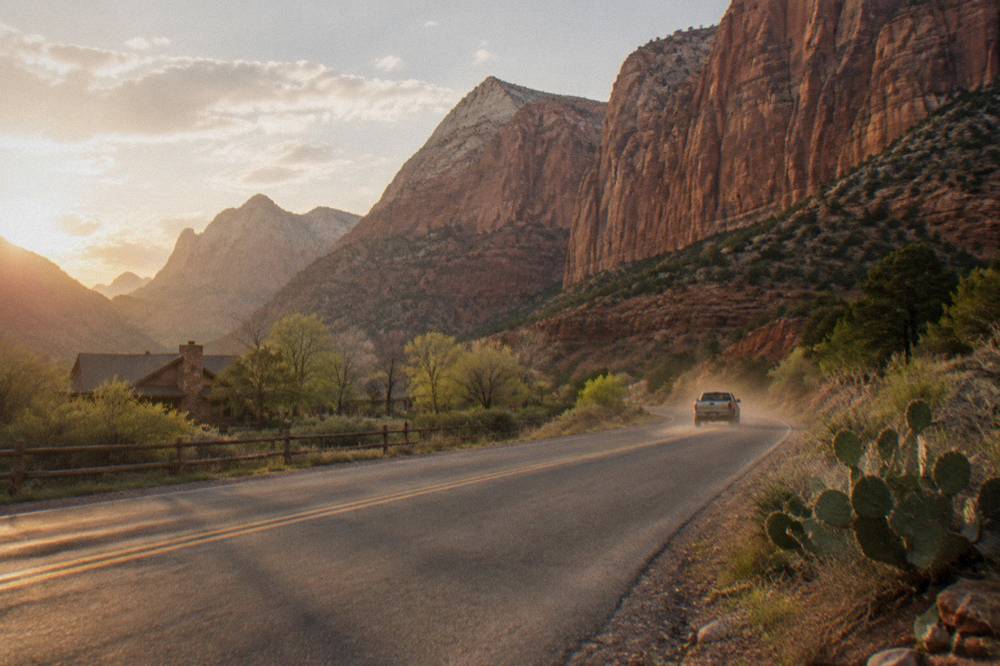
Yes, easily, and it is the most common way to see both. The parks are 78 miles apart by road, close enough that operators run them as a single 12 to 14 hour day trip from Las Vegas, about 270 miles away. A self-drive visitor can do both in one long day or, far better, split them across two days with a night in between. Combo tours bundle the driving, park fees and timing.
The geometry favors the combo. Las Vegas is roughly 270 miles from Bryce Canyon, and the drive to Zion adds the classic east side approach through the Zion Mount Carmel Tunnel. A day tour from Las Vegas that strings both parks is a long day, 12 to 14 hours door to door, but it removes every decision: pickup, route, entrance fees, meal stops and the parking problem at both ends.
The roster's combo products differ mainly in what is included. The Zion and Bryce Canyon small group tour from MARVIT TOURS, from $263.99 per person and rated 4.6 across 155 reviews, includes park admission fees, hotel pickup and drop-off, parking fees, bottled water and a driver-guide, and runs 12 to 14 hours; lunch is excluded, so budget a café stop. The 14-hour Adventure Photo Tours version, from $321.99, includes breakfast and a boxed lunch on top of the fees. The boutique National Park Express pair, from $219 and $234, is the value end, with the pricier listing covering park admission for US residents and the cheaper one charging it separately.
For self-drivers, the audio bundle is the budget combo: the Zion and Bryce self-driving bundle tour from Travel with Action, from $24.99 per group for up to four people and rated 4.2 across 76 reviews, runs GPS triggered commentary in your own car across both parks, with lifetime access and no expiry. The GuideAlong version from $26.99 per group covers up to 8 people across 195-plus points and rates 4.6 from 25 reviews. Both exclude entrance fees, parking and food, and neither replaces the shuttle inside Zion Canyon when it is running.
Multi-day travelers get more depth. The 3-day Grand Canyon, Bryce, Zion, Antelope Canyon and Monument Valley loop from MaxTour, from $799.99 per person and rated 5.0 across 614 reviews, includes hotels, most meals and all the named entrance fees. The 3-day camping option from Bindlestiff, from $875 per person, includes tents, sleeping gear, a Navajo guided jeep tour and park entry fees. The budget four park version from Empire Vacations, from $590 per person, includes hotels and all four park entrances. The choice among them is really a choice between hotel comfort, camping and price, laid out in the guide to Bryce Canyon tours from Las Vegas.
| Combo product | Format | Length | Price | Rating and reviews | Meals and fees |
|---|---|---|---|---|---|
| Zion and Bryce small group tour, MARVIT | Small group day trip | 12 to 14 hours | From $263.99 per person | 4.6, 155 reviews | Fees included, lunch excluded |
| Bryce and Zion day tour, Adventure Photo Tours | Small group day trip | 14 hours | From $321.99 per person | 4.8, 233 reviews | Breakfast, boxed lunch, fees included |
| Boutique Bryce and Zion tour, National Park Express | Small group day trip | 13 hours | From $219 per person | 4.7, 1,224 reviews | Lunch included, park fees for non-US residents excluded |
| Boutique Bryce and Zion tour with WiFi | Small group day trip | 13 hours | From $234 per person | 4.7, 2,711 reviews | Lunch and park admission for US residents included |
| MaxTour 3-day five park loop | Multi-day, hotels | 3 days | From $799.99 per person | 5.0, 614 reviews | Most meals, park fees, hotels included |
What Do The Two Parks Cost To Enter?
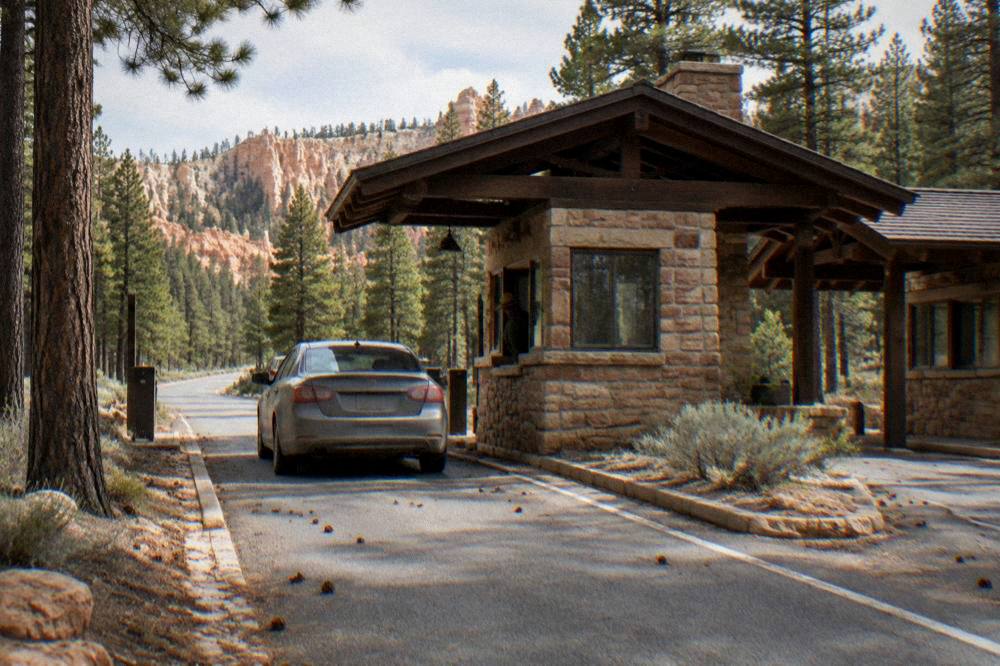
Bryce Canyon charges $35 per private vehicle of up to 15 people, or $20 per person entering on foot or by bike, both valid seven days; Zion charges the same standard structure. The big 2026 difference is the nonresident fee: non-US visitors aged 16 and over pay an additional $100 per person at both parks, including inside commercial tour groups, unless a $250 nonresident annual pass covers them. Several combo listings bundle park fees.
The fee tables at both parks are set by the National Park Service, and Bryce Canyon's are detailed on the park's fees page, which also notes the park does not accept cash at fee stations. Neither park uses timed entry or requires a reservation to enter, which distinguishes both from several other flagship parks. The full fee picture, including commercial tour vehicle rates of $60 for a mini-bus and $150 for a motor coach, is in the guide to Bryce Canyon entrance fees and passes.
| Fee item | Bryce Canyon | Applies at Zion too |
|---|---|---|
| Private vehicle, up to 15 people | $35, valid 7 days | Yes, same structure |
| Motorcycle | $30, valid 7 days | Yes |
| Per person on foot or bike, 16+ | $20 | Yes |
| Nonresident fee, non-US visitors 16+ | Additional $100 per person | Yes, same federal policy |
| Nonresident annual pass | $250, covers holder plus up to 3 adults in a tour group | Yes |
| Cash accepted | No, credit and debit only | Check the park's own page |
The nonresident rule is the line item most international visitors miss. The park service is explicit that the $100 per person fee applies to non-US residents aged 16 and over entering as part of a commercial tour group, not just independent travelers, and that the $250 America the Beautiful nonresident annual pass covers the holder plus up to three nonresident adults traveling in the same commercial group. Several roster listings state plainly that the nonresident entrance fee is excluded from the tour price, including both boutique Vegas listings at $100 per person per park; others, like the MARVIT small group tour, include the standard admission but still exclude the nonresident government fee. Read the listing's exclusions line before booking as an international traveler.
Fees also explain part of the tour price spread. A listing that includes park admission for US residents saves a household the $35 gate fee and the queue; a listing that excludes it adds that cost back at the door. The budget four park, 3-day Empire Vacations tour from $590 per person includes all four park entrances, while the 7-day Bindlestiff tour from $1,995 per person includes park entry fees except Antelope Canyon. On a value per park basis, the longer tours amortize the gate fees across far more days.

Planning a trip around both parks comes down to time. One day favors a guided combo or a fast self-drive audio bundle. Two days, the smarter format, splits one park per day with a night near the boundary, and the piece on a good 2-day itinerary for Bryce Canyon National Park shows how to build the Bryce half. Three days or more opens the multi-day loops that add the Grand Canyon, Antelope Canyon and Monument Valley. Whichever route you choose, this Bryce Canyon National Park Tours guide set covers each product type in detail, from stargazing sessions to helicopter flights over the amphitheater.
If the choice still feels close, that is because it is. The parks answer different questions, and 78 miles is a small price for both answers. Pick the park that matches your legs and your season, book the format that removes your weakest link, whether that is driving, parking or altitude pacing, and let the 78 miles do the rest.
Common Questions About Bryce Canyon Vs Zion
Which Is Better, Bryce Canyon Or Zion?
Neither is objectively better. Zion offers deep canyon immersion and famous challenging hikes; Bryce Canyon offers hoodoo overlooks from a drivable rim at 8,000 feet and gentler walking. Many visitors combine both, since the parks are 78 miles apart and combo day tours from Las Vegas run from $219 to $321.99 per person.
Can You Visit Bryce Canyon And Zion In One Day?
Yes. The parks are 78 miles apart, and several operators run them as a single 12 to 14 hour day trip from Las Vegas with hotel pickup. Expect long hours and a focused stop in each park rather than a full exploration.
Is Bryce Canyon Colder Than Zion?
Yes, noticeably. Bryce Canyon averages about 8,000 feet with a high point of 9,115 feet, and below freezing nights occur from October through May. Zion's canyon floor sits thousands of feet lower and runs much hotter in summer.
Which Park Is Less Crowded?
Bryce Canyon spreads visitors along an 18-mile rim, and the southern scenic drive beyond the first three miles stays quiet. Zion funnels most visitors onto one shuttle-served canyon road, so it concentrates crowds more, though its Angels Landing permit lottery caps that trail.
Do Combo Tours Include The Park Entrance Fees?
Some do, some do not, and the listing states it either way. The 14-hour Adventure Photo Tours day trip includes all entrance fees plus meals; the MARVIT small group tour includes standard admission but not lunch; the boutique National Park Express tours exclude the non-US resident fee of $100 per person per park.
How Far Is Bryce Canyon From Zion?
The National Park Service lists the Zion east entrance as 78 miles from Bryce Canyon. Las Vegas and Salt Lake City airports are each about 270 miles from Bryce Canyon.