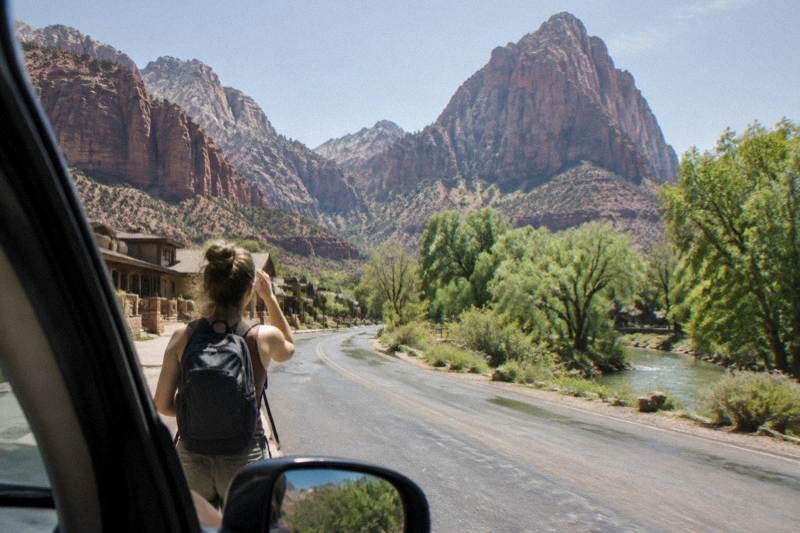
Is Bryce Canyon Worth The Drive From Zion?
A direct answer to whether Bryce Canyon is worth the drive from Zion: the 78-mile distance, what the road is like, how much time you need, and when a combined Zion and Bryce tour beats driving yourself.
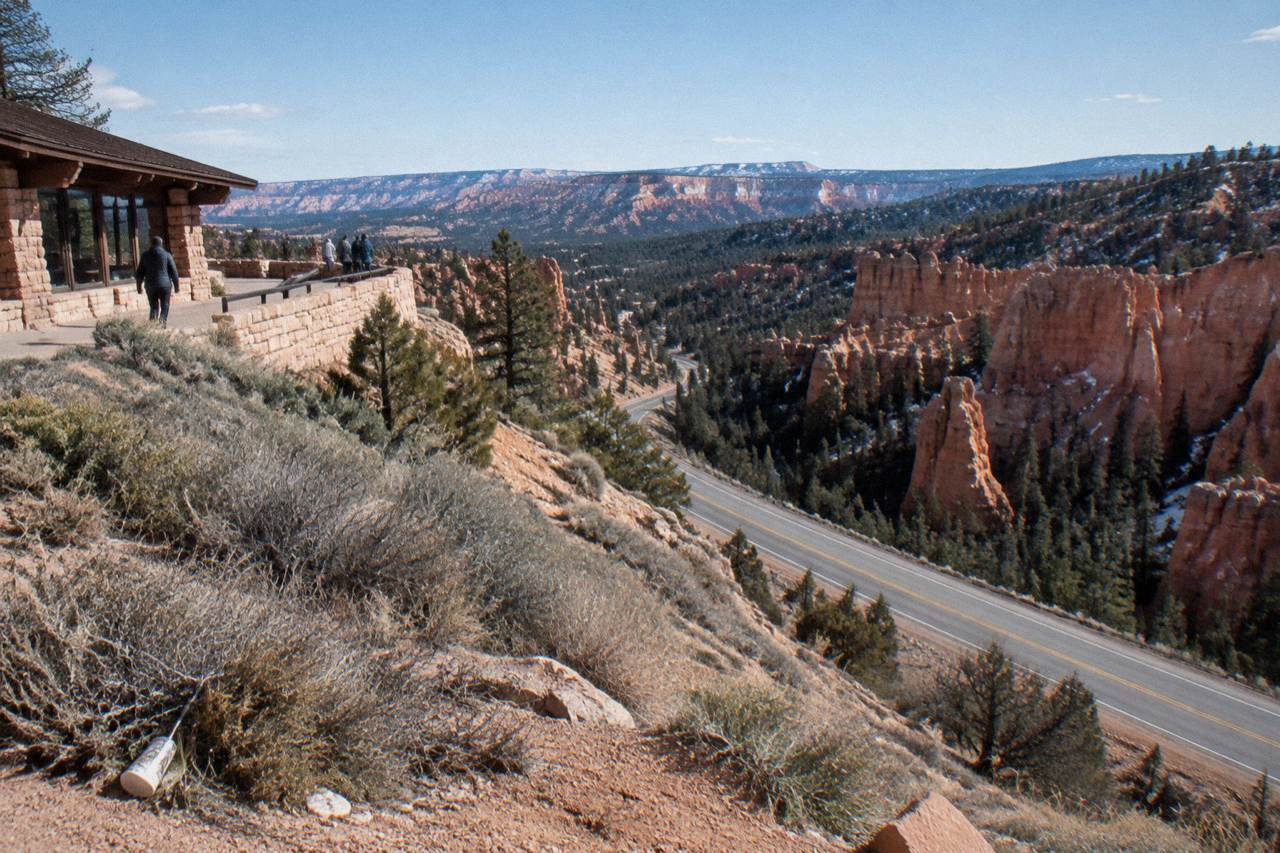
Yes, for almost every traveler. Bryce Canyon sits 78 miles from the Zion east entrance, close neighbors by Southwest standards, and the two parks look nothing alike. Zion is a deep sandstone canyon with a river at its base; Bryce is a cliff-edge amphitheater of stone spires at 8,000 feet. The road between them crosses Zion's east side, a historic tunnel, and the high forests of the Markagunt Plateau, so the drive is not dead time either.
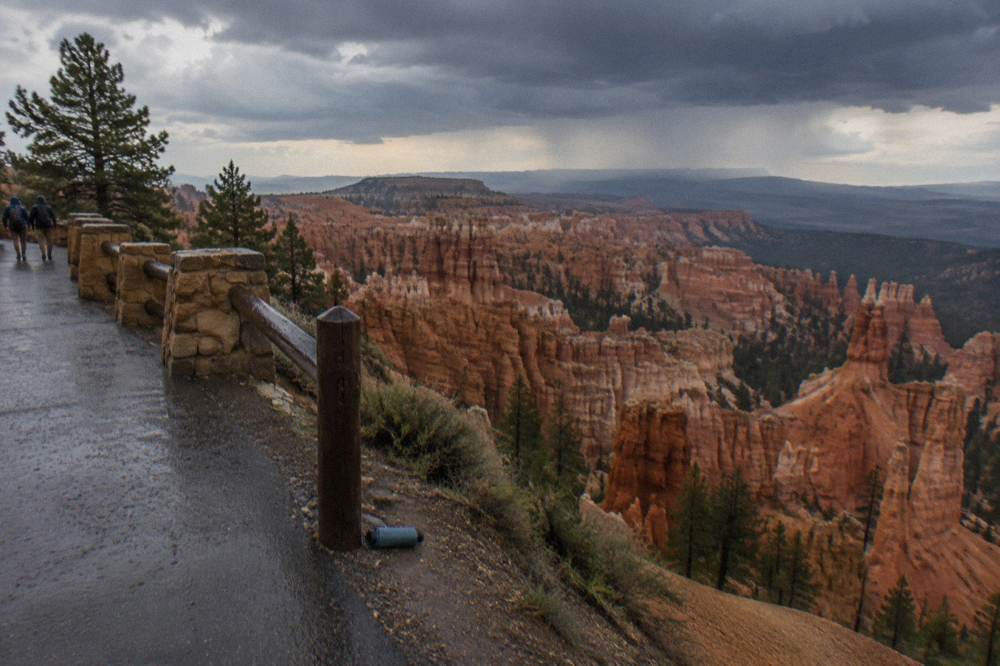
The honest case starts with what you would give up by skipping it. The hoodoo amphitheater at Bryce, the dense collection of orange and pink stone pillars the park is famous for, has no real equivalent in Zion. Visitors who spend three days in Zion Canyon and then drive the extra 78 miles almost universally report that Bryce felt like a different country, not a second helping of the same scenery. The reverse is also true: Bryce alone lacks the river walks and slot canyons that define Zion, which is exactly why the pairing works.
The case against is mostly about time and energy. Bryce's rim sits about 8,000 feet above sea level, well above Zion's canyon floor, and the park's own guidance notes that effective oxygen at that elevation is about 75 percent of sea level, so visitors arriving tired from Zion hikes sometimes feel it on the uphill return sections. If your Zion itinerary already includes a strenuous hike like Observation Point, adding a same-day drive to Bryce can turn a great trip into a marathon. That is a scheduling problem, not a verdict on the park.
Money is rarely the blocker. Entrance to Bryce runs $35 per private vehicle for seven days, or $20 per person for those entering on foot or by bike, per the park's fee schedule. Non-US residents age 16 and over pay an additional $100 nonresident fee unless they hold a qualifying pass, a rule the park service applies even to people arriving inside commercial tour groups. The $250 nonresident annual pass covers the holder plus up to three nonresident adults traveling in a tour group, which matters for international families doing the two-park loop.
For travelers without a car, or those who would rather not put 150-plus miles on a rental in a day, there is a middle path. A combined small group tour from Las Vegas such as the Zion and Bryce Canyon day tour run by MARVIT TOURS covers both parks in one 12 to 14 hour day from $263.99 per person, with hotel pickup and park admission fees included, and it holds a 4.6 rating across 155 reviews on the live listing. Adventure Photo Tours runs a similar 14-hour itinerary from $321.99 per person, 4.8 across 233 reviews, adding breakfast and a boxed lunch. Both stop inside Bryce Canyon National Park proper, not at a viewpoint outside it.
Self-drivers on a budget can also split the difference with audio commentary instead of a guide. The Zion and Bryce self-driving bundle from Travel with Action costs from $24.99 per group, up to four people, and uses GPS-triggered stories in your own car; it carries a 4.2 rating across 76 reviews. It does not include entrance fees or a live guide, so it suits confident drivers who just want context, not logistics.
How Far Is Bryce Canyon From Zion, Really?
Bryce Canyon National Park lies 78 miles from the Zion east entrance, per the Bryce Canyon park service distance chart. From Zion's more visited Springdale side, add the length of the canyon shuttle ride or drive to reach the east entrance. Bryce is about 270 miles from Las Vegas and about 270 miles from Salt Lake City, which is why Zion, the closer major anchor for most road trippers, is the standard pairing.
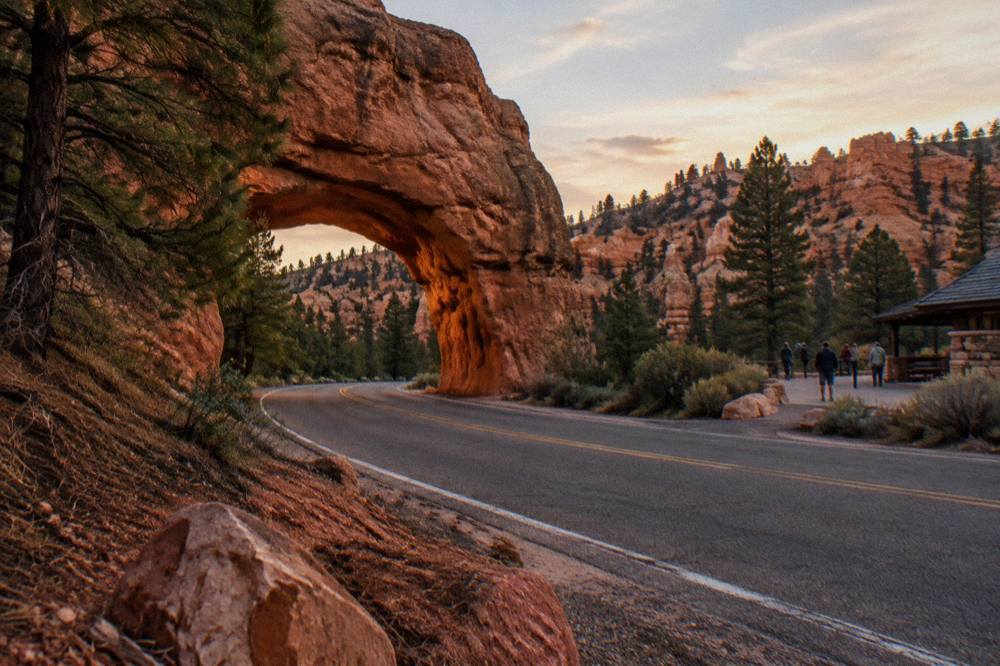
Those 78 miles are not uniform. Leaving Zion through the east entrance means passing through the Zion-Mount Carmel Tunnel, a historic bore with traffic management for oversized vehicles, then descending through slickrock switchbacks toward US-89. From there the route climbs north through the towns of Mount Carmel Junction and Orderville before turning east on Scenic Byway 12 toward Bryce Canyon City. Byway 12 itself is designated as an All-American Road, and the segment between US-89 and Bryce crosses Red Canyon, where crimson sandstone arches sit directly beside the highway.
Practical notes from the park service and Utah Department of Transportation worth folding into your plan:
| Leg | Approximate distance | What to expect |
|---|---|---|
| Springdale to Zion east entrance | Varies; shuttle or canyon drive required | Tunnel traffic control possible for large vehicles |
| Zion east entrance to US-89 junction | Under 20 miles | Slickrock switchbacks, limited services |
| US-89 north to Scenic Byway 12 | About 30 miles | Small towns, the last major fuel and food stops |
| Byway 12 to Bryce Canyon City | About 15 miles | Red Canyon formations beside the road |
Fuel matters more than the distance suggests. Services thin out between Mount Carmel Junction and Panguitch, and the park itself accepts only credit or debit cards at its fee stations, no cash. In winter, the park's main road can temporarily close at mile marker 3 after storms so plows can clear the southern scenic drive; the park service notes the Amphitheater viewpoints in the first three miles are prioritized for plowing. Current road status is posted on the park conditions page, and Utah road conditions are on the UDOT traffic site.
What Does The Drive From Zion To Bryce Canyon Actually Look Like?
The drive is a highlight in its own right, not a commute. The route leaves Zion's pine-covered canyon, threads the historic tunnel, crosses open sage plateau on US-89, then climbs through Red Canyon's red rock arches on the way to Bryce's forested rim at 8,000 feet. Elevation gain is substantial, which changes the vegetation, the temperature, and even the light by the time you arrive. Most people who call the drive boring have only done the US-89 segment in the dark.
The transition is the interesting part. Zion Canyon floor sits several thousand feet lower than Bryce's rim, so over 78 miles you move from riparian cottonwoods to pinyon-juniper scrub to ponderosa forest. Temperatures reflect it: the park service's monthly tables show Bryce's January average high at 37 F and its July average high at 80 F, noticeably cooler than Zion's desert floor in summer. Summer visitors often find the drive delivers genuine relief from the heat, while spring and fall travelers should pack layers for both ends of the same day.
Red Canyon, just west of Bryce on Byway 12, is the surprise for most first-timers. It is managed by the US Forest Service rather than the national park, it costs nothing to drive through, and its arches and hoodoos are a preview of Bryce's geology at eye level. There are pullouts, a visitor center, and short trails if you want to stretch your legs before the park entrance. It is a natural midpoint stop on any self-drive itinerary, and one that organized tours from Las Vegas typically pass on the way in.
This is also where an audio driving tour earns its price. The self-driving bundle tour covers both Zion and Bryce with GPS-triggered narration, pointing out geology and history as you pass it, from $24.99 per group for up to four people in one car. The listing includes lifetime access, offline maps, and route planning tools, and notes that entrance fees, parking and food are separate. For a party of four splitting the cost, it works out cheaper than a single sandwich each, and the 4.2 rating across 76 reviews suggests most buyers are satisfied with the trade.
If you would rather let someone else handle the road entirely, the math changes but the logic holds. The two combined small group tours from Las Vegas both run 12 to 14 hours door to door, which sounds punishing until you consider that a self-drive day covering both parks from Vegas means 300 miles of driving yourself. The MARVIT TOURS version lists hotel pickup and drop-off, national park admission fees, water and parking fees for from $263.99 per person, with lunch and gratuities excluded. Free cancellation is listed on both operators' booking pages.
Should you take a tour instead of driving yourself? That depends on where you started the day. From Zion lodging, self-driving is clearly better; you are already close. From Las Vegas, a combined tour is often the only realistic way to see both parks in one day, and it removes the parking scramble at Bryce's Amphitheater lots, which fill on peak summer mornings. Our guide to that decision, Bryce Canyon tour versus self-drive, breaks the comparison down in detail.
How Much Time Do You Need At Bryce Canyon After The Drive?
Plan on at least three hours at Bryce to make the drive worthwhile, which covers the Amphitheater viewpoints, Sunrise Point, Sunset Point, Inspiration Point and a short walk below the rim. A half day is better if you want the Queen's Garden and Navajo Loop combination the park itself recommends for first-timers. Anything under two hours, and the drive will cost more than the visit delivers.
The good news is that Bryce rewards short visits better than almost any major park. The main amphitheater viewpoints sit in the first three miles of an 18-mile road, all reachable by car or the free shuttle in quick succession, and the classic first-timer hike, descending Queen's Garden from Sunrise Point and ascending the Navajo Loop to Sunset Point, is short enough for most visitors with a full morning. One closure caveat: the Wall Street section of the Navajo Loop has been closed until further notice since the park service's September 29 alert following heavy rains, and it closes for winter by default regardless, so verify current trail status before promising yourself that section. Other pages covering the same trip are gathered on Bryce Canyon National Park Tours.
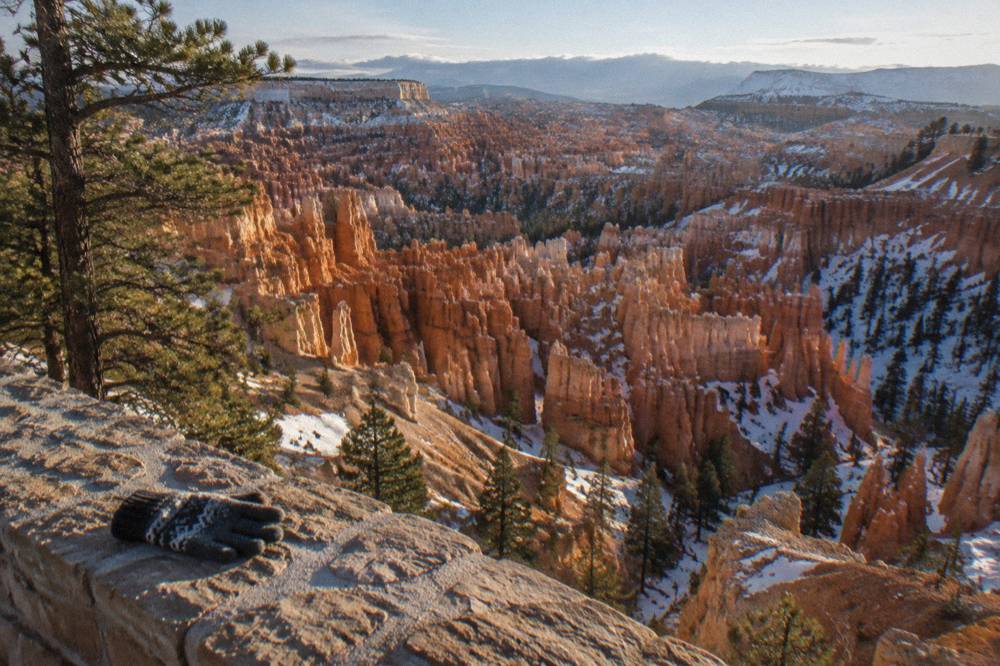
Two timing details shape the whole visit. First, sunrise and sunset hit the hoodoos differently: the park service names Sunrise Point and Bryce Point for dawn, and Inspiration Point or Paria View for evening, with the advice to arrive about 90 minutes before sunset. Second, the park is open 24 hours year-round with no timed entry or reservation system, so early arrival is about parking and light, not permits. The free shuttle runs from April through mid-October, roughly every 15 minutes, boarding in Bryce Canyon City or at the visitor center.
Elevation is the factor Zion visitors underestimate. Trails at Bryce start with a descent, which means every return is uphill, and the park's day hiking guidance suggests drinking about a quart of water every one to two hours at altitude. Visitors arriving straight from a hard Zion hike day should plan the viewpoint-heavy, low-exertion version of Bryce rather than a big loop. A guided option built around exactly that pacing is the 3-hour Scenic Tour of Bryce Canyon from Bryce Canyon Scenic Tours, from $84.81 per person, 4.9 across 1,215 reviews, water and snacks included, park admission separate.
For travelers with more appetite, a full day small group tour and hike with Good Trip Adventures runs 6 to 8 hours from $427 per person with a naturalist guide and park entry fees included; its review pool is small at 5 reviews, so treat the rating with caution rather than as a verdict. And the private guided hike and picnic from Cedar & Sage Boutique Trekking, from $699 per group for up to four people, 5.0 across 33 reviews, includes lunch and trekking poles on routes like the Queens Garden Loop past Sunrise and Sunset Points and Thor's Hammer. These matter less for the drive question than the pacing question: match the amount of Bryce to the energy the drive leaves you.
Can You See Zion And Bryce Canyon In One Day?
Yes, but only comfortably with a tour or an early start. The 78-mile link makes a one-day, two-park itinerary feasible in a way Zion plus Grand Canyon is not. The trade is depth: a single day gives you Zion Canyon's highlights and Bryce's rim viewpoints, with little time below the rim at either park. Most travelers who try it report the day works if they accept it as a survey, not a deep visit.
From Las Vegas, the one-day format is well established. Small group coaches leave with hotel pickup in the morning, reach Zion first, drive the tunnel and Byway 12 corridor to Bryce after midday, spend the afternoon at the Amphitheater, and return at night. Two roster options do exactly this. The Zion and Bryce Canyon small group tour from MARVIT TOURS runs 12 to 14 hours from $263.99 per person with admission fees, hotel pickup and drop-off, water and parking included, lunch and gratuities excluded. Adventure Photo Tours runs a 14-hour version from $321.99 per person, 4.8 across 233 reviews, that adds breakfast, a boxed lunch, all entrance fees, and stops at Bryce Point itself.
What To Know Before Combining Zion And Bryce Canyon
Five things decide whether the pairing goes smoothly: the season, the shuttle calendar, the tunnel and road rules, the nonresident fee if it applies to you, and how you split your energy between a hiking park and a rim park. None of these is a reason to skip the drive. All of them are reasons to plan the drive instead of improvising it.
Season first. May through September is the busiest window at both parks, with July and August bringing frequent afternoon thunderstorms to Bryce's high country; the park service warns that summer lightning cancels ranger programs within a 10-mile radius. October snowstorms are not unusual at Bryce, and the park service notes below-freezing nights are typical from October through May. The free Bryce shuttle operates April through mid-October, so off-season visitors drive the amphitheater loop themselves. Our month-by-month breakdown in Bryce Canyon weather by month covers what each season does to both parks' roads.
Fees and passes deserve one clear paragraph because they trip up international visitors. Bryce charges $35 per private vehicle or $20 per person on foot or bike, credit and debit only. Non-US residents age 16 and over owe the additional $100 nonresident fee unless covered by a pass, and per the park service nonresident fee page this applies even to people traveling inside commercial tour groups, so check whether your chosen tour includes park admission before comparing prices. Several combined tours, including both Las Vegas day trips above, include US-resident admission but list a separate nonresident entrance charge. The $250 nonresident annual pass covers the holder plus up to three nonresident adults in a tour group, per the same page.
Activity rules matter at Bryce specifically. Off-highway vehicles of every kind are banned on park roads and trails, so the popular ATV and RZR rides around Bryce Canyon City, from $145 per group of two through Rubys Inn Adventures, run in Dixie National Forest and on private land with rim views, never inside the park. Helicopter flights from Bryce Canyon Airport, from $175 per person for the 15-minute circuit, fly over the formations but may not land inside the boundary. Both make good add-ons if the drive leaves you with an unplanned afternoon in Bryce Canyon City.
| Option | Format | Price (as listed) | Rating and reviews | Park fee |
|---|---|---|---|---|
| Zion and Bryce small group tour, MARVIT | 12 to 14 hour day tour from Las Vegas | from $263.99 per person | 4.6 across 155 reviews | Included |
| Small group Bryce and Zion day tour, Adventure Photo Tours | 14 hour day tour from Las Vegas | from $321.99 per person | 4.8 across 233 reviews | Included |
| Self-driving bundle audio tour, Travel with Action | Self-drive, both parks, own car | from $24.99 per group, up to 4 | 4.2 across 76 reviews | Separate |
| Scenic Tour of Bryce Canyon, Bryce Canyon Scenic Tours | 3 hour park tour from Bryce Canyon City | from $84.81 per person | 4.9 across 1,215 reviews | Separate |
The last decision is honestly about temperament. Some travelers love the single long day: one pickup, one itinerary, both parks ticked, home by late evening. Others find that a 13 or 14 hour day tour flattens both parks into windshield impressions and would rather sleep near one park, drive the 78 miles at their own pace, and linger. The drive is worth it either way. Zion and Bryce in one trip is not redundancy, it is contrast, and the road between them is one of the few in the Southwest where the connective tissue is as scenic as the destinations. For anyone building a longer Utah loop, the park service's own distances, Capitol Reef at 112 miles and the Grand Canyon's North Rim at 150 miles from Bryce, show how naturally this pairing extends.
Common Questions About Bryce Canyon From Zion
Is Bryce Canyon Worth The Drive From Zion?
For nearly everyone, yes. Bryce sits 78 miles from the Zion east entrance, the road between them passes the Zion tunnel and Red Canyon, and Bryce's hoodoo amphitheater has no equivalent inside Zion. The only visitors who regret it are those who arrive with too little time or too little energy left, so plan at least three hours at the rim.
How Far Is Bryce Canyon From Zion?
Bryce Canyon National Park is 78 miles from the Zion east entrance per the park service distance chart. Bryce is about 270 miles from Las Vegas and about 270 miles from Salt Lake City, which makes Zion the natural pairing anchor for most road trips.
Can You Visit Zion And Bryce Canyon In One Day?
Yes. The 78-mile link makes a two-park day feasible, especially from Las Vegas, where 12 to 14 hour combined small group tours run from $263.99 per person with hotel pickup and park admission included. Self-drivers can do it from Zion lodging with an early start, though they should expect rim viewpoints rather than long hikes.
What Is There To See On The Drive Between Zion And Bryce Canyon?
The route crosses the Zion-Mount Carmel Tunnel, the slickrock switchbacks of Zion's east side, the open plateau of US-89, and Red Canyon on Scenic Byway 12, where red rock arches sit beside the highway. Red Canyon is free to drive through and makes a natural leg-stretch stop before the park entrance.
Do You Need A Reservation To Enter Bryce Canyon?
No. The park is open 24 hours a day year-round with no timed entry or advance reservation required. Entrance runs $35 per private vehicle or $20 per person entering on foot or by bike, credit and debit only, and non-US residents age 16 and over pay an additional $100 nonresident fee unless covered by a qualifying pass.
Is The Road From Zion To Bryce Canyon Open In Winter?
Usually. Snowstorms in October are not unusual and below-freezing nights are typical from October through May. After winter storms, Bryce's main road can temporarily close at mile marker 3 so plows can clear the southern drive, though the Amphitheater viewpoints in the first three miles stay accessible. Check the park's current conditions page before driving.