Bryce Canyon Weather Month By Month
Bryce Canyon sits high enough that its weather behaves more like a mountain range than a desert. Here are the park service numbers month by month, plus what they mean for trails, roads, shuttle dates, and which tours run in each season.
Short answer
Bryce Canyon averages elevations of about 8,000 ft, so summers stay mild with July and August highs around 80 F, while December through February rarely rise above 40 F. July and August bring afternoon thunderstorms; snow falls from October into May, averaging about 100 inches a year. The shuttle runs April through mid-October.
Bryce Canyon behaves like a high mountain plateau wearing a desert's clothes. The park service puts the average elevation at about 8,000 ft with terrain reaching over 9,000 ft, and at that height the air holds roughly 75 percent of the oxygen it holds at sea level. It also holds less heat. Nights drop below freezing nearly every night from October through May, snowstorms in October are not unusual, and the coldest months barely climb out of the thirties even at midday.
That combination surprises visitors who lump Bryce Canyon in with the red rock country of Zion or Arches, both of which sit thousands of feet lower. This guide lays out the official month by month numbers from the National Park Service weather page, then connects them to the things people actually plan around: when the shuttle runs, when lightning cancels ranger programs, when the Wall Street section of the Navajo Loop is closed, and which tours operate in each window. For timing a whole trip around these numbers, the companion piece on the best season for Bryce Canyon tours goes deeper on crowds and programs.
What Is The Weather Like At Bryce Canyon Month By Month
The park service's monthly averages run from a January high of 37 F with a low of 15 F to a July high of 80 F with a low of 53 F. December and January are the coldest and snowiest months. May through September is the warm stretch, with June, July and August highs in the 70s and 80s. Every month of the year, nights are dramatically colder than the afternoon.
Those numbers come straight from the National Park Service weather table for Bryce Canyon, and they describe conditions at the headquarters area near the rim, not deep in a sheltered valley. The park has no valley floor to speak of: the famous Amphitheater is a bowl carved into the plateau edge, and the viewpoints sit at the top. There is no lower, warmer layer to descend into when a cold front passes.
| Month | Average high (F) | Average low (F) | What the month typically feels like |
|---|---|---|---|
| January | 37 | 15 | Deep winter, snow on the rim, short days |
| February | 38 | 17 | Cold and snowy, coldest stretch of the year |
| March | 45 | 23 | Spring storms can still dump heavy snow |
| April | 54 | 29 | Thawing days, freezing nights, mud possible |
| May | 64 | 37 | Pleasant afternoons, chilly mornings |
| June | 75 | 45 | Warm, dry, the start of the busy season |
| July | 80 | 53 | Warm days, afternoon thunderstorm season |
| August | 77 | 50 | Thunderstorms continue, rainy season peak |
| September | 70 | 42 | Cooling fast, crowds thinning |
| October | 58 | 32 | First snowfalls possible, below-freezing nights |
| November | 45 | 23 | Quiet, cold, services winding down |
| December | 36 | 15 | Full winter, snow, deepest quiet |
Two things to read out of that table. First, the spread between afternoon and night is enormous in every single month: 20 to 30 degrees on average, which means a July hiker in shorts at 2 p.m. may want a fleece by 8 p.m. Second, the warm season is narrower than the calendar suggests. May can still throw a cold snap, and September afternoons that start at 70 F often end in the low 40s.

The park is open 24 hours a day, all year, with no timed entry and no advance reservation needed to get in, so these numbers are about comfort and access rather than permission. The main road can close temporarily at mile marker 3 after winter storms until plows clear the southern drive, but the Amphitheater viewpoints in the first three miles are prioritized for plowing and stay reachable.
When Is Thunderstorm Season At Bryce Canyon
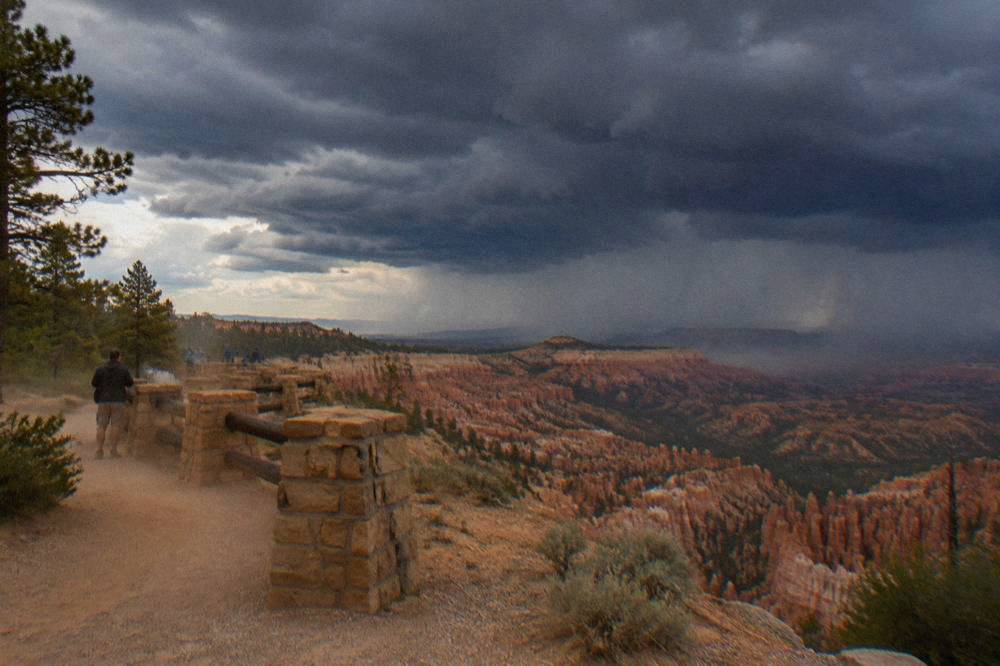
July and August are the rainy season at Bryce Canyon, with frequent afternoon thunderstorms and lightning. The park service warns that lightning is a genuine hazard on the rim, and ranger programs are cancelled when lightning is within 10 miles. Mornings are usually the clear, stable part of the day during those two months.
The monsoon pattern is the single most useful weather fact for a summer visit. Storms build over the plateau through the morning and early afternoon, then break in the mid to late afternoon, and the hours before dawn through late morning are the reliable window. Hikers planning the Queen's Garden and Navajo Loop combination, the route the park service recommends most for first-timers, do better starting early not just for parking but for sky.
Lightning on exposed rim viewpoints is a real risk, and the park treats it that way. The ranger program page states plainly that programs are cancelled when lightning strikes within 10 miles in summer, and the same logic applies to anyone standing at Bryce Point or Inspiration Point with thunder audible. When a storm approaches, the standard advice is to leave the high, exposed edges rather than watch from them.
The practical workaround is structural: put rim walking and viewpoints in the morning, and give the storm hours to something with a roof or a flexible window. The Scenic Tour of Bryce Canyon, a 3-hour small group minivan tour from Bryce Canyon City rated 4.9 across 1,215 reviews, is one option people use exactly this way, since the vehicle becomes shelter between stops. The same logic applies to the stargazing sessions near Bryce Canyon City, which depend on clear evening skies the monsoon usually returns after sunset. You can compare the formats and prices on the guide to choosing a Bryce Canyon tour.
For sky-dependent activities, phase-of-moon timing matters almost as much as storm timing. The park service says the best stargazing comes during the week of or just before the new moon, and about 100 astronomy programs run each year.
If a storm does catch you mid-visit, the Visitor Center makes a reasonable wait-it-out stop, open daily with hours that vary by season. Afternoon thunderstorms in July and August usually pass within a couple of hours, and the light after a monsoon storm, with wet red rock and clearing skies, is often the best of the day.
How Much Snow Does Bryce Canyon Get Each Winter
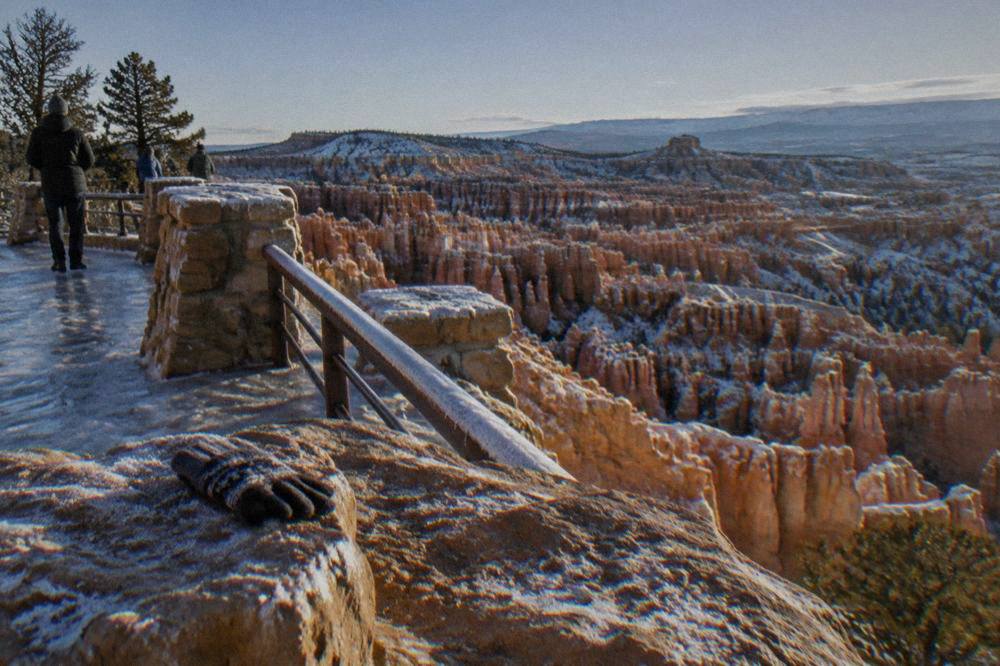
Bryce Canyon averages about 100 inches of snow a year at the headquarters area. Historical monthly averages run 17 inches in January, 18 in February, 17 in March, 8 in April, 10 in November and 14 in December. October and May snow is possible, and nights fall below freezing from October through May.
Those snowfall figures come from the National Park Service historical averages, and they describe the rim. Snow depth near the Visitor Center runs about half of what accumulates at Agua Canyon, nearly 1,000 ft higher on the southern drive, so conditions vary along the same 18-mile road. The park service winter page details how the season reshapes access.
| Month | Average snowfall at headquarters area | Typical winter effect |
|---|---|---|
| October | Possible early storms | Snowstorms in October are not unusual |
| November | 10 inches | Sunset Campground closes for winter |
| December | 14 inches | Full winter operations begin |
| January | 17 inches | Coldest, snowiest stretch |
| February | 18 inches | Peak snow depth on the plateau |
| March | 17 inches | Spring storms can bring heavy snow |
| April | 8 inches | Thaw begins, mud on lower trails |
| May | Light, rare | Below-freezing nights continue |
Winter changes more than the footing. The Fairyland Point road and the Paria View road close to vehicles for the entire winter season, staying open on foot, ski or snowshoe. The Wall Street section of the Navajo Loop and the Rim Trail between Inspiration and Bryce Points close for the winter by default, and as of the park service alert of September 29, 2026, Wall Street is closed until further notice following recent rains regardless of season. Nobody should plan a route through it right now.
The trade for all that white is a park that looks unlike anything else in Utah. Snow against orange hoodoos is the reason winter photography visits exist, and the park supports it with ranger-led snowshoe hikes when snow depth and staffing permit, free snowshoes and poles included for participants ages 8 and up. Cross-country skiing is allowed on designated routes above the rim, including sections of the Rim Trail, the Bristlecone Loop and the unplowed Fairyland and Paria roads.
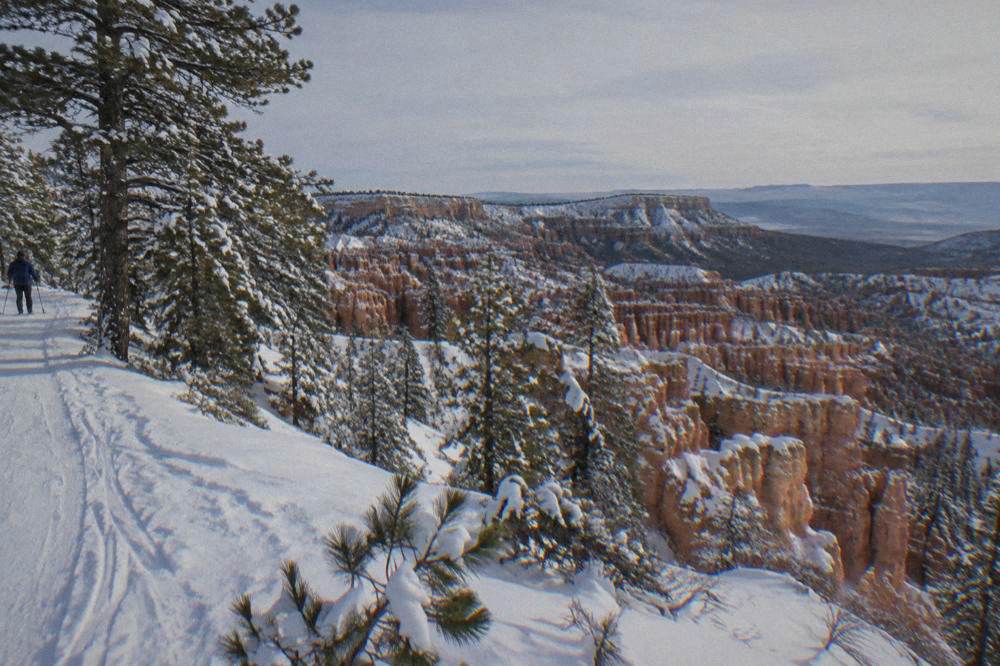
The shuttle, which riders board free with park admission at the Shuttle Station in Bryce Canyon City or the Visitor Center, runs April through mid-October only, so a snowy-month visit means driving yourself or joining a tour vehicle. Guides operating in winter watch the road-closure pattern closely: after storms the main road temporarily closes at mile marker 3 so plows can work the southern drive, typically for a day or more, while the Amphitheater stays open. More winter-specific planning lives in the Bryce Canyon winter tours guide.
How Does Bryce Canyon Elevation Change The Weather
Bryce Canyon averages about 8,000 ft in elevation and reaches over 9,000 ft at its high points, with the hiking page listing 9,115 ft as the ceiling. At 8,000 ft the effective oxygen is about 75 percent of sea level. The elevation keeps temperatures down roughly 20 degrees compared with nearby desert parks and makes sunburn and dehydration bigger factors than heat.
The Visitor Center sits at 7,894 ft, and most Amphitheater viewpoints cluster near that mark, so nearly everything a visitor does at Bryce Canyon happens at altitude. Two consequences follow. First, the sun is stronger: thinner air filters less UV, and snow on the ground doubles the exposure by reflection. Second, the air is dry, and the park service advises drinking about a quart, roughly a liter, of water every one to two hours while hiking. The full index of guides sits on Bryce Canyon National Park Tours.
The elevation also reshapes the hiking experience in a way the temperature tables hide. Trails at Bryce Canyon start with a descent into the Amphitheater, which means every hike ends with a sustained climb back up to the rim at mountain altitude. A February day with a 38 F high can feel comfortable on the walk down and punishing on the climb out.
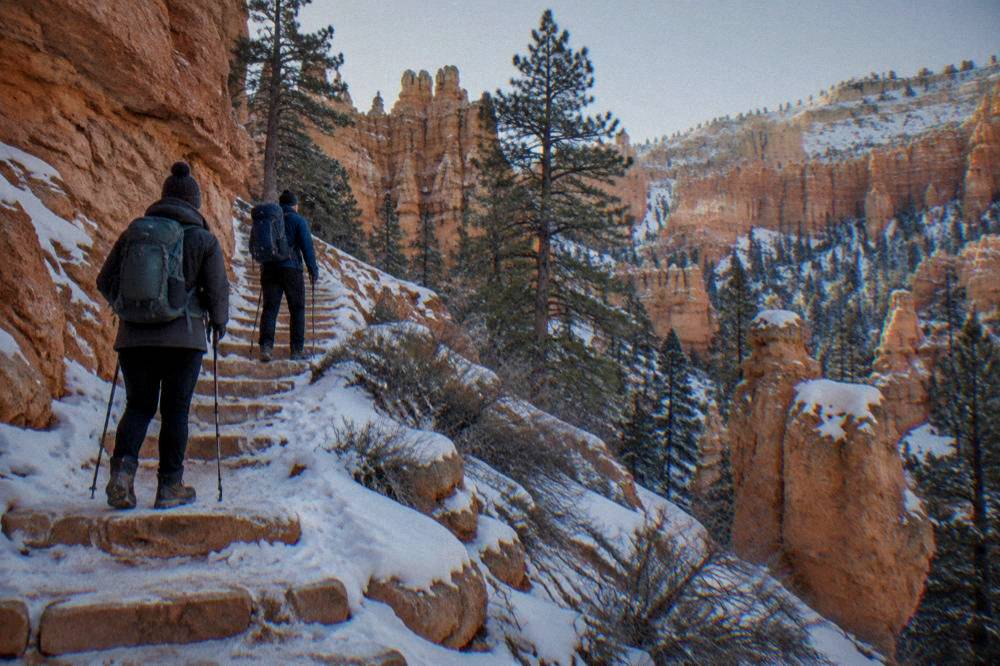
Guided products absorb much of this planning burden. The full day small group tour and hike with Good Trip Adventures, from $427 per person, pairs a medically trained naturalist guide with park entry fees included, and its 6 to 8 hour format is built around pacing at altitude. The same operator runs a private full-day version from $972.95 per person with lunch included. Neither is a weather guarantee, nothing is, but a guide who reads the sky and the trail is worth considering in the months when afternoon conditions turn quickly.
Altitude is also why Bryce Canyon runs colder than Zion in every month, a difference big enough that visitors pairing the two parks, about 78 miles apart by road from Zion's east entrance, regularly misjudge their packing. Layering is the standing advice: a morning that starts at 45 F in September can still end at 42 F after dark, and in July a 53 F evening follows an 80 F afternoon.
What Is The Best Month To Visit Bryce Canyon For Good Weather
June and September are the sweet spots by the numbers. June averages a 75 F high with a 45 F low, sits just ahead of thunderstorm season, and has the shuttle running full hours. September averages 70 F and 42 F with thinning crowds and the monsoon fading. July and August trade slightly warmer days for afternoon storms.
May through September is when most visits happen, according to the park service, and within that window the choice comes down to what you want from the sky. June offers the driest reliable warmth. July and August offer the warmest nights and the astronomy program season, but with monsoon afternoons. September offers quiet and golden light with rapidly cooling nights. October offers the first snow possibility and no shuttle after mid-month.
| Month window | Weather case for it | Trade-offs to plan around | Tours that fit it well |
|---|---|---|---|
| May | 64 F highs, thin crowds early in month | Freezing nights, occasional spring storms | Las Vegas day trips, 3-hour park tours |
| June | Dry, 75 F, full shuttle schedule | Busiest two weeks around summer start | Stargazing sessions, full-day hikes |
| July to August | Warmest nights, 100 astronomy programs a year | Afternoon thunderstorms and lightning | Morning park tours, evening stargazing |
| September | 70 F days, thinning crowds | Nights near 40 F, first storm risk late | Horseback rides in Red Canyon, hikes |
| October | Crisp air, possible snow scenes | Shuttle ends mid-month, cold nights | Stargazing, scenic drives, audio tours |
| November to April | Snow on the hoodoos, solitude | Road closures at mile 3, Wall Street closed | Winter road-accessible tours, snowshoe programs |
The horseback riding tour through Red Canyon and Losee Canyon in Dixie National Forest, a 3-hour ride from Bryce Canyon City rated 4.7 across 252 reviews at from $130 per person, runs in the warmer half of this table, and it makes a good September choice: the ride is outside the national park boundary entirely, so it dodges the in-park snow closures while still riding through red rock. The guided ATV and RZR rides from the same area, from $145 per group up to 2, follow a similar season; no off-highway vehicles are allowed inside the park at any time of year.
One more calendar fact belongs in this discussion. The annual Astronomy Festival, a four-day event around the new moon in June, ran June 11 to 13 in 2026, and 2027 dates had not been published when this was researched. Anyone planning around it should check the park's astronomy pages rather than assume the same weekend. The Bryce Canyon stargazing guide covers the telescope programs and full moon hikes in detail.
How Does The Weather Affect Bryce Canyon Tours And Programs
Weather decides whether several Bryce Canyon experiences run at all. Lightning within 10 miles cancels ranger programs in summer; snowstorms and windchill of 10 F or below cancel them in winter. Winter closes the shuttle, two rim roads and the Wall Street trail section. Tours shift with all of it, which is why free cancellation matters when booking ahead.
Every open-air tour at Bryce Canyon is fully exposed to the sky. The stargazing sessions near Bryce Canyon City, from $59.04 per person for the 1.5-hour session with hotel pickup rated 4.5 across 69 reviews, depend on clear evening skies, and the same operator runs a late-night version at from $106.28 per person for darker, later viewing. Neither session is inside the national park; both use a private dark-sky site near Bryce Canyon City, in a region where the park itself holds Gold Tier International Dark Sky status, designated in 2019.
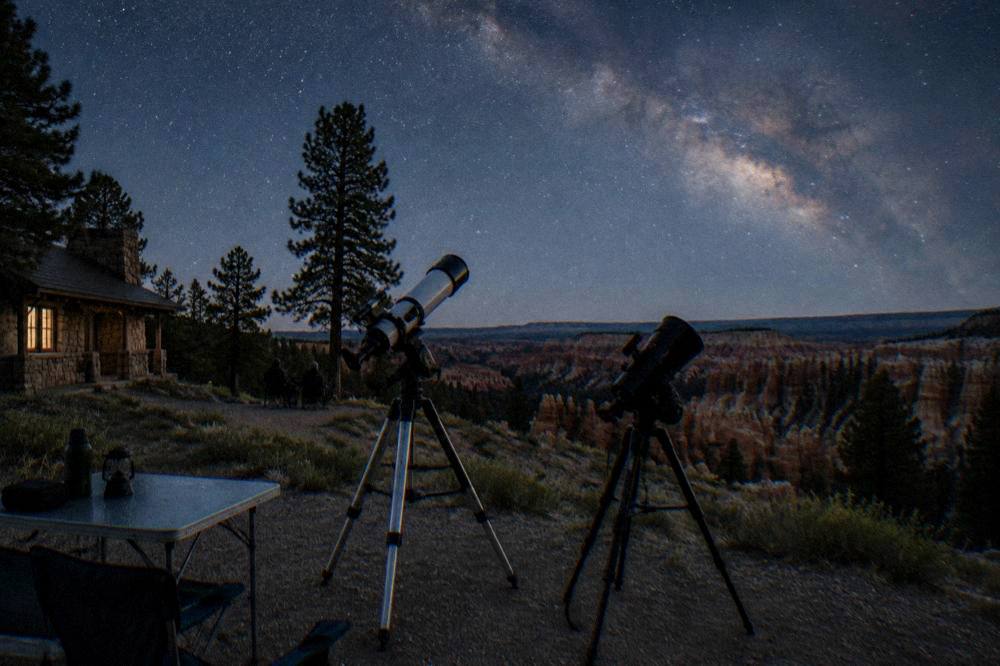
Helicopter flights over the park from Bryce Canyon Airport, from $175 per person for 15 minutes, are explicitly subject to weather and weight conditions, and no helicopter may land inside park boundaries. The Las Vegas day trips, including the small group Bryce and Zion tours from $219 to $321.99 per person, run year-round schedules but adjust stops when winter closes road segments. Even the self-guided audio driving tours, from $16.99 per group for the Bryce version, are effectively weather products: the car is the shelter, and the park's current conditions page is the thing to check before setting out.
Booking strategy follows directly from all of this. Every tour listed here includes free cancellation, so in any volatile month the sensible pattern is to reserve ahead, watch the forecast from about five days out, and rebook if the sky turns. Autumn visitors should note that the shuttle season ends in mid-October, per the park shuttle schedule, after which the Amphitheater parking lots carry the full load.
The fee angle matters for weather planning too, because several tour listings include park entry for US residents while nonresidents owe the extra $100 per person fee, and the $250 nonresident annual pass covers the holder plus up to three nonresident adults in a commercial tour group. The entrance fees and passes guide breaks down which tours bundle what.
The honest summary of Bryce Canyon weather is that it is a mountain forecast wearing a park brochure. The same elevation that keeps July at 80 F instead of 100 F also delivers a hundred inches of snow and lightning-cancelling afternoons. Pack layers in every month, put your rim time in the morning from July through August, and treat winter closures as part of the scenery rather than a failure of planning. The sky here is not an obstacle to work around; it is half of what the place is.
Common Questions About Bryce Canyon Weather
What Is The Weather Like At Bryce Canyon Month By Month?
Average highs run from 36 F in December and 37 F in January to 80 F in July, with average lows from 15 F in midwinter to 53 F in July. Nights fall below freezing nearly every night from October through May. July and August bring afternoon thunderstorms; snow falls from October into spring.
What Is The Hottest Month At Bryce Canyon?
July, with an average high of 80 F and an average low of 53 F. August is close behind at 77 F and 50 F. Both months sit inside the rainy season, so afternoon thunderstorms are frequent and mornings are the dependable window for viewpoints and hiking.
What Is The Coldest Month At Bryce Canyon?
December and January are the coldest. December averages a high of 36 F and a low of 15 F; January averages 37 F and 15 F. February is nearly as cold and is typically the snowiest month at 18 inches on average.
When Is Thunderstorm Season At Bryce Canyon?
July and August. The park service describes frequent afternoon thunderstorms and lightning during these months, and ranger programs are cancelled when lightning is within 10 miles. Storms usually build in the afternoon, making mornings the safer time for exposed rim walking.
How Much Snow Does Bryce Canyon Get?
About 100 inches a year on average at the headquarters area. Historical monthly averages include 17 inches in January, 18 in February, 17 in March, 8 in April, 10 in November and 14 in December. Snow depth near the Visitor Center runs about half of what falls at higher southern points like Agua Canyon.
Does Snow Close The Roads At Bryce Canyon?
Temporarily, yes. After winter storms the main park road can close at mile marker 3 so plows can clear the southern drive, typically for a day or more, while the Amphitheater viewpoints in the first three miles stay accessible. The Fairyland Point and Paria View roads close to vehicles for the entire winter season.