What Should I Not Miss In Bryce Canyon?
The viewpoints, hikes and dark-sky nights first-time visitors should not miss in Bryce Canyon, with current trail closures, park fees and the guided tours that cover the highlights.
Bryce Canyon is not one canyon but a series of amphitheaters carved into the Paunsaugunt Plateau, and the park keeps almost all of its marquee scenery inside the first three miles of the main road. Sunrise Point, Sunset Point, Inspiration Point and Bryce Point sit within sight of one another, each framing a different wall of hoodoos. Below the rim, a handful of short trails thread between the formations themselves, and above the rim the southern drive climbs past Natural Bridge to Rainbow Point at the top of the park. Add a night sky the park service protects with roughly 100 astronomy programs a year, and the not-miss list almost writes itself, with one important closure to plan around this season.
The four Amphitheater viewpoints, Sunrise and Sunset Points first; the Queen's Garden and Navajo Loop trails below the rim; the southern scenic drive to Rainbow Point; and, if your schedule allows, one night under the park's Gold Tier dark sky. First-timers should prioritize the Bryce Amphitheater: the park service itself calls the Queen's and Navajo combination the most recommended hike for first visitors.
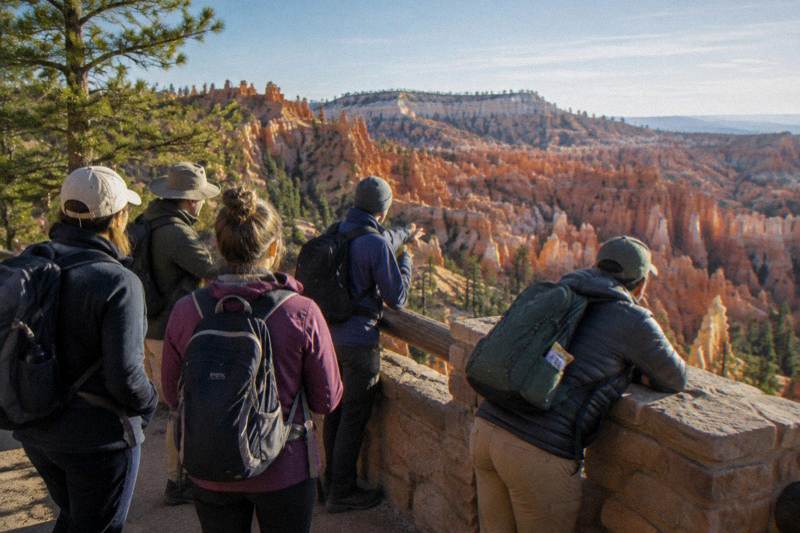
The reason the Amphitheater comes first is simple geography. Bryce Canyon's elevations average about 8,000 feet and reach over 9,000 feet at the southern end, yet nearly everything a visitor has seen in photographs, Thor's Hammer, the Silent City, the cathedral spires, stands inside that first three-mile stretch. You can walk between Sunrise and Sunset Points on a paved half-mile of Rim Trail in fifteen minutes and see three of the four great overlooks on foot. A guided option compresses this further: the guided sightseeing tour of the park from $109 per person, rated 4.9 across 945 reviews, starts in Fairyland Canyon and visits Natural Bridge, Inspiration Point and the Cathedral in three hours with the park entrance fee included. The 3-hour small group scenic tour from $84.81 per person, 4.9 across 1,215 reviews, covers the same core ground for less, with water and snacks provided.
Below the rim the experience changes completely. Descending even 300 feet puts you among the hoodoos rather than above them, and every trail back up is uphill, a fact the altitude makes honest work of. If your time is short and your knees are willing, one loop trail plus the viewpoints beats three overlooks and no trail at all. That single choice is the one most day visitors get wrong, and a Bryce Canyon one day itinerary built around it is the most common fix.
Which Bryce Canyon Viewpoints Deserve Your First Stop?
Sunrise Point and Sunset Point, in that order, then Inspiration Point, then Bryce Point. Sunrise Point anchors the wheelchair-accessible half mile of Rim Trail and the start of Queen's Garden; Sunset Point fronts the Silent City and the Navajo Loop trailheads; Inspiration Point sits highest and delivers the widest single frame of the Amphitheater; Bryce Point looks down on the Peekaboo Loop.
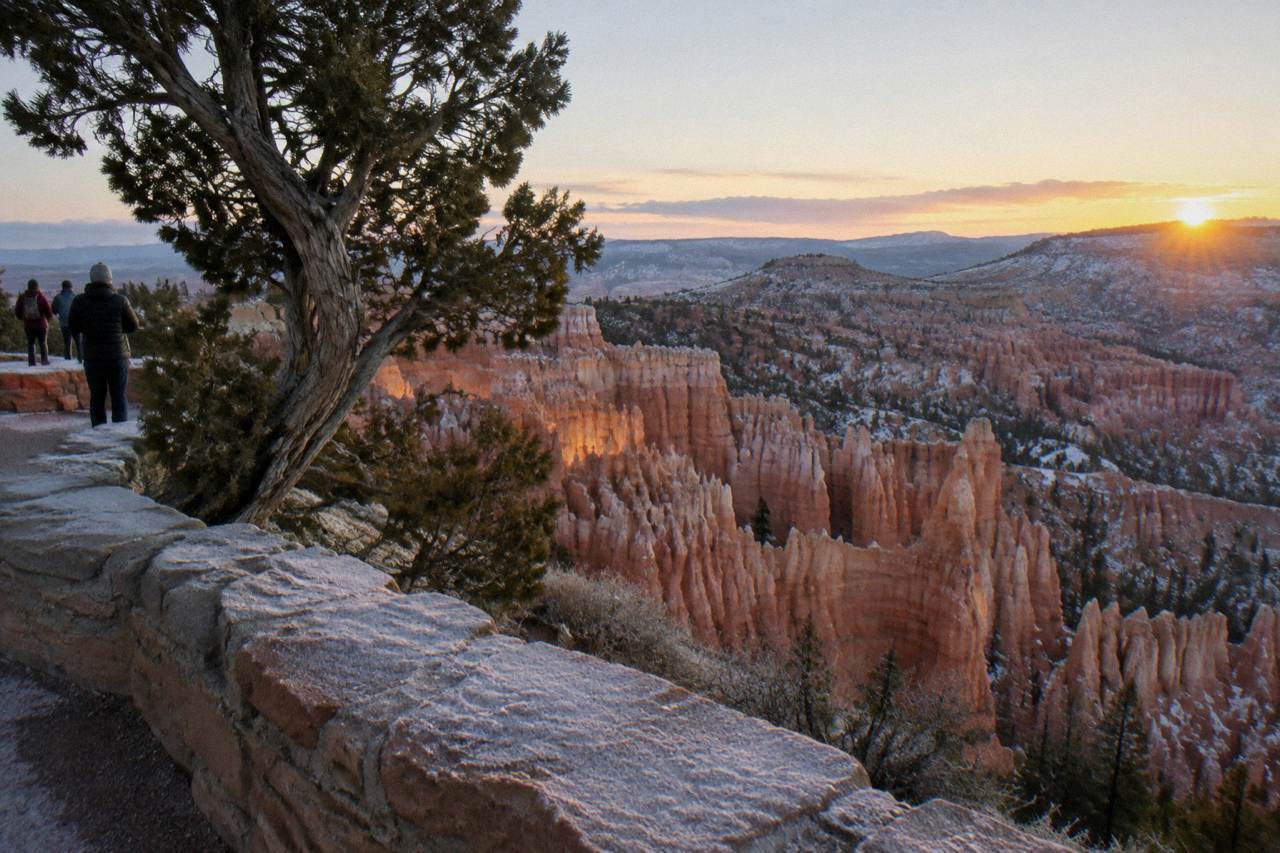
Sunrise Point earns its name literally: the park service lists it, with Bryce Point, as one of the two sunrise spots. What the photographs do not prepare you for is the walking. Sunrise and Sunset Points are close enough that most visitors stroll the paved Rim Trail between them, the only section of Rim Trail rated wheelchair accessible, a half mile total. Pets are allowed here too, leashed at six feet or less, the only paved surface in the park where that is true, which matters if your not-miss list includes a dog.
Inspiration Point is a short drive or a longer rim walk further south, and its three tiers each raise the perspective. From the uppermost terrace the Amphitheater reads as a single landscape rather than a series of spires, which is why so many guided tours, including the Fairyland-start sightseeing tour mentioned above, list it as a named stop. Bryce Point, last of the four, is both an overlook and a trailhead: the Peekaboo Loop descends from here, and the park's horseback concessioner, Canyon Trail Rides, brings its 2-hour and 3-hour guided rides down a dedicated horse trail to the same loop, typically April through October 31. Watching a string of riders cross below the rim is a genuine not-miss moment for many visitors, and the separate Red Canyon horseback ride near Bryce Canyon City covers similar scenery outside the park boundary.
How The Four Main Overlooks Compare
| Viewpoint | What it shows | Trail connections | Practical notes |
|---|---|---|---|
| Sunrise Point | Eastern Amphitheater, hoodoo rows at first light | Queen's Garden trail starts here; Rim Trail to Sunset Point | Paved, wheelchair accessible to Sunset Point; pets allowed leashed |
| Sunset Point | The Silent City and Thor's Hammer | Navajo Loop trailheads | Central parking, fills early in peak season |
| Inspiration Point | Widest full frame of the Amphitheater from three tiers | Rim Trail (unpaved beyond here) | Highest of the four terraced overlooks |
| Bryce Point | Downward view of the Peekaboo Loop | Peekaboo Loop and Under-the-Rim trailhead | Also a listed sunrise spot per the park service |
A practical word on timing: the park service suggests arriving at Inspiration Point or Paria View about 1.5 hours before sunset, while sunrise chasers should be at Sunrise or Bryce Point before dawn. The park is open 24 hours a day year-round with no timed entry or advance reservation, so the constraint is parking, not gates. For a broader look at how the whole road fits together, the Bryce Canyon scenic drive guide maps the full 18 miles.
Which Hikes Are Worth The Descent In Bryce Canyon?
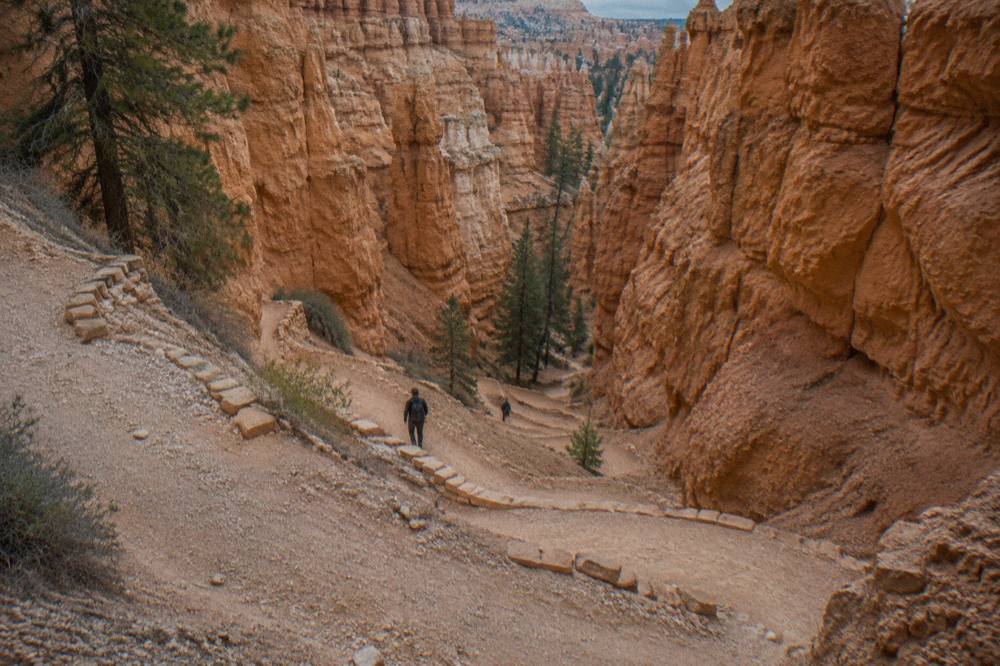
The Queen's Garden and Navajo Loop combination, descending via Queen's Garden from Sunrise Point and ascending Navajo Loop to Sunset Point, is the park's most recommended first hike. Second priority is the Peekaboo Loop for a longer immersion among the hoodoos. One caution shapes everything: the Wall Street section of the Navajo Loop is closed until further notice, per the park service alert.
The combination loop is the hike rangers steer first-timers toward, and the structure explains why. You descend through Queen's Garden, the gentlest entry into the Amphitheater, walk among the formations at the bottom, then climb back out via the Navajo Loop to Sunset Point and return along the Rim Trail. The descent-first design is a real consideration at this altitude: trails start by going down, so every return is uphill, and the park service recommends drinking about one quart or liter of water every one to two hours of hiking. At 8,000 feet the effective oxygen is roughly 75 percent of sea level, a number that surprises visitors from low elevations on the climb out.
The closure matters for planning. The Wall Street section of Navajo Loop has been closed until further notice following recent rains, per the National Park Service current conditions page, and it also closes for the winter season by default in any year. Hikers can still complete the loop using the Two Bridges side of the Navajo, so the combination remains doable; the switchback slot between the towering walls of Wall Street is simply off the table until the park reopens it. Check the alerts page close to your visit, because rain and snow move this status quickly. Beyond the Amphitheater, the Under-the-Rim backcountry trail has deteriorated sections and the park advises hikers to proceed at their own risk with strong wayfinding skills, so it belongs on few first-visit lists.
If you want a guide below the rim rather than a signposted walk, the private guided hike with picnic, from $699 per group for up to four people, covers Queens Garden Loop, Sunrise Point, Sunset Point and Thor's Hammer over four to six hours with lunch, snacks, trekking poles and water included. It carries a 5.0 rating from 33 reviews. The full-day small group tour and hike from $427 per person goes deeper, six to eight hours with a medically trained naturalist guide and park entry fees included, though its review pool of 5 is too small to characterize.
Hikes Ranked For A First Visit
| Trail | Experience | Status and notes |
|---|---|---|
| Queen's Garden plus Navajo Loop combo | Park's most recommended first hike; hoodoos up close | Wall Street section of Navajo closed until further notice; use Two Bridges side |
| Peekaboo Loop | Longer loop under Bryce and Sunset Points; shared with horses | Reached from Bryce Point or via Navajo; horses use a dedicated trail here |
| Rim Trail, Sunrise to Sunset | Paved half mile, amphitheater views without descent | Only wheelchair-accessible trail section; pets allowed leashed |
| Bristlecone Loop at Rainbow Point | One-mile forest walk to the park's highest viewpoint | Hard surface but grades exceed accessibility standards |
| Under-the-Rim Trail | Multi-day backcountry route | Deteriorated sections; proceed at own risk with strong wayfinding |
What Should You Not Miss On The Southern Scenic Drive?
Natural Bridge and Rainbow Point, in that order, with Agua Canyon as the quiet stop between them. The southern drive covers miles 4 to 18 of the main road, climbs toward the park's high point at 9,115 feet, and delivers scenery the Amphitheater cannot: a natural arch, fir forests at the rim, and views south toward the Grand Staircase.
Natural Bridge is the drive's single most photographed stop after the Amphitheater itself, a limestone arch rather than the sandstone arches most visitors expect, and it is a short walk from the pullout. Rainbow Point, at the end of the road, is the park's highest viewpoint at 9,115 feet, and the one-mile Bristlecone Loop from its parking area passes trees among the oldest living things in the Southwest. The contrast is the point: after hours of bare hoodoos, the southern drive is forested, cooler and far quieter, and snow levels near the southern stops run higher than at the Visitor Center, which the park notes can hold snow longer into spring. The rest of the planning pages sit on Bryce Canyon National Park Tours.
The logistics favor an early start on this drive rather than the Amphitheater, because most visitors do the reverse and the southern overlooks thin out after mid-morning tour buses turn around. Oversize vehicles 23 feet and longer face parking restrictions only in the Amphitheater area during shuttle season, so the southern drive is the easier half for larger rentals and RVs. If you would rather not drive it yourself, the guided sightseeing tour covers Natural Bridge as a named stop, and the self-guided driving audio tour, from $16.99 per group for up to four with lifetime access, narrates the same road, Bryce Point and the Amphitheater with GPS-triggered stories in your own car. It carries a 4.3 rating across 89 reviews, and one purchase covers everyone in the vehicle.
What Can You Not Miss In Bryce Canyon Without Hiking?
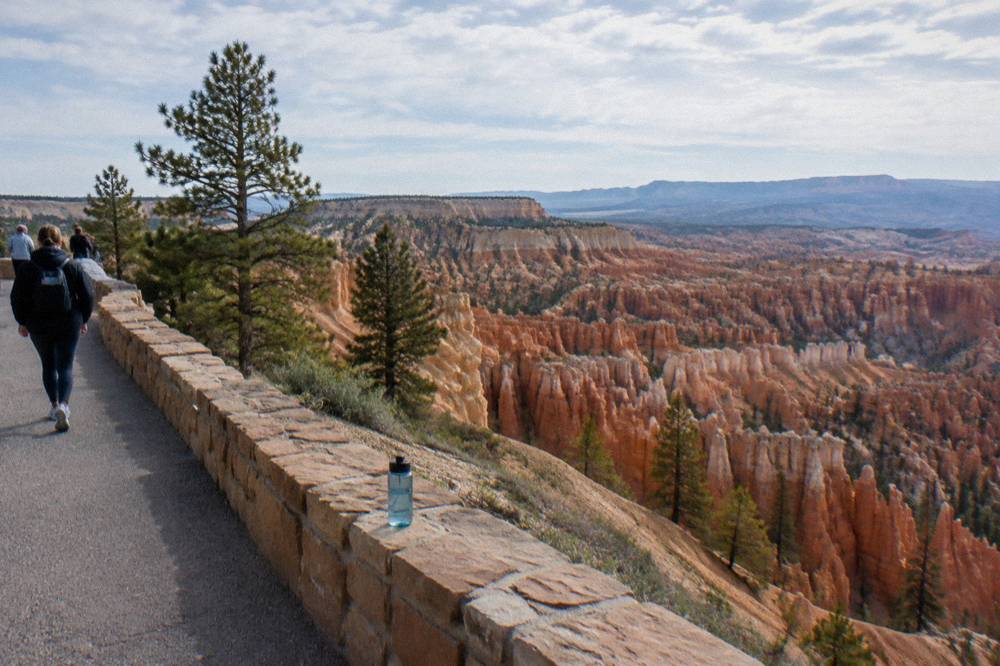
The Amphitheater overlooks, the southern scenic drive, a ranger program, and the night sky: all four are fully accessible without setting foot on a dirt trail. The paved Rim Trail between Sunrise and Sunset Points, the shuttle, and the roadside overlooks deliver the core Bryce Canyon experience to visitors who cannot or prefer not to descend below the rim.
This matters more here than at most parks because Bryce's signature views are rim-level. Zion's best scenery demands a canyon floor walk; Bryce's hangs below your feet from the moment you step out of the car. The free park shuttle, running roughly every 15 minutes between the Bryce Canyon City shuttle station and the Visitor Center with buses from 8 a.m. into the evening during the season, connects the main overlooks without any parking stress. In 2026 it operated from April 3 through mid-October; there is no winter service, and the road itself can temporarily close at mile marker 3 after winter storms until plows clear the southern drive, typically a day or more.
For non-hikers who still want structure, the two 3-hour guided park tours are the strongest fit: the small group scenic tour from $84.81 per person and the park-fee-included sightseeing tour from $109 per person both work entirely from overlooks and minivan transport. Nearby but outside the park boundary, the stargazing sessions at Bryce Canyon City run an hour and a half from $59 per person with telescopes and hot drinks, no walking required beyond a short stroll at a private dark-sky site. The helicopter flights from Bryce Canyon Airport, from $175 per person for 15 minutes, put the Amphitheater below you with no trail time at all, though helicopters may not land inside the park. Visitors weighing the tradeoffs will find the guide to Bryce Canyon tours for seniors covers the same ground in more depth.
Is The Night Sky A Not-Miss In Bryce Canyon?
Yes, and arguably the park's most underrated one. Bryce Canyon is a Gold Tier International Dark Sky Park, a designation it earned in 2019, and the park service runs roughly 100 astronomy programs a year, with the best viewing in the week around the new moon. The summer Astronomy Festival, four days of telescope viewing and constellation tours around the June new moon, is free with park admission.
The darkness is not accidental. The park sits at high elevation with dry air and distant city light, and the park service actively protects it, canceling programs only for lightning within ten miles in summer or extreme wind chill in winter. Night Sky Telescope Programs generally run Thursdays through Saturdays in June and July starting around 9:45 p.m. at Sunset Point, weather-dependent, and Full Moon Hikes run one to two miles for two to three hours on nights near the full moon, with limited tickets, no flashlights allowed, and lug-soled footwear required. Ticketed locations are announced only to holders, and winter versions can become snowshoe hikes when snowpack passes 16 inches. Details live on the park's astronomy programs page.
For visitors who want a guided night without ticket lotteries, the area's commercial stargazing sessions run year-round at a private dark-sky site near Bryce Canyon City: the 1.5-hour session from $59 per person, rated 4.4 across 63 reviews, includes high-powered telescopes, laser pointers, chairs, blankets and hot beverages, with an optional shuttle from Ruby's Inn for ten dollars extra. A hotel-pickup version from $59.04 per person carries 4.5 across 69 reviews, and a late-night session from $106.28 per person runs the same dark sky at a quieter hour. Whether you go with a ranger or a guide, the practical rule from the park service is the same: plan around the new moon for the darkest sky, and give your eyes twenty minutes to adjust.
How Many Days Do You Need For The Not-Miss List?
One long day covers the Amphitheater viewpoints, one loop hike and the southern drive; two days add a sunrise, a ranger program or a night sky session, and the chance to visit without rushing. Most of the must-see list sits within three miles of the entrance, so the returns on a third day are smaller unless you are pairing Bryce with Zion.
The one-day version works because of that geography. A morning sunrise at Sunrise Point, the Queen's Garden and Navajo combination before the midday heat, lunch, the southern drive to Rainbow Point, and sunset at Inspiration Point is a complete, honest visit. What it misses is redundancy, the second morning when weather turns, and the night. Since the park needs no timed entry and the Visitor Center posts each day's ranger program schedule, a second day mostly buys flexibility and the evening programs. Visitors debating the question seriously should read how many days are needed in Bryce Canyon, which works through the tradeoffs in detail.
Pairing changes the math. Zion's east entrance is 78 miles from Bryce, and the combined visit is common enough that Las Vegas day trips exist specifically for it: a 13-hour small group tour from Las Vegas covering both parks with lunch runs from $219 per person, rated 4.7 across 1,224 reviews, and a 14-hour version with breakfast, boxed lunch and all entrance fees from $321.99 per person carries 4.8 across 233 reviews. Those are long days, but they are the standard answer for travelers who cannot overnight in southern Utah. Multi-day options from Las Vegas, from $590 per person for a three-day four-park loop to $1,995 per person for a seven-day five-park itinerary, spread the same ground across realistic pacing.
Entrance costs are modest relative to the touring decisions: $35 per private vehicle, $20 per person entering on foot or by bike, with non-US residents age 16 and over paying an additional $100 nonresident fee unless covered by an Annual or America the Beautiful pass. Some listings include the park fee and some exclude it, so check which before comparing prices. The full fee picture, including the $250 nonresident annual pass that covers the holder plus up to three nonresident adults in a commercial tour group, is laid out in the Bryce Canyon entrance fees and passes guide.
One more not-miss candidate belongs to the closing hour of any visit. Paria View, which the park service names alongside Inspiration Point for sunset, faces west over a quieter arm of the Amphitheater and typically has a fraction of the crowd of the marquee overlooks. Arrive about 1.5 hours before sunset, stay past the color peak, and you get the transition into the dark sky the park is famous for, the same horizon the stargazing sessions set their telescopes against an hour later. Few itineraries list it. Regulars keep it.
Common Questions About Bryce Canyon
What Should I Not Miss In Bryce Canyon?
The four Amphitheater viewpoints (Sunrise, Sunset, Inspiration and Bryce Points), the Queen's Garden and Navajo Loop combination hike, the southern scenic drive to Natural Bridge and Rainbow Point, and a night sky program. If you have only half a day, do the viewpoints and one short hike below the rim.
Is Wall Street In Bryce Canyon Open?
No. The Wall Street section of the Navajo Loop is closed until further notice following recent rains, and it closes for the winter season by default. The rest of the Navajo Loop, via the Two Bridges side, remains usable, so the classic combination hike is still possible.
Can You See Bryce Canyon Without Hiking?
Yes. The signature views are rim-level overlooks reachable by car or the free shuttle, and the paved half mile of Rim Trail between Sunrise and Sunset Points is wheelchair accessible. Guided sightseeing tours from $84.81 and $109 per person also cover the highlights entirely from overlooks.
Which Is Better, Sunrise Or Sunset At Bryce Canyon?
The park service lists Sunrise Point and Bryce Point for sunrise, and Inspiration Point or Paria View for sunset, suggesting arrival about 1.5 hours before sunset. Both are rewarding; sunrise typically comes with fewer crowds and colder air, since temperatures drop below freezing most nights from October through May.
How Far Is The Southern Scenic Drive From The Amphitheater?
The southern drive covers miles 4 to 18 of the 18-mile main road, starting just past Bryce Point. Natural Bridge and Rainbow Point, the two signature stops, sit toward the far end, with Rainbow Point at 9,115 feet, the park's highest viewpoint.
Do I Need A Reservation To Enter Bryce Canyon?
No. The park is open 24 hours a day year-round with no timed entry or advance reservation. The constraint is parking at the Amphitheater overlooks in peak season, which is why the free shuttle, running about every 15 minutes in season, is recommended.