Best Time Of Year For Bryce Canyon Tours, Month By Month
Bryce Canyon sits between 8,000 and 9,115 feet, so the calendar matters more here than at almost any other park in Utah. This guide walks through all twelve months: what runs, what closes, when the thunderstorms hit, and what a December visit actually looks like.
Short answer
May through September offers the widest tour selection, shuttle service and the warmest weather, though July and August bring afternoon thunderstorms. December is the quietest month: snow averages about 14 inches, the shuttle has stopped, and the 3-hour scenic tour runs from $84.81 per person while the park stays open 24 hours with no timed entry.
Bryce Canyon is open 24 hours a day, every day of the year, with no timed entry and no advance reservation needed to get through the gate. What changes through the calendar is everything else: the shuttle, the horseback season, the road plowing, the thunderstorms, and how many tour operators are running at all. The park service says elevations average about 8,000 feet and reach 9,115 feet at the top of the main road, which makes it one of the highest, and coldest, of the major Utah parks. That altitude drives every seasonal decision in this guide.
The park's own numbers make the spread plain. July and August average daytime highs near 80 degrees Fahrenheit, but nearly every night from October through May drops below freezing, and December through February is the coldest and snowiest stretch of the year. Snow is not an occasional visitor here: the headquarters area averages roughly 100 inches across a year, with historical averages of 17 inches in January, 18 in February and 17 in March. A visit timed for the wrong month can mean a closed trail, a cancelled ranger program, or a scenic drive blocked at mile marker 3.
We compared the tour listings on this site against the park service's seasonal data to build a month-by-month picture. The short version: the 3-hour small group scenic tour, from $84.81 per person with 4.9 across 1,215 reviews, runs on a much longer calendar than almost anything else at Bryce, and it is the backbone of a winter visit. The Las Vegas day trips, the Red Canyon horseback ride and the stargazing sessions each have their own windows, and several of them stop entirely in deep winter.
Which Months Have The Best Tour Conditions At Bryce Canyon?
The strongest overall window is late May through mid September, when the shuttle, the horseback season and the full tour roster overlap. May through September are also the park's most popular months, so the trade is choice against crowds. December through February is the quietest period: deep snow, no shuttle, and a much smaller tour menu.
Between those poles sit two genuinely pleasant shoulders. June is drier than July and August, with an average high of 75 degrees, and it carries the park's Astronomy Festival, which ran June 11 to 13 in 2026. October brings average highs near 58 degrees, fall color on the plateau, and the tail end of the horseback season, which the park concessioner Canyon Trail Rides typically runs through October 31.
The one summer caveat is thunderstorms. The park's weather page states that July and August bring frequent afternoon thunderstorms and lightning, and that lightning within 10 miles cancels ranger programs. If you are booking a stargazing session or a guided hike in that window, an afternoon arrival and a morning backup plan are sensible. Every listing on this site that names cancellation terms offers free cancellation, which matters more in storm season than at any other time of year.
For readers comparing seasons against self-driving, the Bryce Canyon tour versus self-drive question mostly resolves to winter: guided tours earn their keep in December, January and February because operators know which roads are plowed and which viewpoints hold snow.
What Does Each Month Look Like At Bryce Canyon?
Month by month, the pattern is a cold shoulder in spring, a warm crowded core in summer, a golden fall, and a snowy, quiet winter. January averages 17 inches of snow and a 37 degree high, while July averages an 80 degree high with afternoon storm risk. April and October are the two best compromise months.
The table below draws on the park service's monthly temperature and snowfall table plus the seasonal facts in this site's research files. Snow figures are historical averages at the headquarters area; the higher southern end of the park, near Agua Canyon, holds roughly twice the snow the Visitor Center area does.
| Month | Avg high / low (F) | Avg snowfall | Tour picture |
|---|---|---|---|
| January | 37 / 15 | 17 in | Snowshoe season, full moon hikes, scenic tours running, smallest crowds |
| February | 38 / 17 | 18 in | Coldest, snowiest stretch; fee-free day mid month for US residents |
| March | 45 / 23 | 17 in | Heavy spring storms possible, roads can close at mile marker 3 |
| April | 54 / 29 | 8 in | Shuttle returns April 3, horseback season typically opens |
| May | 64 / 37 | rare | Full tour roster active, stargazing in prime form near new moon |
| June | 75 / 45 | rare | Astronomy Festival month, warm dry days, longest daylight |
| July | 80 / 53 | rare | Hot days, frequent afternoon thunderstorms and lightning |
| August | 77 / 50 | rare | Storm season continues, biggest crowds of the year |
| September | 70 / 42 | rare | Crowds ease, shuttle runs to 8 pm through Sept 20 |
| October | 58 / 32 | light | Fall color, horseback to Oct 31, shuttle ends mid month |
| November | 45 / 23 | 10 in | Lodge typically closes, Sunset Campground closes, quiet arrives |
| December | 36 / 15 | 14 in | Deepest quiet, snow on the hoodoos, fee-free day Nov 11 has passed |
Two dates reshape the calendar more than any others. The free park shuttle runs April 3 through mid October in 2026, ending its season on October 18 by the shuttle page's schedule, which means every month outside that band you are driving yourself or riding with a tour. And Canyon Trail Rides, the in-park concessioner, typically operates its 2-hour and 3-hour guided rides April through October 31, weather permitting, so the horse season and the shuttle season almost exactly overlap.
For depth on temperature and storm timing, the companion Bryce Canyon weather by month guide unpacks the same NPS table in more detail.
Three listings anchor the trio of products that make sense across the widest set of months: the 3-hour scenic tour, the 3-hour Red Canyon horseback ride, and a guided stargazing session.
Is December A Good Time For Bryce Canyon Tours?
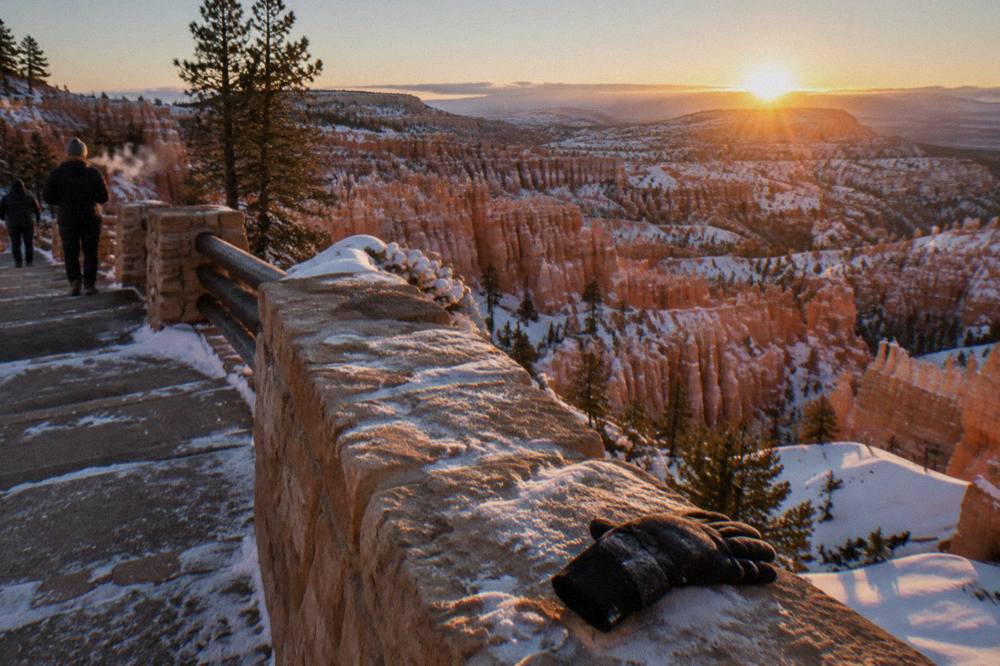
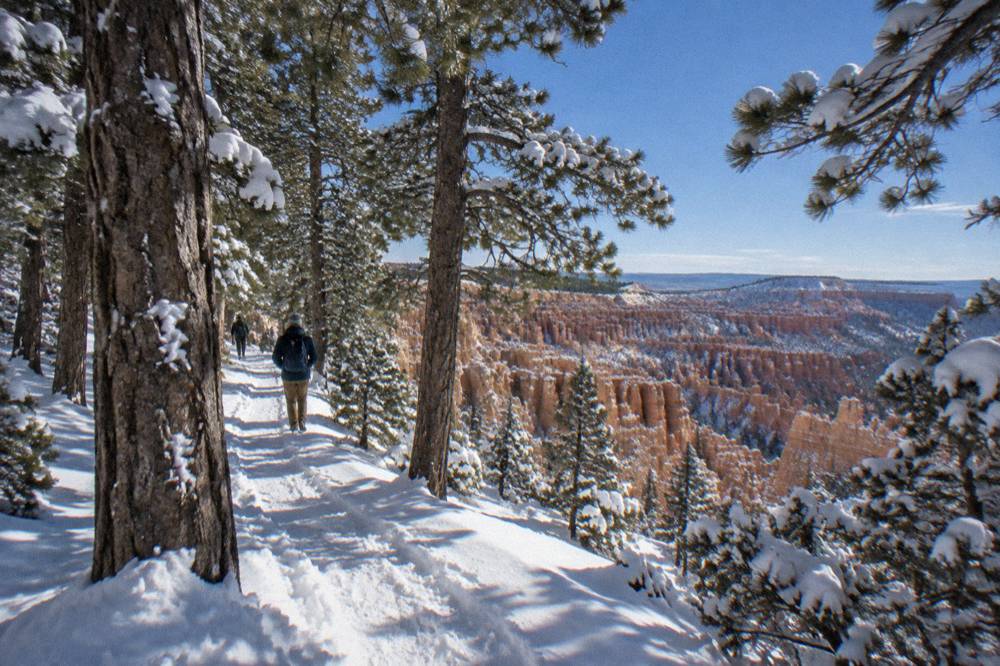
December is the park's quietest tour month, and that is exactly its appeal. Expect about 14 inches of average snowfall, average highs of 36 and lows of 15 degrees, no shuttle, and snow-packed trails. The scenic tour still runs, stargazing conditions are excellent near the new moon, and the amphitheater viewpoints stay plowed as a priority.
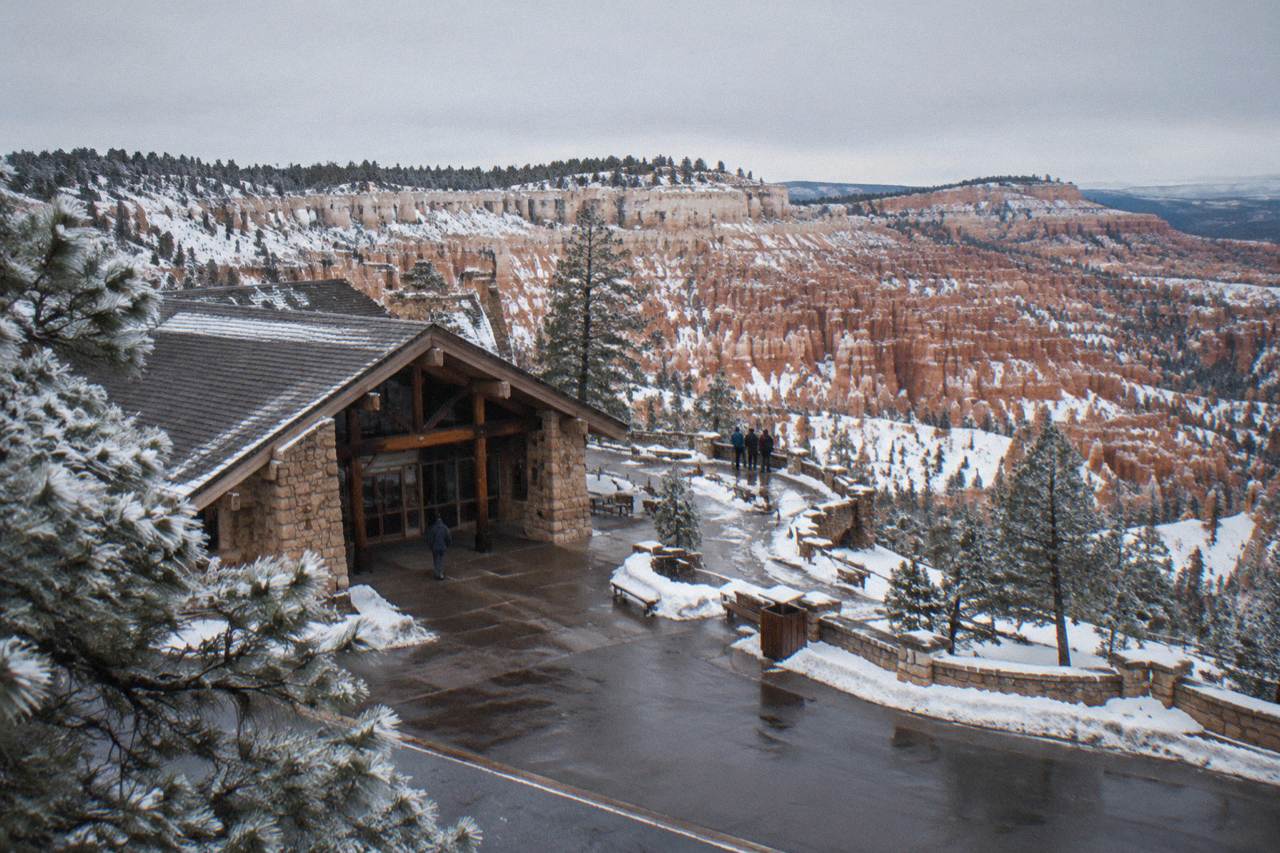
The park service plows the first three miles of the main road, where the Bryce Amphitheater viewpoints sit, before anything else, and the road can close temporarily at mile marker 3 after storms until the southern drive is cleared. In practice that means Sunrise, Sunset, Inspiration and Bryce Points usually stay reachable in December even when Rainbow Point does not. The Wall Street section of the Navajo Loop is closed until further notice following the park service alert of September 29, 2026, and it is closed for the winter season by default anyway, so December hikers should plan on Queen's Garden and connected trails rather than a full Navajo Loop.
What actually runs in December is a shorter menu, but a real one. The 3-hour small group scenic tour from Bryce Canyon Scenic Tours operates from its meeting point at 450 N Arpt Rd in Bryce Canyon City, from $84.81 per person, carrying bottled water and snacks, with free cancellation listed. The guided sightseeing version from the same operator, from $109 per person with 4.9 across 945 reviews, includes the park entrance fee in its price and starts its route in Fairyland Canyon. Winter visitors should confirm the day's departure on the operator's live listing, since deep storm days can shift schedules.
| Product | December status | Price basis |
|---|---|---|
| 3-hour small group scenic tour | Runs from Bryce Canyon City, confirm day of travel | $84.81 per person |
| Guided sightseeing tour, park fee included | Runs, starts in Fairyland Canyon | $109 per person |
| Private 3-hour park tour | Runs, small review pool at 5.0 from 35 reviews | $159.95 per person |
| Stargazing sessions at Bryce Canyon City | Run at the private dark-sky site, dress for 15 degree nights | from $59 per person |
| Red Canyon horseback ride | Listed season April 1 to October 18, closed winter | $130 per person |
| Las Vegas day trips | Listed as operating year-round listings, expect winter weather variability | from $219 per person |
The stargazing case for December is strong. Bryce Canyon is a Gold Tier International Dark Sky Park, designated in 2019, and the park service runs roughly 100 astronomy programs a year, with the best sky viewing in the week of or just before a new moon. The guided stargazing sessions on this site run at a private dark-sky site at Bryce Canyon City rather than inside the park: the standard session, from $59.04 per person with 4.5 across 69 reviews, includes hotel pickup and hot drinks, while the listing twin from $59 includes telescopes, chairs, blankets and restrooms but no pickup. At a December night temperature near 15 degrees, the blankets are not a gimmick.
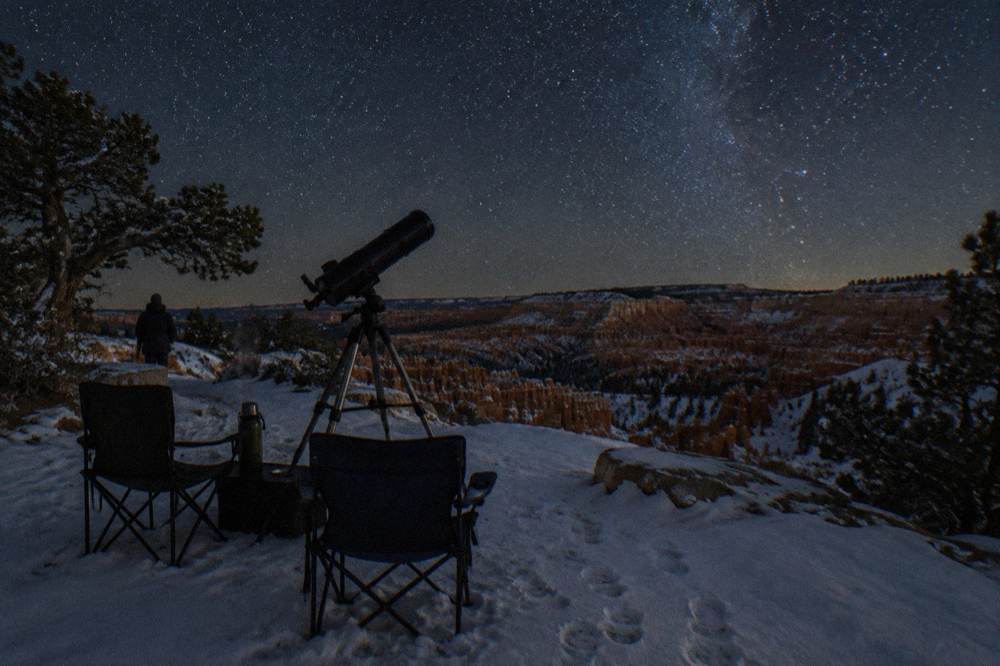
For a fuller picture of the cold-season menu, the Bryce Canyon winter tours guide covers snowshoe programs, the full moon hikes and what closes when the snow arrives.
How Bad Is Summer Thunderstorm Season For Bryce Canyon Tours?
July and August bring frequent afternoon thunderstorms and lightning, per the park's weather page, and lightning within 10 miles cancels ranger programs. Morning tours dodge most of it. Stargazing sessions are the most exposed to evening cloud cover, and the park service never promises sky clarity, so a free-cancellation booking matters.
The storm rhythm is consistent enough to plan around. Days typically start clear, build clouds through mid afternoon, and clear again after dark, which is why ranger-led astronomy programs in June and July begin around 9:45 pm at Sunset Point. A morning scenic tour or a morning horseback ride fits the reliable part of the day; a midday start on a high-altitude trail does not.
The rule that matters most on the rim: lightning. The park service cancels outdoor ranger programs when lightning is within 10 miles, and any sensible self-guided plan follows the same standard. Tour operators on this site run their own weather calls, and every listing that states cancellation terms states free cancellation, so a storm-claimed afternoon is an inconvenience rather than a sunk cost.
For hikers who want the deepest storm-season immersion, the full day small group tour and hike from Good Trip Adventures, from $427 per person for 6 to 8 hours with a medically trained naturalist guide and park entry fees included, is the most weather-exposed product on the roster. Only 5 reviews so far, too few for the rating to mean much, so judge it on its format rather than its stars.
The stargazing sessions deserve the same weather caveat, stated plainly: no operator can promise a clear sky. The late-night stargazing session, from $106.28 per person with hotel pickup, has only 9 reviews at 4.9, again too small a pool for a star claim, but the format itself, a later start under darker conditions at the same Bryce Canyon City dark-sky site, is the point.
When Do The Horseback Rides And Other Seasonal Tours Run?
The in-park horseback concessioner, Canyon Trail Rides, typically runs 2-hour and 3-hour guided rides April through October 31, weather permitting. The Red Canyon ride runs on a seasonal window from April 1 through October 18. The park shuttle runs April through mid October. Almost every seasonal product packs into the same six-month band.
That overlap is worth understanding before you book anything for April or late October. The shuttle season and the horse season and the ATV season all start and end within about two weeks of each other, which means early April and late October are transition zones where individual dates matter. The park service notes that spring storms in March and April can still bring heavy snow, so an April 5 visit and a May 5 visit can feel like different parks.
The horseback choice on this roster is the 3-hour Red Canyon ride from Rubys Inn Adventures, from $130 per person with 4.7 across 252 reviews, which runs through Red Canyon and Losee Canyon in Dixie National Forest, not inside the national park boundary. It includes the trail horse, saddlebags, a guide, riding instruction and a water bottle. The in-park alternative, Canyon Trail Rides into the Amphitheater along the Peekaboo Loop, is booked directly with the concessioner, and within 7 days of a ride by phone at 435-834-5500.
| Seasonal product | Typical season | Booking basis on this site |
|---|---|---|
| Canyon Trail Rides in-park rides | April through Oct 31 | Direct with concessioner |
| Red Canyon 3-hour horseback ride | April 1 through Oct 18 | $130 per person, free cancellation listed |
| ATV and RZR rides from Bryce Canyon City | April 1 through Oct 18, weather permitting | $145 per group up to 2 |
| Park shuttle | April 3 through mid October | Free with park admission |
| Astronomy Festival | 4 days each summer, around the June new moon | Free with park admission |
| Full Moon Hikes | On or near full moon nights, year round | Limited tickets via Recreation.gov |
One boundary rule clears up a common confusion: ATVs, UTVs and all off-highway vehicles are prohibited on every park road and area under the Superintendent's Compendium, per the park service's compendium page. The ATV tours run outside the park in Dixie National Forest and on private land with views of the rim. The Bryce Canyon ATV tours guide covers that world in full.
How Do Crowds Change Through The Year At Bryce Canyon?
May through September are the park's most popular months, per the park service. August is the peak of the peak. December through February is the emptiest stretch, and April plus late September to mid October are the smart shoulders: near-full services with a fraction of the summer congestion.
The practical levers are arrival time and season length. The park service suggests arriving early in busy months, and oversize vehicles, 23 feet and longer, are restricted from Amphitheater-area parking during the shuttle season, which pushes big rigs toward the southern drive or the shuttle. In the quiet months the whole calculus relaxes: parking at Sunrise Point in December is a different experience from August.
Guided tours act as crowd insurance in the busy season. The Las Vegas day trips, which cover roughly 270 miles each way from the Las Vegas airports, handle the driving, the timing and the park entry logistics in one move: the boutique day trip with lunch from National Park Express runs 13 hours from $219 per person with 4.7 across 1,224 reviews, and the version with WiFi onboard runs from $234 per person with 4.7 across 2,711 reviews. In August, letting someone else manage the early departure is half the value.
| Crowd period | What it feels like | Best tour fit |
|---|---|---|
| May to September | Park's stated most popular months | Day trips and guided hikes that fix timing for you |
| July and August | Peak crowds plus afternoon storms | Morning departures, storm-aware bookings |
| Late September | Crowds ease, shuttle still to 8 pm through Sept 20 | Horseback rides and full day hikes |
| October | Fall color, shoulder congestion on weekends | Scenic tour plus stargazing combo |
| December to February | Quietest months, snow on the trails | Scenic tour, stargazing, snowshoe programs |
The park's hours page posts the current Visitor Center schedule, which is a reasonable proxy for the full staffing picture: 8 am to 6 pm daily through October 31, then 8 am to 4:30 pm from November 1 through the winter, with a closure on Christmas Day.
Which Fees And Passes Change With The Season?
Entrance fees do not change by month: $35 per private vehicle, $20 per person on foot or bike, and a $100 nonresident fee for non-US residents age 16 and over, on top of entry, unless covered by a pass. What changes seasonally is only which tour listings include the park fee in their price.
That last point is where money quietly moves. The guided sightseeing tour at $109 per person includes the Bryce Canyon entrance fee; the scenic tour at $84.81 per person lists the admission fee as excluded, so a fair comparison depends on whether you already hold an America the Beautiful pass. Among the Las Vegas day trips, some include park admission for US residents with valid ID while others list entrance as excluded for international travelers, at $100 per park per person on some itineraries. Read the includes and excludes lines on the live listing before comparing headline prices.
The pass math favors repeat or group visitors. The America the Beautiful nonresident annual pass costs $250 from January 1, 2026 onward and covers the $100 nonresident fee for the holder plus up to three additional nonresident adults in a commercial tour group, which is a genuine consideration for an international family of four on a guided day trip. The Bryce Canyon entrance fees and passes guide works through every scenario.
What Is The Single Best Month For Most Visitors?
For most visitors the answer is September: the shuttle still runs to 8 pm through September 20, average highs sit near 70 degrees, thunderstorm frequency drops after August, and every seasonal product from horseback rides to stargazing is still operating. June is the close second, drier than July and August and anchored by the Astronomy Festival.
September also lands the footing well. Trails that turned muddy in the July and August rains have usually dried, the Under-the-Rim advisory sections are no worse than usual, and the evening temperatures, average lows near 42 degrees, are comfortable for a stargazing session without the December deep-freeze. Riders get the tail of the horse season, and photographers get the first snow-dusted rim possibilities late in the month in some years, though snow in October is what the park service calls not unusual, and September snow is never promised.
If September is booked or too late in your calendar, treat early June as the fallback: an average high of 75, no snow on the schedule, and the darkest-sky event of the park year. The 2026 Astronomy Festival ran June 11 to 13 around the new moon, free with park admission, and 2027 dates have not yet been published by the park service.

Whenever you go, the scenic tour is the product that spans the most months of the year, and it is the one listing on this roster with a review pool deep enough, 1,215 reviews at 4.9, to call a proven choice rather than a promising one.
For everything that fits into a single day at the park, the one day Bryce Canyon itinerary sequences the viewpoints, trails and tour slots against the clock, whatever month you pick.
Planning a Bryce Canyon trip well is mostly calendar work, and Bryce Canyon National Park Tours keeps the seasonal picture, the fee math and the live listings in one place. Before you finalize dates, run the trio one more time against your chosen month: the scenic tour, the Red Canyon horseback ride and the stargazing session cover the three experiences that define this park across the widest stretch of the year.
Common Questions About The Best Time For Bryce Canyon Tours
Is December A Good Time To Visit Bryce Canyon?
December is the quietest month at the park, with about 14 inches of average snowfall, average highs of 36 degrees and lows of 15. The amphitheater viewpoints are plowed first and stay reachable, the 3-hour scenic tour runs from $84.81 per person, and stargazing near the new moon is excellent. The shuttle has stopped and the Wall Street section of the Navajo Loop is closed, so plan on rim viewpoints and guided products rather than a full trail network.
What Is The Busiest Month At Bryce Canyon?
May through September are the park service's stated most popular months, with August typically the peak. Early arrivals, the free shuttle and guided day trips with fixed timing are the standard ways to manage the congestion in that window.
When Does The Bryce Canyon Shuttle Run?
The free shuttle ran April 3 through October 18 in 2026, with hours of 8 am to 6 pm in spring, 8 am to 8 pm from May 9 through September 20, and 8 am to 6 pm again through mid October. It boards at the Bryce Canyon City shuttle station or the Visitor Center, is free with park admission, and runs about every 15 minutes. No 2027 start date has been published yet.
What Months Have Thunderstorms At Bryce Canyon?
July and August are the rainy season, with frequent afternoon thunderstorms and lightning per the park's weather page. Lightning within 10 miles cancels ranger programs. Morning tours avoid most of the risk, and every listing on this site that states cancellation terms states free cancellation.
Do Tours Run At Bryce Canyon In Winter?
Yes, a smaller set. The 3-hour scenic tour, the guided sightseeing tour with the park fee included, the private park tour and the Bryce Canyon City stargazing sessions all operate in winter, while the horseback and ATV rides close for the season. The park itself is open 24 hours a day year-round with no timed entry.
When Is The Best Time For Stargazing At Bryce Canyon?
The week of or just before the new moon, in any month. Bryce Canyon is a Gold Tier International Dark Sky Park and hosts about 100 astronomy programs a year. The annual Astronomy Festival runs four days around the June new moon; 2027 dates have not yet been published.