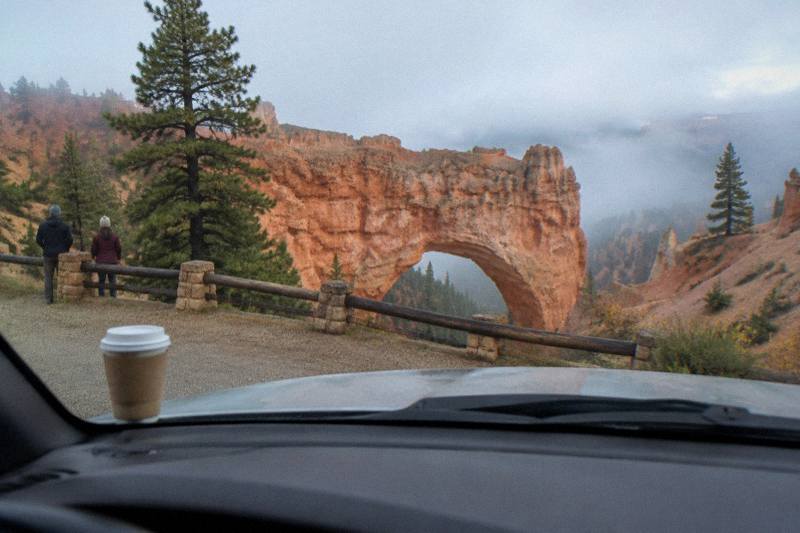
Bryce Canyon Shuttle: 2026 Schedule, Stops And Who Should Ride It
The free Bryce Canyon shuttle runs from early April to October 20 and connects Bryce Canyon City with the four main Amphitheater viewpoints, but it is optional, it does not serve the southern scenic drive, and it stops for the winter. Here is the full 2026 schedule, every stop, and how to decide whether to ride it or drive.
Short answer
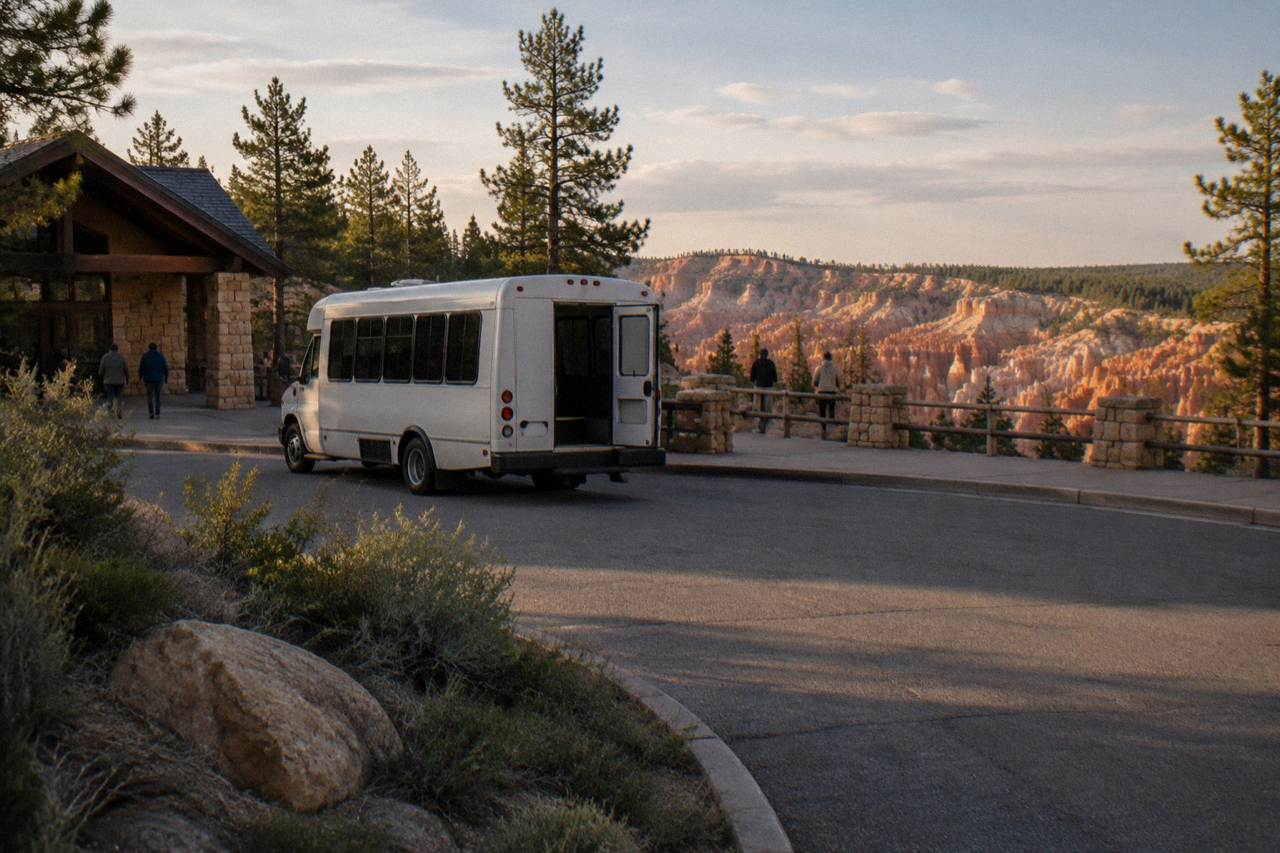
The Bryce Canyon shuttle is free with park admission and runs April 3 to October 20 in 2026: 8 a.m. to 6 p.m. in spring and fall, 8 a.m. to 8 p.m. from May 9 to September 20. Buses arrive about every 15 minutes. It is optional, not mandatory, and highly recommended in summer when Amphitheater parking fills.
Bryce Canyon National Park keeps its entrance gate simple: no timed entry, no advance reservation, open 24 hours a day all year. What strains in summer is parking. The four viewpoints that most visitors come for, Bryce, Inspiration, Sunset and Sunrise Points, sit inside the first 3 miles of an 18-mile road, and their lots were built for a fraction of today's traffic. The park's answer is a free shuttle that loops between Bryce Canyon City and the Amphitheater, running roughly early April to mid-October. This guide lays out the 2026 schedule stop by stop, explains who the shuttle actually serves, and is equally clear about what it does not do, because in several common trip situations driving yourself or joining a tour is the better fit.
Is The Bryce Canyon Shuttle Mandatory In 2026?
No. Riding the Bryce Canyon shuttle is entirely optional in 2026. The park service describes it as not mandatory but highly recommended, and it is free once you have paid park admission or hold an entrance receipt or annual pass. Buses run about every 15 minutes during the season, which runs from early April to October 20. Riding it is a parking decision, not a rule.
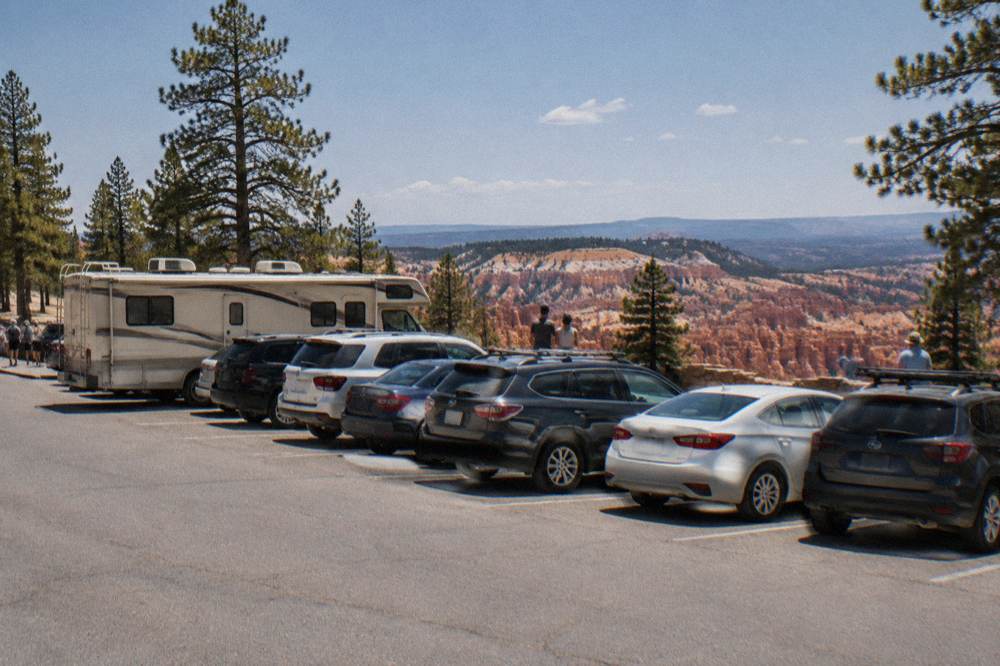
The distinction matters because several national parks, Zion most famously, close their scenic drives to private cars in peak season and force visitors onto transit. Bryce Canyon never does. You can drive your own vehicle to every viewpoint on the main road, at any hour, in any month. What the shuttle buys you is a parking spot problem solved: the Amphitheater lots fill early on summer days, and once they do, rangers turn cars away or circle them back down the road.
The trade is time and flexibility. A bus every 15 minutes is generous, but a family bouncing between Sunrise Point and Sunset Point moves faster in their own car when a space is available. Visitors who arrive before 9 a.m. in summer often skip the shuttle entirely, park easily, and still see all four primary viewpoints. Arrive at 11 a.m. in July and the calculus flips.
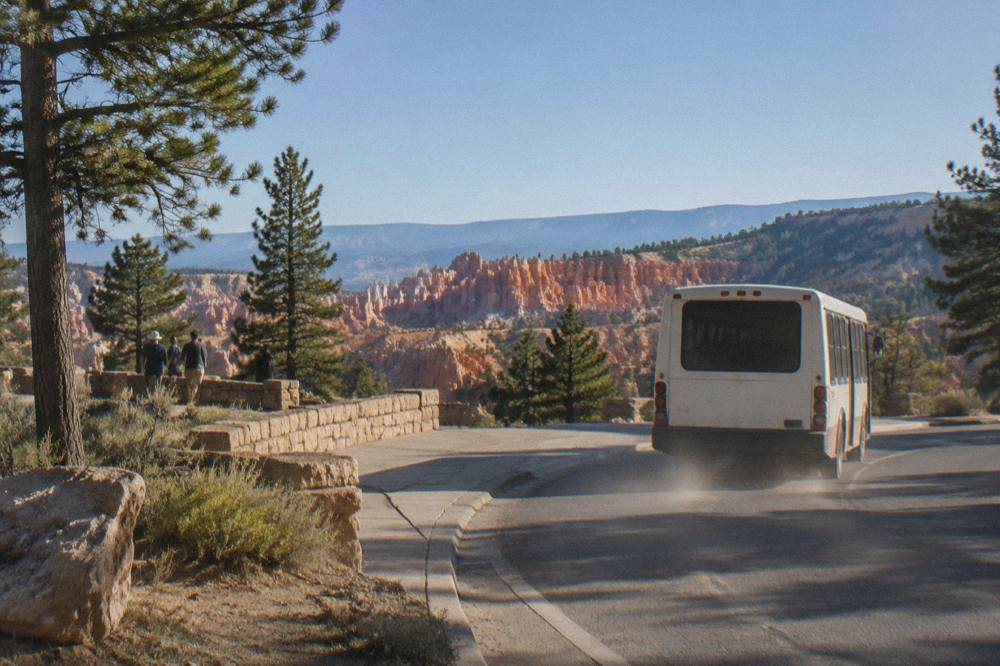
Guided tours largely sidestep the question. The 3-hour small group park tours drop passengers at overlooks directly, and the Las Vegas day trips arrive with their own vehicle and driver. The shuttle exists mainly for independent travelers staying in or near the park, which is why the parking question and the lodging question tend to get solved together, a point covered in our one day Bryce Canyon itinerary.
When Does The Bryce Canyon Shuttle Run In 2026?
The 2026 shuttle season runs April 3 through October 20, in three schedule blocks: April 3 to May 8 from 8 a.m. to 6 p.m., May 9 to September 20 from 8 a.m. to 8 p.m., and September 21 to October 18 from 8 a.m. to 6 p.m., with the season closing October 20. First buses leave around 8 a.m. and service ends at the stated closing hour.
Those hours come straight from the park service shuttle page. The middle block, the 12-hour span from May 9 to September 20, is the one that matters for sunrise and sunset chasers: an 8 p.m. last service comfortably covers the evening glow at Inspiration Point, which the park recommends arriving about 1.5 hours before sunset to enjoy. The spring and fall blocks end at 6 p.m., which in April or October can be before or right around sunset, so late-day photographers in shoulder season should check the calendar against actual sunset times and plan to be on a bus, not waiting for one.
The shuttle does not run in winter at all. From late October until the following April, everyone drives, and after snowstorms the main road can temporarily close at mile marker 3 so plows can clear the southern drive. The Amphitheater viewpoints in the first 3 miles stay the priority for plowing. Full seasonal detail, including which spur roads close to vehicles all winter, is in our Bryce Canyon winter tours guide.

| 2026 dates | Daily hours | What to expect |
|---|---|---|
| April 3 to May 8 | 8:00 a.m. to 6:00 p.m | Shoulder season, easy parking, possible snow at viewpoints |
| May 9 to September 20 | 8:00 a.m. to 8:00 p.m | Peak season, Amphitheater lots fill, best evening coverage |
| September 21 to October 18 | 8:00 a.m. to 6:00 p.m | Fall color crowds, cooler mornings |
| October 19 to October 20 | Season end | Final days of service before winter |
| October 21 to April | No service | Everyone drives; winter road rules apply |
The official source for any schedule change is the park service shuttle page, and a season-length tracker exists in the form of a Shuttle Tracker so you can see where buses are in real time on the day you ride.
Where Does The Shuttle Stop And Where Do You Board?
The shuttle boards at two anchor points: the Shuttle Station in Bryce Canyon City (Stop 1) and the park Visitor Center (Stop 6), then serves stops along the Amphitheater corridor including the campground and the primary viewpoints. Buses are wheelchair accessible, carry two bikes on a front rack, and do not allow pets. Outside parking at Stop 1 is free.
The two boarding anchors serve different crowds. The Bryce Canyon City station sits near the lodging cluster at the park entrance, so guests staying there can walk to the shuttle and leave the car all day. The Visitor Center stop serves day visitors driving in: park once at the Visitor Center lot, ride the loop, and never hunt for an Amphitheater space. Between those anchors the route threads past the campground and the overlooks, so a typical loop lets a rider hop off at Sunrise Point, walk the accessible half mile of Rim Trail to Sunset Point, and reboard there.
| Stop | Location | Who uses it most |
|---|---|---|
| Stop 1 | Shuttle Station, Bryce Canyon City | Lodge and hotel guests at the entrance |
| Stop 6 | Visitor Center | Day visitors parking once |
| Campground stops | North and Sunset campgrounds | Campers without a vehicle at the site |
| Viewpoint stops | Bryce, Inspiration, Sunset, Sunrise Points corridor | Everyone; the Amphitheater core |
Two practical notes from the park's own rules. Bikes ride only on the front rack, two per bus, and bikes are restricted to park roadways and the Shared Use Path, never the Rim Trail or overlooks, a regulation the park states plainly on its laws and policies page. And pets cannot board, with the park's only pet-friendly trail surface being the paved Rim Trail stretch between Sunset and Sunrise Points.
One service the shuttle explicitly does not replace: the park's old 3-hour Rainbow Bus Tour of the southern drive is not being offered, and the park service points visitors to its approved commercial tours page for in-park transport beyond the shuttle. That is where guided products come in, and the choice among them is worth a moment.
If your priority is the viewpoints the shuttle already reaches, a 3-hour small group tour covers that ground with a guide. If your priority is the 18-mile road the shuttle ignores, a self-guided audio drive in your own car is the natural pairing.
What The Shuttle Does Not Do
The shuttle does not serve the southern scenic drive beyond the Amphitheater, does not run in winter, does not pick up at individual hotels or campsites outside its listed stops, does not carry pets, and does not replace a tour or a parking pass. It is a free loop for one corridor of the park, nothing more.
The southern limitation is the one that surprises people. Natural Bridge, Agua Canyon, Farview Point, Rainbow Point and the whole sweep of miles 4 to 18 have no shuttle service at all. Visitors who ride the loop all day and leave at dusk have seen perhaps the most famous 3 miles of an 18-mile road. Rainbow Point, at 9,115 feet the high point of the park's road system, requires a vehicle: your own, a guided tour van, or nothing.
It also does not solve lodging logistics. There is no hotel-door pickup, no service to Tropic, Panguitch or the outlying lodging spread along Highways 12 and 63. The bus connects its listed stops on its listed days. Guests staying farther afield drive to Stop 1 or the Visitor Center like everyone else, or join one of the Bryce Canyon City based tours that meet at fixed points in town.
Finally, it does not run past October 20. A late-October or November visitor planning around a shuttle that no longer exists is the single most common planning error in shoulder season, and the park's hours page is the place to confirm the current operating calendar before any trip.
Shuttle Or Drive Yourself: Which Fits Your Trip?
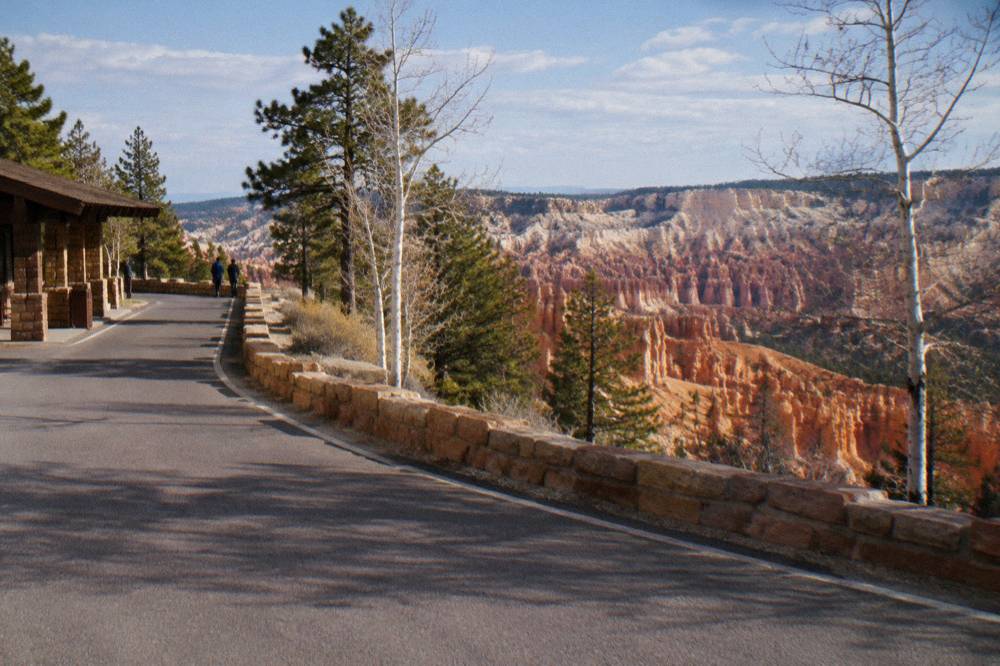
Drive yourself if you want the southern drive, sunrise before 8 a.m., winter months, or a tight schedule. Ride the shuttle if you are staying at Bryce Canyon City, arriving midday in summer, or want to park once at the Visitor Center. In July and August the shuttle is the safer bet for the Amphitheater; every other season favors the car more often.
The parking math changes by month. Summer midday crowds make the shuttle the reliable option; a May morning often does not. Sunrise is a special case the schedule cannot serve: first buses leave around 8 a.m., but sunrise photographers need to be at Sunrise or Bryce Point before dawn, which means a car or a dedicated tour. The park names Sunrise Point and Bryce Point as its sunrise spots, and arriving by vehicle at first light is the standard way to do it.
| Your situation | Better choice | Why |
|---|---|---|
| Staying in Bryce Canyon City, summer | Shuttle | Walk to Stop 1, skip Amphitheater parking entirely |
| Want Rainbow Point and the south drive | Own car or tour | No shuttle service past the Amphitheater |
| Sunrise photography | Own car | First bus leaves around 8 a.m. |
| Midday arrival, June to August | Shuttle | Lots fill earliest in peak season |
| November to March | Own car | No shuttle service in winter |
| Oversize vehicle or RV, shuttle season | Shuttle for the Amphitheater | Vehicles 23 ft and longer are restricted from Amphitheater parking, miles 1 to 3 |
That last row is an under-used rule worth knowing: during shuttle season, oversize vehicles 23 feet and longer are restricted from Amphitheater-area parking, with no restriction on the Southern Scenic Drive. An RV traveler can park outside the corridor, ride the loop, then drive south afterward. Travelers weighing the broader question of independent driving versus guided options will find the comparison worked out in full in our Bryce Canyon tour versus self-drive guide.
How Guided Tours Interact With The Shuttle
Guided tours do not use the shuttle. The 3-hour park tours, the full-day hikes and the Las Vegas day trips all travel in their own vehicles to the overlooks and trailheads, so tour passengers never depend on the bus schedule. The shuttle matters to tour travelers only as background: fewer tour vehicles would exist if the shuttle covered the whole park, which it does not.
The meeting-point details make this concrete. The Scenic Tour of Bryce Canyon, from $84.81 per person with 4.9 across 1,215 reviews, meets at 450 N Arpt Rd in Bryce Canyon City and spends 3 hours at the park's viewpoints with water and snacks included, park admission separate. The Guided Sightseeing Tour, from $109 per person with 4.9 across 945 reviews, differs in one significant way: the park entrance fee is included in the listing, and the route starts at Fairyland Canyon before continuing to Natural Bridge, Inspiration Point and the Cathedral. One of those stops, Natural Bridge, is on the southern drive the shuttle never touches, which is exactly why a guided minivan covers ground a shuttle rider cannot reach in the same morning.
For hikers the logic holds too. The full-day small group tour and hike meets at the Bryce Canyon Shuttle station as a landmark but runs its own air-conditioned vehicle to Bryce Point and trailheads, park entry fees included, from $427 per person. That listing carries just 5 reviews so far, too few to read much into the rating.
The self-guided audio driving tours are the third interaction, and the most interesting one. They exist precisely because the shuttle covers only a fraction of the park.
Why Audio Driving Tours Pair Well With The Shuttle's Limits
Because the shuttle stops at the Amphitheater, a self-guided audio driving tour in your own car is the cheapest way to cover the full 18-mile road, including the stops the bus never reaches. The Bryce Canyon audio drive costs from $16.99 per group of up to 4, plays GPS-triggered stories offline, and needs no signal inside the park.
The economics are hard to argue with. One purchase covers everyone in the car, the listing states lifetime access with the tour usable on future trips, and the itinerary lists the Bryce Amphitheater, the Visitor Center and Bryce Point among its stops, all on the main road your car can use. The trade is what the listing states plainly: no live guide, and entrance fees, parking, food and car rental are separate. It solves the southern-drive problem for the price of a sandwich.
Visitors pairing Zion with Bryce can step up to the two-park bundle, from $24.99 per group of up to 4, covering both parks' drives in one purchase; the two parks sit 78 miles apart at Zion's east entrance, an easy day link. Choosing between parks is its own question, covered in our Bryce Canyon versus Zion comparison.
For travelers who want the southern drive with a human explaining it rather than a phone, the guided sightseeing minivan above is the step up, and the helicopter flights from Bryce Canyon Airport, from $175 per person for 15 minutes, put the whole road beneath you in a way no bus ever could. Those flights depart the airport outside the park; aircraft may not launch or land inside park boundaries.
Bikes, The Shared Use Path And Shuttle-Season Rules
Cyclists can ride park roadways and the Shared Use Path but no other trail, and the shuttle carries two bikes per bus on its front rack. The Shared Use Path's final 2.7-mile segment was completed in autumn 2026, finishing a paved route that now links Red Canyon through the Visitor Center and the Amphitheater viewpoints to the Bryce Point area.
That path completion is the biggest logistics change at Bryce Canyon in years. A cyclist or e-bike rider can now travel paved, car-separated path from Red Canyon all the way to the Bryce Point area, connecting the Visitor Center, Sunrise, Sunset, Inspiration and Bryce Points, the campgrounds, and points north. E-bikes are permitted under park policy on roads and the path; pedal-assist, low-speed models are the type the park describes. The path also serves walkers and wheelchair users, giving non-drivers a shuttle-free way between viewpoints that does not depend on the seasonal bus.
Two cautions from the park's regulations. Bikes are prohibited on the Rim Trail and all other trails and off-trail areas, full stop. And the shuttle's two-bike rack means a group of four cyclists may wait for a second bus at peak times.
| Option | Covers the Amphitheater | Covers the south drive | Runs in winter | Cost basis |
|---|---|---|---|---|
| Shuttle | Yes, all season | No | No | Free with admission |
| Own car | Yes | Yes | Yes | Park entry $35 per vehicle |
| Guided 3-hour park tour | Yes | Partially, per itinerary | Varies by operator | From $84.81 per person |
| Self-guided audio drive | Yes | Yes | Yes, self-timed | From $16.99 per group up to 4 |
| Shared Use Path | Yes, paved corridor | No | Yes, conditions permitting | Free with admission |
Entrance costs are a separate line from all of this: $35 per private vehicle covers all occupants for seven days, and non-US residents age 16 and over pay an additional $100 per person nonresident fee unless covered by a pass. The full fee and pass landscape, including the $250 nonresident annual pass, is broken down in our Bryce Canyon entrance fees and passes guide.
What Changes After The Shuttle Stops In Late October
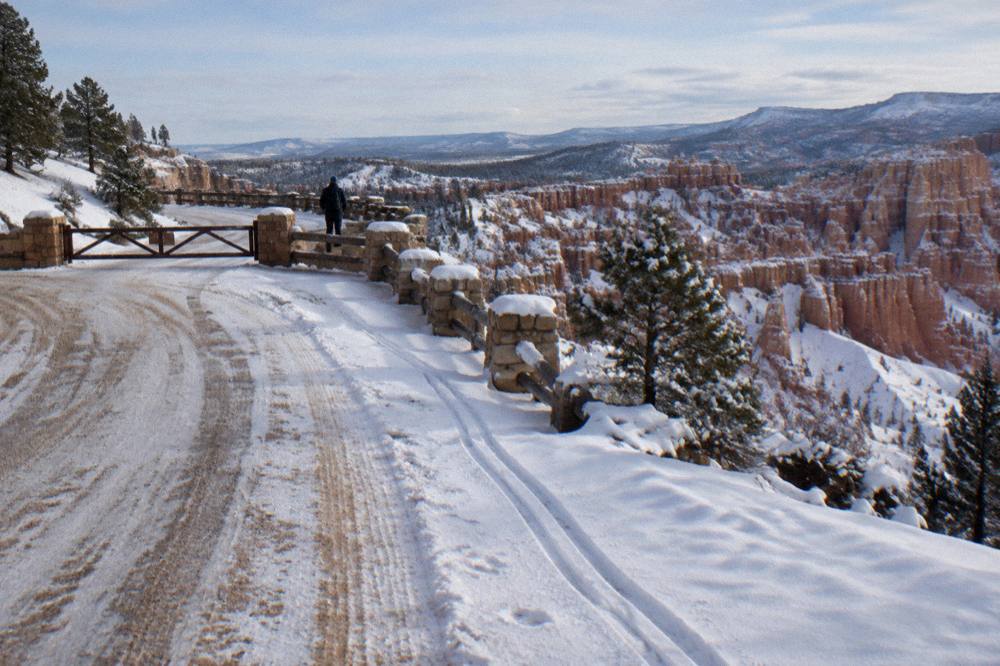
After October 20 the shuttle stops for the year and every visitor drives. The road can close temporarily at mile marker 3 after winter storms until plowing finishes, typically for a day or more, while the Amphitheater viewpoints stay accessible. Fairyland Point road and Paria View road close to vehicles for the whole winter, and Wall Street remains closed per the current park alert.
The winter pattern is consistent and worth internalizing before a cold-season trip. The first 3 miles get plowing priority, so sunrise and sunset watchers keep access to the main viewpoints. Beyond that gate, the southern drive opens and closes storm by storm. The two short spur roads, Fairyland Point at 1 mile and Paria View at 0.3 miles, shut to vehicles all season and become foot, ski and snowshoe territory. Snowfall averages roughly 100 inches a year at park headquarters, with January, February and March each averaging 17 to 18 inches.
Late-season visitors are not short of options once the bus is gone. Winter is quietly one of the park's best stargazing windows, and the guided stargazing sessions at Bryce Canyon City run from $59 per person, with telescopes and hot beverages at a private dark-sky site near town rather than inside the park. The self-guided audio drives also keep working year-round, since your own car does not observe a season. For the full cold-weather picture, including ranger snowshoe hikes when snow depth and staffing permit, see the winter guide linked earlier.
Aside from sightseeing, this site exists to help you compare the bookable options at Bryce Canyon National Park Tours, and the honest summary of the shuttle is that it is excellent at its one job and useless beyond it.
Planning A Day That Uses The Shuttle Well
A good shuttle day parks once, rides the loop in one direction, walks the Rim Trail connections on foot, and saves the southern drive for a car or tour either before or after. Arrive at Stop 1 or the Visitor Center early, board the first useful bus, and treat the 15-minute frequency as a hop-on framework rather than a tour. Bring water; the park recommends about one quart per hour of hiking at 8,000 feet.
The altitude point is not decoration. Bryce Canyon's elevations average about 8,000 feet and reach 9,115 feet, where effective oxygen is roughly 75 percent of sea level, and every Amphitheater trail descends first, which means every return climbs. Riders who hop off at Sunrise Point and decide to walk down Queen's Garden discover the uphill exit on the way back. The park's most recommended first-timer route is the Queen's and Navajo combination loop, descending Queen's Garden and ascending Navajo, with one caveat in the current conditions: the Wall Street section of the Navajo Loop is closed until further notice per the park alert of September 29, 2026, so the two-way tunnel section is the working alternative for that connector.
A workable shuttle-first morning: board at Stop 1 or the Visitor Center, hop off at Sunrise Point, walk the paved half mile of Rim Trail to Sunset Point, reboard, ride to Inspiration Point for the midday view, then return. That loop costs nothing beyond admission and fills half a day at a relaxed pace. The afternoon belongs to the southern drive, which is where the audio tour earns its $16.99, or to a guided minivan that folds Natural Bridge into a narrated 3-hour circuit. Families weighing pace and stamina can find age-appropriate structure in the Bryce Canyon family tours guide.
Common Questions About The Bryce Canyon Shuttle
Is The Bryce Canyon Shuttle Free?
Yes. The shuttle is free with park admission, meaning a valid entrance receipt or an annual or lifetime pass. It is not mandatory, and the park service describes it as highly recommended rather than required.
Where Do You Park For The Bryce Canyon Shuttle?
Park at the Shuttle Station in Bryce Canyon City (Stop 1) or at the Visitor Center (Stop 6). Both are free outside parking points, and the loop connects the campground and Amphitheater viewpoint stops between them.
Can You Drive Bryce Canyon Without The Shuttle?
Yes. The shuttle is optional all season. You can drive to every viewpoint on the 18-mile main road, though in summer the Amphitheater lots fill early, and vehicles 23 feet and longer are restricted from Amphitheater parking during shuttle season.
Does The Shuttle Go To Rainbow Point?
No. The shuttle serves the Amphitheater corridor in the first 3 miles of the park. Rainbow Point, Natural Bridge, Agua Canyon and the rest of the southern scenic drive have no shuttle service; reach them in your own car or on a guided tour.
Does The Bryce Canyon Shuttle Run In Winter?
No. The 2026 season ends October 20 and service resumes the following April. After winter storms the main road can temporarily close at mile marker 3 until plowing finishes, while the Amphitheater viewpoints stay accessible.
Can I Take My Bike Or Dog On The Shuttle?
Bikes ride on the front rack, two per bus, and bikes are allowed only on park roadways and the Shared Use Path. Pets are not allowed on the shuttle at all.