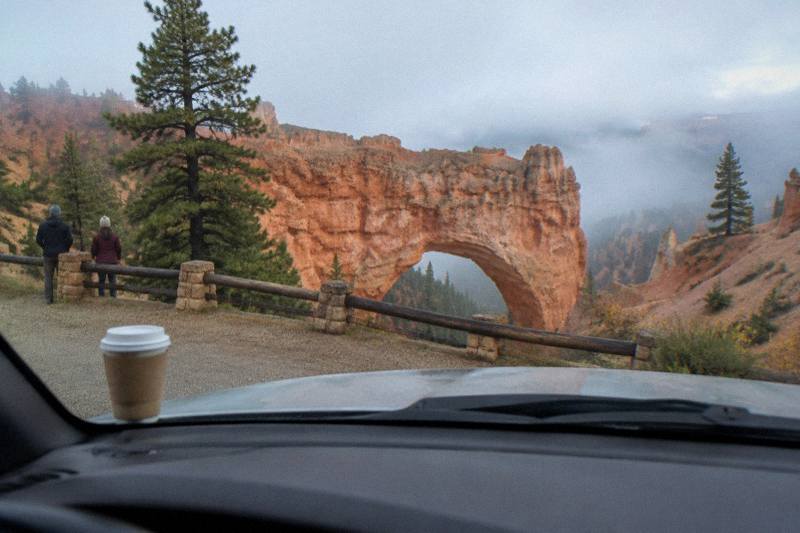
Free Things To Do In Bryce Canyon: Ranger Programs, Rim Trail And Fee-Free Days
Bryce Canyon entry costs $35 per vehicle, but nearly everything inside the gate, from ranger astronomy programs to the Rim Trail, costs nothing extra. This guide lists what is genuinely free, the remaining 2026 fee-free days, and the point at which a paid tour actually earns its price.
Short answer
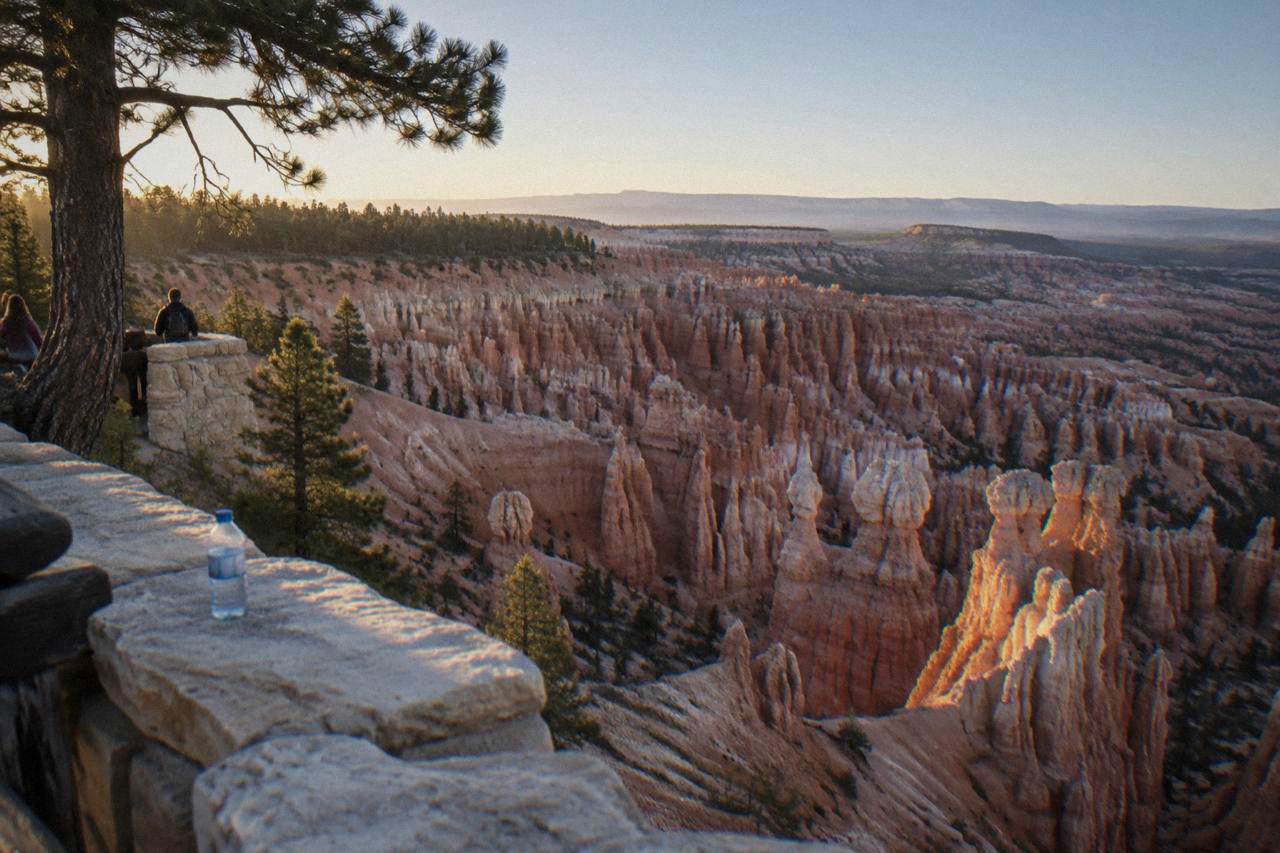
After paying $35 per vehicle entry, the Rim Trail, ranger programs, about 100 annual astronomy programs, the park shuttle and visitor center exhibits are all free. Two fee-free days remain in 2026: October 27 and November 11, when entry itself is waived for U.S. citizens and residents. Stargazing from the overlooks costs nothing at all.
Bryce Canyon is one of the cheaper national parks to enjoy once you are through the gate. Entry runs $35 per private vehicle, good for seven days, and after that receipt nearly every experience inside the boundary is free: the Rim Trail, the visitor center, ranger talks, roughly 100 astronomy programs a year, and the shuttle that spares you the oversize-vehicle parking rules along the first three miles. Two fee-free days remain on the 2026 calendar, October 27 and November 11, when even the entry fee is waived for U.S. citizens and residents, per the park service fee page.
This guide walks through what is genuinely free, what only looks free, and the one point where paying for a guided product, such as the 3-hour small group park tour or a stargazing session near Bryce Canyon City, earns its price. Everything here comes from the park service's own pages and from the tour listings themselves.
What Is Actually Free Inside Bryce Canyon
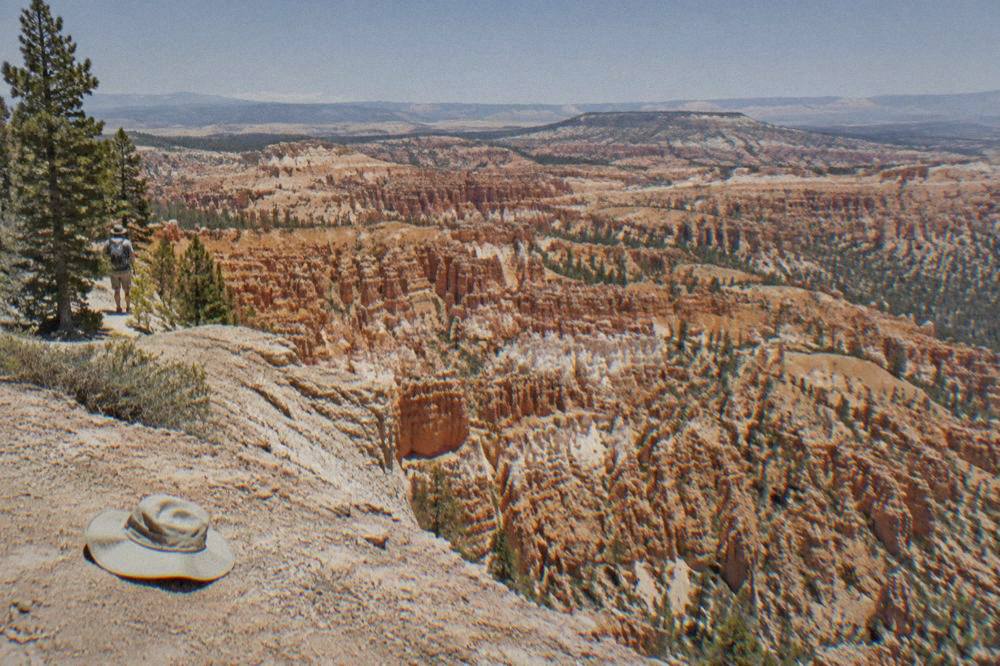
Almost everything inside the park is free once you have paid the $35 per vehicle entrance fee, which covers seven days and all occupants. The Rim Trail, all four main Amphitheater viewpoints, ranger programs, visitor center exhibits and the park shuttle carry no additional charge. Stargazing from the overlooks is free too, since the park is open 24 hours a day year-round.
The park does not accept cash at fee stations, so bring a card or buy a digital pass ahead of time. There is no timed entry and no advance reservation required, which is unusual among the major southwestern parks and worth planning around: you can arrive at any hour, including after dark for stargazing, without a booking slot.
One clarification matters for non-U.S. residents: the fee-free days waive standard entrance fees for U.S. citizens and residents, but the $100 per person nonresident fee for visitors age 16 and over still applies unless covered by an America the Beautiful pass. The $250 nonresident annual pass covers the holder plus up to three nonresident adults traveling in a commercial tour group.
| Activity | Cost | Notes |
|---|---|---|
| Rim Trail walking | Free with entry | Half-mile section between Sunset and Sunrise Points is wheelchair accessible |
| Ranger programs | Free with entry | Schedule posted at the visitor center; weather-dependent |
| Astronomy programs | Free with entry | About 100 per year; best near new moon |
| Park shuttle | Free with entry | Runs April through mid-October, roughly every 15 minutes |
| Visitor center exhibits | Free | Open daily, hours vary by season |
| Full Moon Hikes | Free, ticketed | Limited tickets, reserved through Recreation.gov |
If you are mapping a full day rather than a free hour, our one-day Bryce Canyon itinerary shows how the free pieces fit together with the viewpoints and shuttle stops.
Which Ranger Programs And Astronomy Events Are Free
Every ranger-led program at Bryce Canyon is free with park admission, and the park runs about 100 astronomy programs a year, more than almost any other unit of the park system. Programs are weather-dependent and the schedule is posted at the visitor center. Summer ranger programs cancel when lightning is within 10 miles, and winter ones cancel at windchill of 10 degrees Fahrenheit or below.
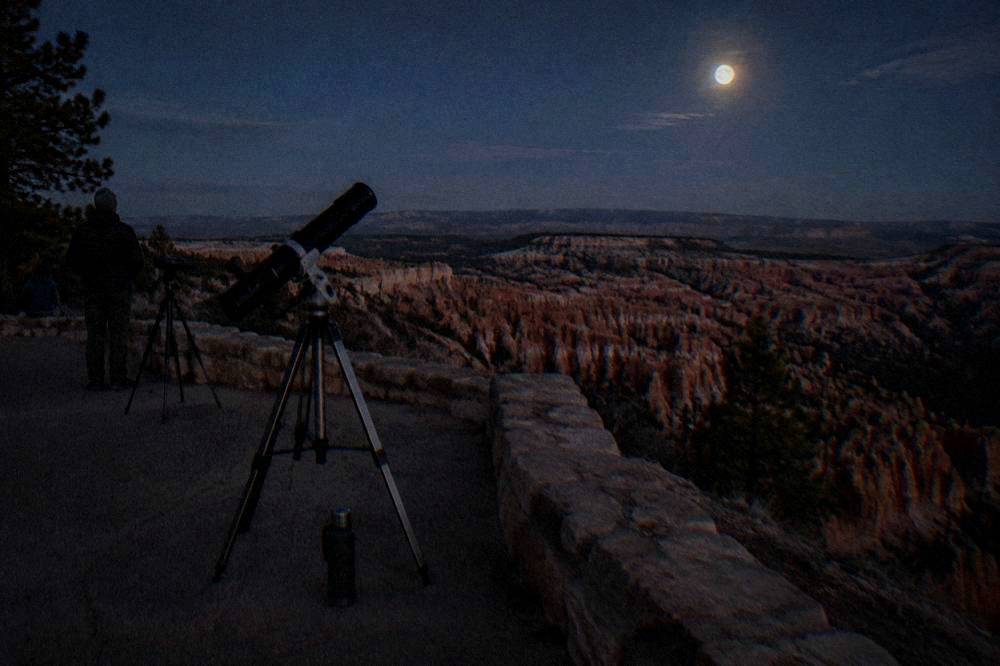
The astronomy lineup is the signature. Bryce Canyon is a Gold Tier International Dark Sky Park, designated in 2019, and the park leans into it: telescope programs run on summer evenings at Sunset Point, typically Thursdays through Saturdays in June and July starting around 9:45 p.m., each lasting 60 to 75 minutes, per the park astronomy page. The annual four-day Astronomy Festival each June, free with admission, adds daytime activities, constellation tours and rows of telescopes.
Full Moon Hikes are the hardest free ticket in the park. They run 1 to 2 miles over 2 to 3 hours on nights near the full moon, ages 8 and up, with limited tickets released through Recreation.gov in phases. No flashlights are allowed, and lug-soled or traction footwear is required. Winter versions can become snowshoe hikes when snowpack exceeds 16 inches.
| Program type | Frequency | What to know |
|---|---|---|
| Night sky telescope programs | Summer evenings, June through July | 60 to 75 minutes at Sunset Point, weather permitting |
| Full Moon Hikes | Monthly, near full moon | Ticketed, 1 to 2 miles, ages 8+, no flashlights |
| Astronomy Festival | 4 days each June | Free with admission; 2026 dates ran June 11 to 13 |
| Geology Festival | July | Talks and exhibits at the visitor center; 2026 dates July 17 to 18 |
| Ranger snowshoe hikes | Winter, snow and staff permitting | Free snowshoes and poles provided, ages 8+ |
The 2027 festival dates have not been published yet, so plan around the annual pattern rather than a set week. For visitors who want a guaranteed telescope session on their own schedule rather than a ranger calendar, a guided session at a private dark-sky site is the alternative; the Bryce Canyon Stargazing Adventure runs 90-minute sessions from $59.04 per person with hotel pickup, coffee or tea included, 4.5 across 69 reviews. Note honestly that the stargazing sessions run at a private dark-sky site at Bryce Canyon City, not inside the national park.
When Are The 2026 Fee-Free Days At Bryce Canyon
Two fee-free days remain in 2026: October 27 and November 11. On those days the standard entrance fee is waived for U.S. citizens and residents, making the Rim Trail, viewpoints and visitor center genuinely free end to end. Non-U.S. residents age 16 and over still pay the $100 nonresident fee unless they hold an applicable pass.
Fee-free days are the cheapest way to see the park, but they are also among the busier days, especially the late-October date when fall color on the Paunsaugunt Plateau can still be strong. Arrive early for Amphitheater parking, or park in Bryce Canyon City and ride the free shuttle, which this season ran through October 18. After the shuttle season ends, the oversize-vehicle parking restriction along the first three miles no longer applies, but winter weather becomes the bigger variable.
November 11 lands in early winter mode: visitor center hours drop to 8 a.m. to 4:30 p.m. from November 1, the lodge is typically closed November through March, and the main road can close temporarily at mile marker 3 after storms until plows clear it. The Amphitheater viewpoints in the first three miles stay the priority for plowing and remain reachable.

The full year's remaining structure is simple: eight fee-free days were designated for 2026, and only the last two, October 27 and November 11, fall after mid-October. If you are flexible, those are the dates to circle. For the full fee and pass picture, including the $80 resident and $250 nonresident annual passes, see our Bryce Canyon entrance fees and passes guide.
Is The Rim Trail Really The Best Free Walk
Yes. The Rim Trail between Sunset and Sunrise Points is the best free walk at Bryce Canyon, and the half-mile section between those two points is paved, wheelchair accessible and open to leashed pets, the only place in the park where pets are allowed. It delivers the core Amphitheater panorama with almost no elevation change.
The longer Rim Trail stretches beyond those two points toward Inspiration Point, and each extension adds a different angle on the hoodoos without requiring you to descend into the canyon. That matters at this elevation: the park sits at about 8,000 feet on average, reaching over 9,000 feet, where effective oxygen is about 75 percent of sea level. Rim walking lets you acclimate before any hike that drops below the edge, and every below-the-rim trail ends with an uphill climb back out. Other pages covering the same trip are gathered on Bryce Canyon National Park Tours.
Two closures shape current planning. Wall Street, the Navajo Loop section, is closed until further notice per the park service alert of September 29, 2026, after recent rains, and it closes for winter regardless; do not plan a loop through it. The Rim Trail segment between Inspiration and Bryce Points also closes for the winter season. Ranger programs and trail conditions posts are the source of truth on the day.
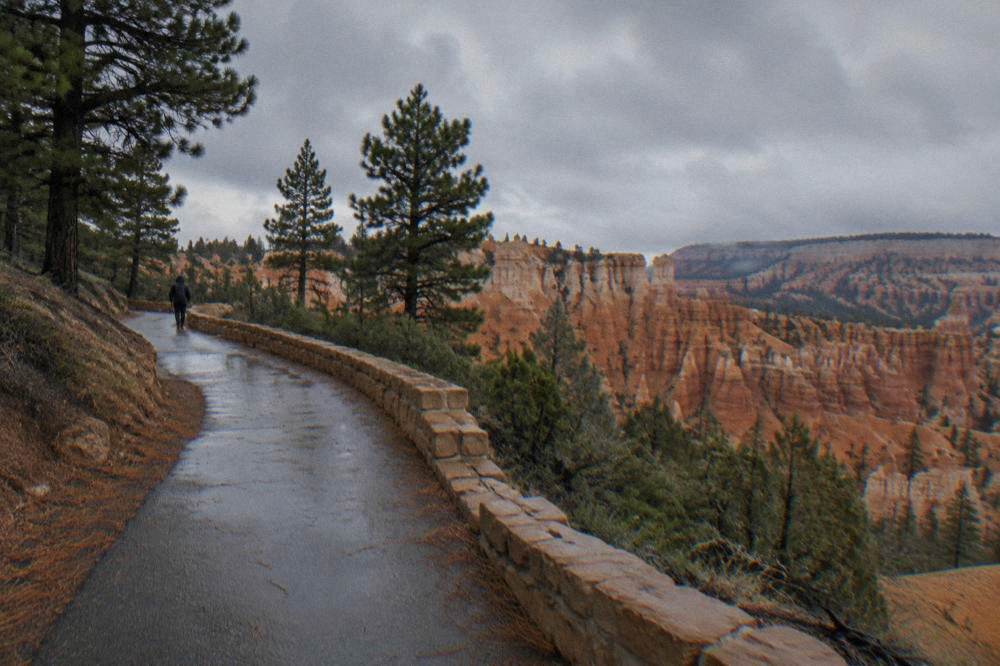
Beyond the rim, the newly completed Shared Use Path deserves a mention. Its final 2.7-mile segment was finished in autumn 2026, completing a paved route that connects the visitor center, the main points, the campgrounds and Red Canyon. It is free to walk or pedal, and bikes and low-speed pedal-assist e-bikes are allowed on park roads and this path only, not on the Rim Trail or overlooks.
Free Winter Activities When Snow Covers The Rim
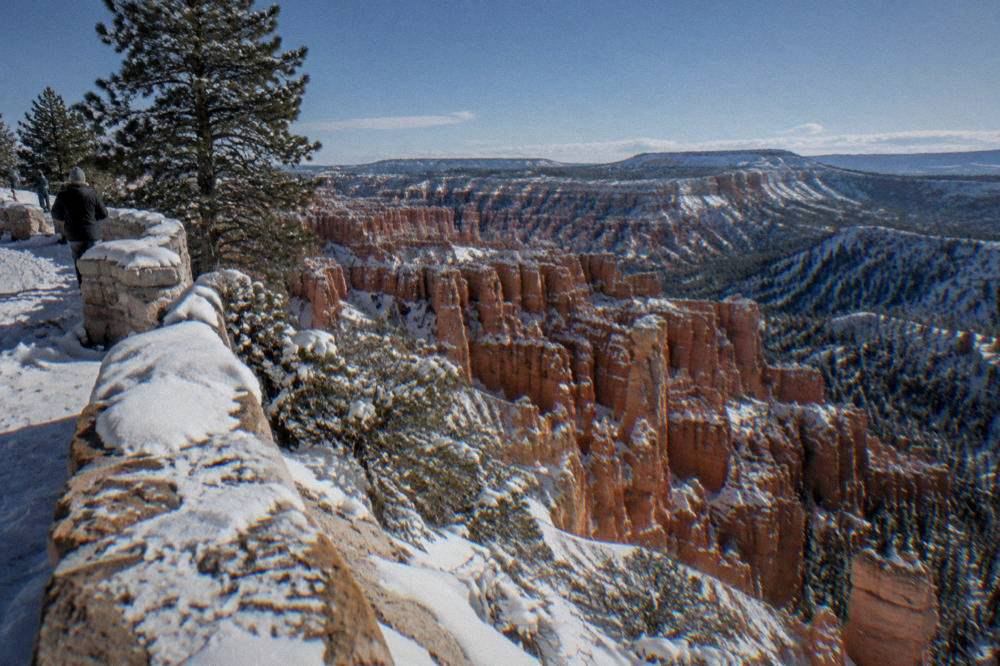
Winter at Bryce Canyon is largely free with entry: ranger-led snowshoe hikes run when snow depth and staffing permit, with free snowshoes and poles provided for participants ages 8 and up. Cross-country skiing is allowed on designated routes above the rim, including unplowed sections of the Fairyland and Paria roads. Full-moon snowshoe hikes run November through March when snowpack tops 16 inches.
Winter changes the fee picture in one pleasant way: the shuttle season ends in mid-October, so parking pressure drops sharply, and the park stays open 24 hours a day. Average snowfall runs about 100 inches a year at headquarters, with January, February and March each averaging 17 to 18 inches. The Fairyland Point road and Paria View road close to vehicles for the season but stay open on foot, skis or snowshoes, which turns them into quiet, free ski routes.
The practical winter cautions are road and cold related. The main scenic drive can close at mile marker 3 after storms, typically for a day or more while plows work the southern stretch. Nights drop below freezing nearly every night from October through May, and ranger programs cancel at a windchill of 10 degrees Fahrenheit or lower. Visitor center hours from November 1 to April 3 run 8 a.m. to 4:30 p.m. daily, with a closure on Christmas Day.
For month-by-month temperature and snow detail, our Bryce Canyon weather by month guide breaks down the planning ranges. And if a winter visit has you weighing guided support, the Bryce Canyon winter tours guide covers what still operates in the cold months.
When A Paid Bryce Canyon Tour Earns Its Price
A paid tour earns its price in three cases: when you have limited time and want the overlooks decoded quickly, when you want a guaranteed experience outside the ranger calendar, and when you are traveling from Las Vegas or pairing parks. The 3-hour Scenic Tour of Bryce Canyon, from $84.81 per person at 4.9 across 1,215 reviews, is the clearest example of the first case.
Free is a fine default, but free has constraints. Ranger programs run on the park's schedule, not yours. Full Moon Hikes are ticketed and competitive. The free shuttle stops running in mid-October. If you arrive off-season with half a day, a guided product converts your window into a structured visit. The Scenic Tour of Bryce Canyon, run by Bryce Canyon Scenic Tours, is a 3-hour small group park tour from Bryce Canyon City that includes water and snacks; park admission is separate, and international travelers pay an additional fee unless they hold an America the Beautiful pass. Free cancellation is listed.
For a longer, deeper day, the full-day guided hikes and the private hike with picnic at from $699 per group of up to 4 exist on the roster, but at that price you are buying depth, not value per viewpoint. The honest comparison for most first-time visitors is between the free ranger-and-rim day and the 3-hour tour, not between tour tiers.
| Option | Cost | What you get | Best for |
|---|---|---|---|
| Free: rim and ranger day | $35 per vehicle entry | Rim Trail, viewpoints, ranger programs | Flexible schedules, repeat visits |
| 3-hour Scenic Tour of Bryce Canyon | From $84.81 per person | Guided overlooks in 3 hours, snacks, water | Short visits, first-timers |
| Stargazing Adventure near Bryce Canyon City | From $59.04 per person | 90-minute telescope session, hot drinks, hotel pickup | Guaranteed night-sky slot |
| Red Canyon horseback ride | From $130 per person | 3-hour guided ride in Dixie National Forest | Riders who want saddle time |
Horseback riding deserves one honest framing note: the park concessioner, Canyon Trail Rides, runs 2-hour and 3-hour guided rides into the Amphitheater typically April through October 31, booked separately. The roster product, the 3-hour Red Canyon horseback ride from Bryce Canyon City at from $130 per person, 4.7 across 252 reviews, rides through Red Canyon and Losee Canyon in Dixie National Forest, outside the national park boundary, and that distinction is worth knowing before you book either.
The same boundary logic applies to vehicles. ATVs, UTVs and all off-highway vehicles are prohibited on every park road and area, per the Superintendent's Compendium, and helicopters and drones may not launch or land inside the park. Scenic helicopter flights depart from Bryce Canyon Airport and fly over the formations. Framing matters when a listing says "Bryce Canyon": check whether the experience is inside the park, near it, or over it.
How To Build A Full Free Day At Bryce Canyon
A full free day works like this: sunrise at Sunrise or Bryce Point, a morning Rim Trail walk between Sunset and Sunrise Points, a midday visitor center stop to read the ranger program board, an afternoon ranger talk, and evening stargazing from an overlook, since the park never closes. Bring a headlamp with a red light mode and about one quart of water per person per couple of hours at this altitude.
The sequencing is not arbitrary. Sunrise and sunset are when the hoodoos change character, and the park service itself names Sunrise Point and Bryce Point for dawn and Inspiration Point or Paria View for dusk, with arrival about 1.5 hours before sunset recommended. The middle of the day is the weakest light and the fullest parking lots, which makes it the right window for the visitor center and any ranger program that fills the gap.
Food is the one gap a free day cannot fill. There are dining options at the lodge in season, but the lodge typically closes November through March, and bringing your own supplies is the reliable move. Water matters more than food at 8,000 feet: the park recommends about one quart, roughly a liter, every 1 to 2 hours of walking, and the free water and snacks on a guided tour are a genuine convenience, not a gimmick.
Evening stargazing on your own costs nothing and needs no equipment: the overlooks along the first miles of the road are the natural spots, and the week of or just before the new moon is the best timing, since roughly 100 park astronomy programs a year are scheduled around that cycle. If the ranger telescope schedule does not line up with your night, that is the moment a paid session near Bryce Canyon City makes sense; it is the only item on this page that buys certainty the free options cannot promise.
Planning a broader trip around the free core is where most visitors land: a free first day to learn the park, then a decision about whether a guided second day adds enough. For that decision, how to choose a Bryce Canyon tour lays out the trade-offs by format, and the notes on this site come from comparing the listings side by side rather than from any single operator's pitch.
Common Questions About Free Things To Do In Bryce Canyon
Is Bryce Canyon Free To Visit?
No, entry costs $35 per private vehicle, good for seven days. Once inside, the Rim Trail, ranger programs, astronomy programs, shuttle and visitor center are all free. Two remaining 2026 fee-free days, October 27 and November 11, waive entry for U.S. citizens and residents.
What Are The Free Things To Do In Bryce Canyon After Paying Entry?
The Rim Trail between Sunset and Sunrise Points, all Amphitheater viewpoints, ranger talks, about 100 astronomy programs a year, Full Moon Hikes (ticketed but free), winter snowshoe hikes with free equipment, and the park shuttle through mid-October.
Do Fee-Free Days Waive All Fees For Everyone?
No. Fee-free days waive standard entrance fees for U.S. citizens and residents. Non-U.S. residents age 16 and over still pay the $100 nonresident fee unless covered by an America the Beautiful pass; the $250 nonresident annual pass covers the holder plus up to three nonresident adults in a commercial tour group.
Is Stargazing At Bryce Canyon Free?
Yes. The park is open 24 hours and the overlooks cost nothing extra at night. Ranger telescope programs in summer are free with entry, and Full Moon Hikes are free but ticketed. Paid telescope sessions near Bryce Canyon City, from $59 per person, exist for visitors who want a guaranteed slot.
Is The Bryce Canyon Shuttle Free?
Yes, the shuttle is free with park admission, an entrance receipt or pass. It runs April through mid-October, roughly every 15 minutes, boarding in Bryce Canyon City or at the visitor center. No 2027 start date has been announced yet.
Can I Hike Wall Street For Free?
No, Wall Street is closed entirely, regardless of fee. The park service closed the Navajo Loop section until further notice after rains, and it closes for the winter season by default. The Queen's Garden and Navajo combination loop remains the recommended first hike, done without the Wall Street section.