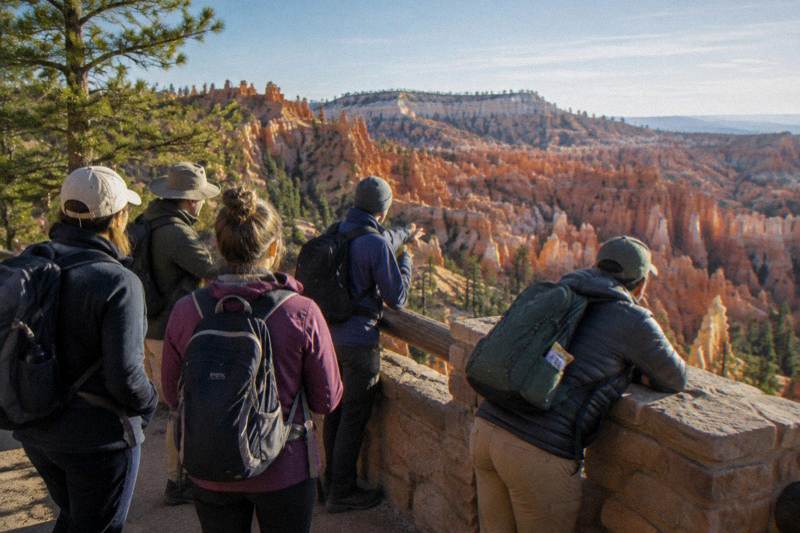
Is Bryce Colder Than Zion?
Yes, Bryce Canyon runs noticeably colder than Zion because it sits thousands of feet higher. Here is what the temperature gap means for trails, tours and packing.
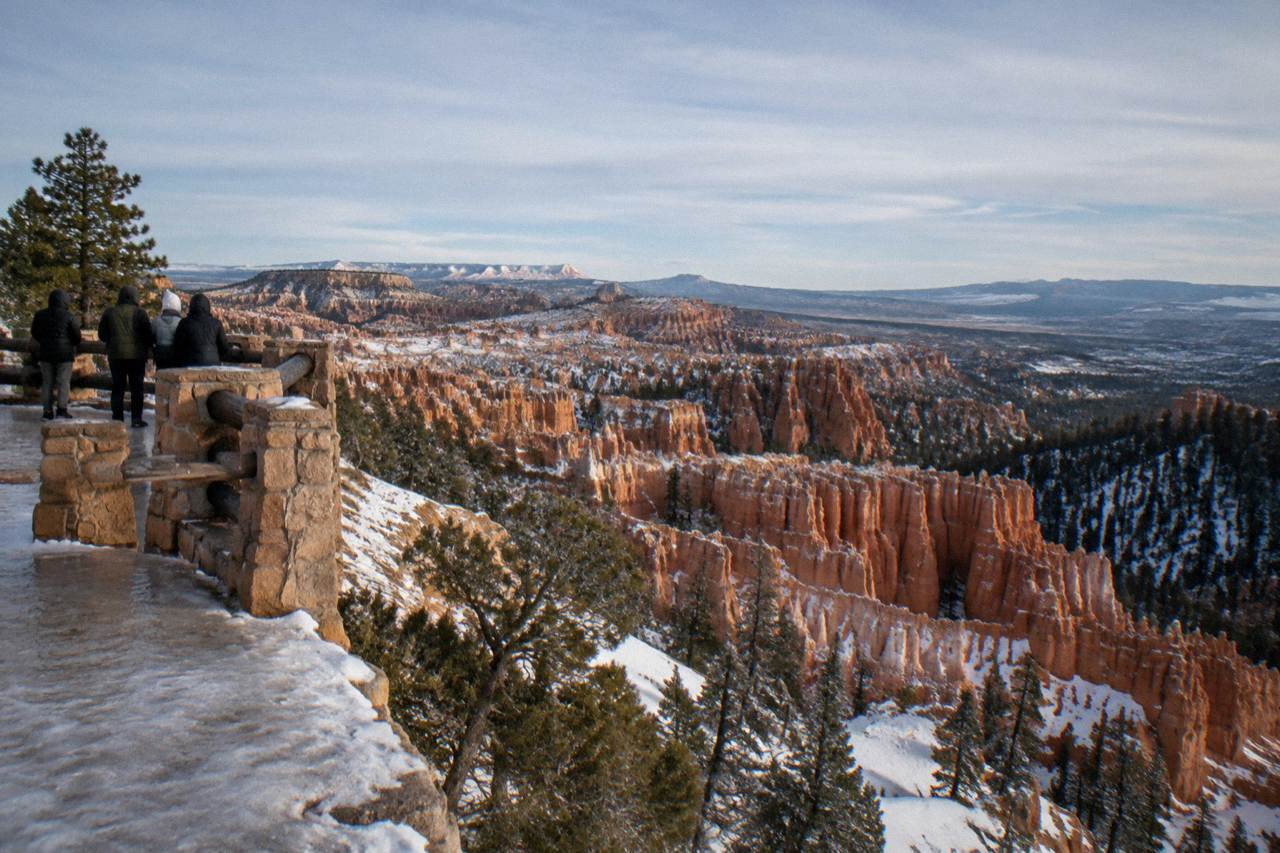
Yes, Bryce Canyon is colder than Zion, and the reason is elevation. Bryce Canyon averages about 8,000 feet above sea level and reaches 9,115 feet at its high points, so summer stays mild and winter turns genuinely harsh. The park service reports below-freezing nights nearly every night from October through May, a stretch Zion's lower canyon rarely matches.
The two parks sit only 78 miles apart if you measure from the Zion east entrance, yet they occupy completely different climate worlds. Zion's canyon bottoms sit far lower in the Colorado Plateau country, where summer heat builds and winter stays comparatively gentle. Bryce Canyon perches on the rim of the Paunsaugunt Plateau, high enough that the air holds less heat overnight and snow piles up through the cold half of the year. The park records roughly 100 inches of snow in an average year at the headquarters area alone.
That gap surprises a lot of travelers who plan both parks in one trip. People pack shorts for Zion, drive the scenic 78 miles east, and step out at Sunrise Point into air that feels like a different month. Tour operators see it constantly: the Las Vegas day trips that combine both parks, like the Zion and Bryce Canyon Small Group Tour from MARVIT TOURS at from $263.99 per person, cover both climates in a single 12 to 14 hour day, and guides on those runs tell guests to bring a layer for Bryce no matter what Zion felt like at lunchtime.
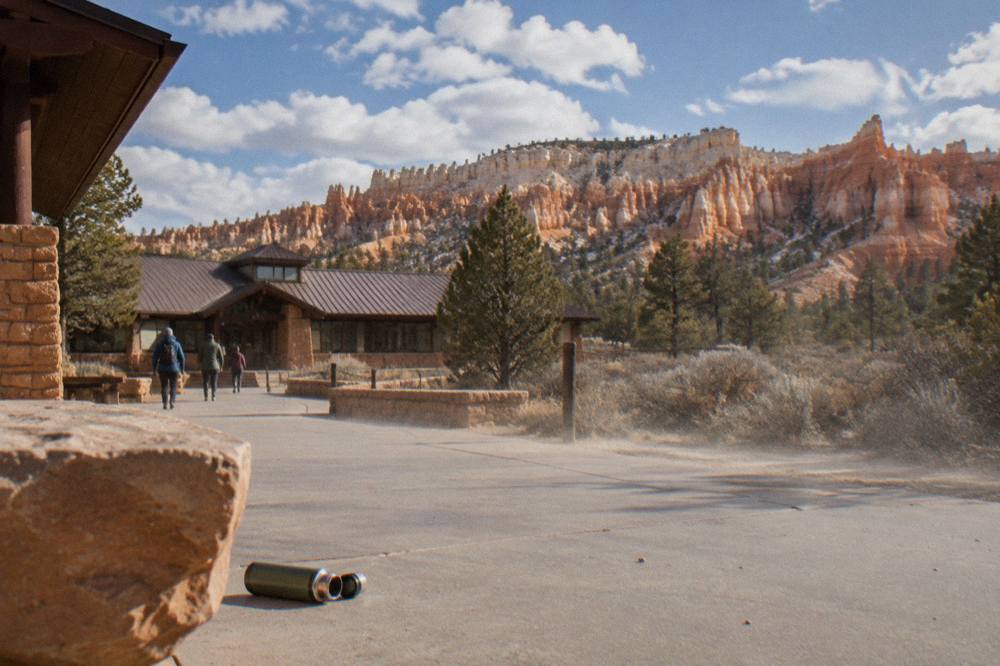
The practical version of the answer is simple. If Zion is comfortable in a T-shirt, Bryce Canyon probably wants a fleece, and if Zion is merely cool, Bryce Canyon could be freezing, especially at dawn or after sunset. The rest of this article lays out the actual numbers the park service publishes, what the cold does to each season, and how to plan around it, whether you are hiking the Queen's Garden route, riding with a small group tour, or booking one of the stargazing sessions that run late into the colder night air.
Why Elevation Makes Bryce Canyon The Colder Park
Bryce Canyon is colder because air cools as it rises, and the park sits at serious altitude. Elevations average about 8,000 feet and reach 9,115 feet, where the effective oxygen is about 75 percent of sea level and the sun warms thin air that then loses its heat fast after dark. Every thousand feet of climb costs real temperature.
The park service states it plainly on its altitude page: Bryce Canyon averages about 8,000 feet, reaches over 9,000 feet, and the Visitor Center itself sits at 7,894 feet. Zion, by contrast, is famous for canyon-bottom heat, and the two parks' climate personalities diverge almost entirely from that single difference. Thin air at altitude also intensifies the daily swing. Days can feel pleasantly warm in direct sun at Bryce Canyon even in January, then the moment the sun drops behind the rim the temperature plunges, which is why the monthly average lows look so brutal compared with the highs.
Altitude also changes how the cold feels and how your body handles it. The park service advises hikers to drink about one quart or liter of water every one to two hours, because the dry plateau air pulls moisture out of you faster than you notice, and dehydration mimics altitude sickness. Combined with cold, that catches visitors off guard. People who felt fine at Zion's lower elevation in the morning can feel short of breath climbing back up the Navajo Loop trail in the afternoon, since every Bryce Canyon trail starts with a descent and every return is uphill.
For tour planning, this elevation effect is why the same product can feel like two different trips depending on the hour. The 3-hour Scenic Tour of Bryce Canyon from Bryce Canyon Scenic Tours, from $84.81 per person with 4.9 across 1,215 reviews, runs largely at overlook stops where you stand in the wind. The private guided hike and picnic from Cedar & Sage Boutique Trekking, from $699 per group for up to four people, puts you on the trails where exertion keeps you warm but the morning start can be near freezing even in shoulder season. Neither is a bad choice in cold, but they reward different packing lists.
If you want the deeper dive into the numbers behind this, our Bryce Canyon weather by month guide breaks the full year down, and the Bryce Canyon elevation and altitude guide covers what thin air does to hiking.
Bryce Canyon Temperatures Month By Month
The park service publishes monthly averages for Bryce Canyon, and they run far colder than most visitors expect. Average highs range from 37°F in January to 80°F in July, while average lows sit between 15°F and 53°F. Freezing or near-freezing nights occur nearly every night from October through May.
Here are the published numbers, from the National Park Service weather table for the park headquarters area:
| Month | Average High (°F) | Average Low (°F) | What It Means |
|---|---|---|---|
| January | 37 | 15 | Coldest stretch, deepest snowpack |
| February | 38 | 17 | Coldest and snowiest period continues |
| March | 45 | 23 | Spring storms can still bring heavy snow |
| April | 54 | 29 | Muddy trails, freezing nights |
| May | 64 | 37 | Comfortable days, cold mornings |
| June | 75 | 45 | Mild, the best early-summer balance |
| July | 80 | 53 | Warmest month, afternoon thunderstorms |
| August | 77 | 50 | Rainy season continues |
| September | 70 | 42 | Crisp and clear, a favorite month |
| October | 58 | 32 | Snowstorms are not unusual |
| November | 45 | 23 | Below freezing most nights |
| December | 36 | 15 | Full winter, short days |
Two patterns in that table matter more than any single number. First, the daily spread is huge: even in July, a 27-degree gap separates the average high from the average low, so a day that starts at a stargazing session in the 50s ends in the morning cold of the low 50s falling toward the 40s. Second, the cold season is long. The park service notes that temperatures drop below freezing nearly every night from October through May, which means eight months of the year can hand you an icy morning at Sunrise Point regardless of how warm the afternoon became.
Snow reframes everything. Average monthly snowfall at the headquarters area runs about 17 inches in January, 18 in February, 17 in March, 8 in April, 10 in November and 14 in December, and the annual average across the park's monitoring is roughly 100 inches. The park also warns that snow levels near the Visitor Center run about half of what accumulates at Agua Canyon nearly 1,000 feet higher, so the southern scenic drive holds deeper snow than the Amphitheater overlooks even on the same day.
Planning a two-park day around these numbers? The Zion and Bryce Canyon tour guide covers how operators sequence the pair, and the operator's live listing shows current availability for the small group version.
How The Cold Changes What A Visit Feels Like
Cold at Bryce Canyon is not just a number on a forecast, it changes the experience hour by hour. Morning overlooks can be below freezing even after a warm afternoon, wind on the rim strips heat quickly, and winter brings snow-covered trails where traction footwear matters. The park itself shifts services seasonally.
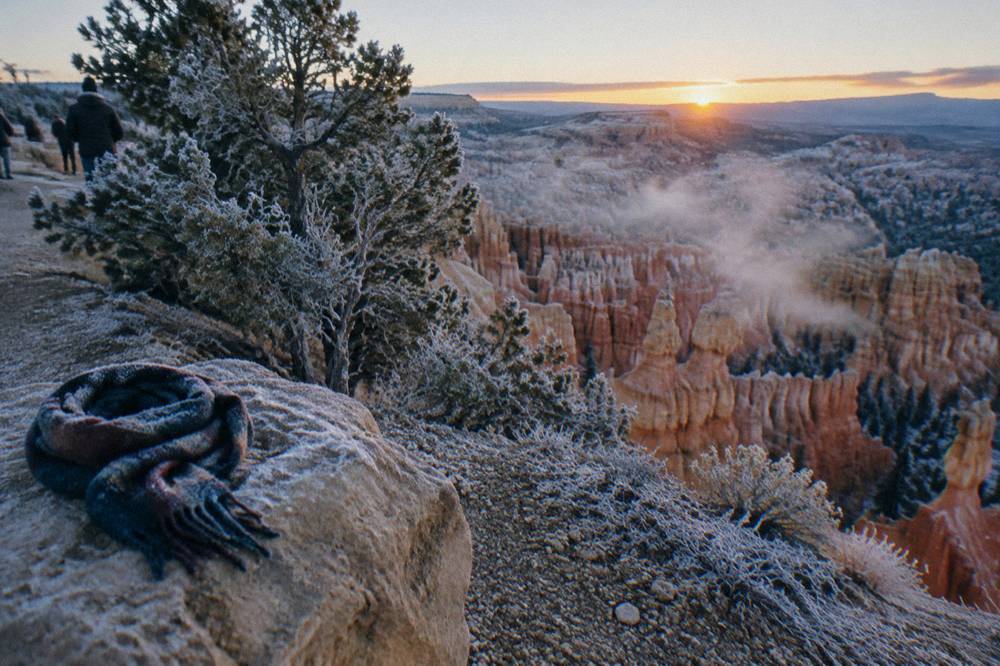
Dawn and dusk are when the temperature gap with Zion bites hardest, and those are exactly the hours Bryce Canyon is famous for. Sunrise Point and Bryce Point are the park service's named sunrise spots, and the best light arrives at the coldest hour of the day. In October that can mean standing on frosty pavement in the low 30s or colder while photographers wait for first light on the hoodoos. For sunset the park service suggests Inspiration Point or Paria View, arriving about 1.5 hours before the sun goes down, which in the cold half of the year means standing into the deepening chill well past the moment the sun leaves the rim, until the payoff arrives.
The rim wind is the multiplier. Bryce Canyon is an exposed plateau edge, and the same breeze that feels refreshing at Zion's lower elevation can make 40°F feel like freezing at 8,000 feet. Locals and guides repeat the same advice the park service gives: dress in layers you can shed, because you will want them all within a single morning.
Then there is the night. Bryce Canyon is a Gold Tier International Dark Sky Park, designated in 2019, and the stargazing sessions that run from Bryce Canyon City take full advantage of it, at private dark-sky sites with telescopes and hot beverages. The standard session runs 1 hour 30 minutes from $59.04 per person with 4.5 across 69 reviews, and the late-night version runs the same length from $106.28 per person with hotel pickup listed. Both put you outdoors at the coldest hours, and the operator supplies chairs and blankets at the base session for good reason. Clear winter skies are spectacular, but they come paired with serious cold.
Packing For Bryce Canyon When Zion Feels Warm
Pack for two climates on any trip that pairs the parks. For Bryce Canyon, the essentials are warm layers, a windproof outer shell, sun protection for the thin high-altitude air, and lug-soled or traction footwear in the cold half of the year. The park service requires lug-traction footwear on its limited-ticket Full Moon Hikes.
The layering logic follows directly from the temperature table above. A morning that starts near freezing needs an insulating layer and a shell, and by early afternoon the same day may only want a T-shirt in the sun. The dry air at 8,000 feet also dehydrates you faster than the cold suggests, so carry the quart or liter of water per couple of hours of hiking that the park service recommends, even in December when drinking feels like the last thing on your mind.
Footwear deserves a special note. Snow lingers on the shady north-facing sections of Bryce Canyon trails well after storms, and packed snow turns to ice on the popular routes. The park service requires lug-soled footwear for its Full Moon Hikes, 1 to 2 mile walks that run 2 to 3 hours with no flashlights allowed, and the same traction logic applies to any winter hike here. When snowpack exceeds 16 inches, those Full Moon Hikes can become snowshoe hikes, and the ranger-led snowshoe program provides free snowshoes and poles for participants ages 8 and up.
| Condition at Bryce Canyon | What to Bring | Which Tours Feel It Most |
|---|---|---|
| Freezing morning, mild afternoon | Layers, warm hat, gloves | Sunrise visits, 3-hour scenic park tours |
| Rim wind at any temperature | Windproof shell | Overlook-based tours, stargazing sessions |
| Afternoon thunderstorm season, July to August | Rain shell, storm awareness | Full-day hikes, Las Vegas day trips |
| Snow or ice on trails | Lug-traction footwear, gaiters | Guided hikes, horseback rides outside the park |
| Clear winter night | Insulated jacket, blanket | Stargazing sessions, late-night sessions |
A related planning note: if you are coming from Las Vegas, the guide to Bryce Canyon tours from Las Vegas covers the long day trips, and the drive question is answered in how long it takes to drive from Vegas to Bryce. Both are worth a read before you commit to a single-day pairing of the two parks and their two climates.
Which Bryce Canyon Tours Work Well In Cold Weather
Cold weather does not shut Bryce Canyon's tour calendar, it reshapes it. Overlook-based tours, stargazing sessions, private guided hikes and Las Vegas day trips all run in cool conditions, and every roster tour listed here offers free cancellation. The main cold-season constraint is that some in-park activities, like the concessioner horseback rides, pause in deep winter.
The overlook-based products are the most cold-tolerant, because you can stay warm in the vehicle between stops. The Scenic Tour of Bryce Canyon, from $84.81 per person with 4.9 across 1,215 reviews, covers the Amphitheater viewpoints in 3 hours with bottled water and snacks included. Its sibling, the Guided Sightseeing Tour from Bryce Canyon Scenic Tours at from $109 per person with 4.9 across 945 reviews, includes the park entrance fee in the price and starts in Fairyland Canyon before visiting the Natural Bridge, Inspiration Point and the Cathedral. On a cold morning, the minivan becomes part of the experience, not just transport.
The hiking products trade warmth for depth. The Full Day Small Group Tour & Hike from Good Trip Adventures runs 6 to 8 hours from $427 per person with a medically trained naturalist guide and park entry fees included, though it carries only 5 reviews so far, too few to quote as a rating. The full-day private version, from $972.95 per person with lunch included and 5.0 across 18 reviews, lets you set the pace, which in cold weather means building in warm-up stops. For families or small groups, the private guided hike and picnic from Cedar & Sage at from $699 per group for up to four, with 5.0 across 33 reviews, includes trekking poles that genuinely help on icy sections of the Queen's Garden route.
The Las Vegas combination day trips deserve a special mention for the cold question, because they are the products most likely to hand you both parks in one day. The Zion and Bryce Canyon Small Group Tour from MARVIT TOURS runs 12 to 14 hours from $263.99 per person with 4.6 across 155 reviews, hotel pickup, park admission for US residents and bottled water included, but no lunch, which matters when you are planning a cold day's food. The boutique small group option from National Park Express covers both parks in 13 hours from $219 per person with 4.7 across 1,224 reviews and a deli-style turkey sandwich served as a picnic, an inclusion that earns its keep when the afternoon wind picks up at Bryce Point.
For the night side of the calendar, the stargazing products above handle the cold better than most, since the operator supplies hot beverages and, at the base session, chairs and blankets. Late-night sessions run from $106.28 per person and add hotel pickup, useful when the session ends deep into the coldest hours.
Does The Cold Ever Close Bryce Canyon?
The park itself never closes for cold, it is open 24 hours a day year-round with no timed entry, but winter storms close roads temporarily and some facilities shut seasonally. The main road can close at mile marker 3 after storms until plows clear it, Wall Street is closed until further notice, and the shuttle stops running after mid-October.
The road closure pattern matters for tour planning. After a winter storm the park service closes the main scenic drive at mile marker 3, the Rainbow Gate, so plows can clear the southern 15 miles, and closures typically last a day or more. The Amphitheater viewpoints in the first 3 miles are prioritized for plowing, so the overlook tours keep running even when the southern drive to Rainbow Point and its 9,115-foot high country is temporarily off the table. Fairyland Point road and Paria View road close to vehicles for the entire winter season once snow requires plowing, though you can still reach them on foot, skis or snowshoes.
Two trail notes are firm. The Wall Street section of the Navajo Loop Trail is closed until further notice per a park service alert, and that section also closes for the full winter season by default, so plan the Queen's Garden and Navajo combination, the park's most recommended first-timer route, without it. And the Under-the-Rim backcountry trail has deteriorated sections where hikers proceed at their own risk with strong wayfinding skills, per the park's conditions page.
Facilities scale down with the seasons. The free park shuttle runs from April through mid-October with buses about every 15 minutes, so from late October through winter you are driving yourself or riding with a tour operator. Sunset Campground closes from November into April, while North Campground stays open year-round. The Visitor Center runs daily 8 a.m. to 4:30 p.m. through the winter and closes on Christmas Day. None of that closes the park, it just shifts how a visit works, and the winter months hand you snow-dusted hoodoos and quiet overlooks in exchange.
| Winter Change at Bryce Canyon | Detail | Tour Impact |
|---|---|---|
| Main road closure at mile marker 3 | After storms until plowed, typically a day or more | Southern overlooks drop off; Amphitheater stays open |
| Fairyland and Paria roads | Closed to vehicles all winter | No drive-up access; reachable on foot or skis |
| Wall Street section of Navajo Loop | Closed until further notice, plus seasonal winter closure | Combine Queen's Garden with the open Navajo sections |
| Shuttle season | Runs April through mid-October only | Tours and private vehicles handle winter transport |
| Ranger programs | Weather-dependent; snowshoe hikes when snow and staffing allow | Free cold-season alternative to paid tours |
For more on the quiet season, the Bryce Canyon winter tours guide covers what runs when the snow arrives.
One Trip, Two Climates: The Practical Takeaway
Treat Zion and Bryce Canyon as two different packing problems. Check the Bryce Canyon forecast against the monthly averages above, trust the layers over the thermometer, and schedule the coldest exposures, sunrise and stargazing, with the right gear. The temperature gap is real but entirely manageable with a plan.
The visitors who struggle are the ones who treat the 78 miles between the parks as a formality. The ones who thrive bring the fleece even when the Las Vegas forecast says warm, book the overlook tour for the windy morning and the hike for the calm afternoon, and accept that a Bryce Canyon sunset in October is a commitment measured in degrees. On this site, Bryce Canyon National Park Tours exists partly for that reason: the weather question and the tour question are the same question, and the operator's live listing for each product states its own cancellation terms.
Free options soften the cold too. The Rim Trail, the ranger programs and the park's roughly 100 annual astronomy events cost nothing beyond admission, and the snowshoe hikes lend you the gear. Between those and the bookable products, from the $16.99 per group audio driving tour to the full-day guided hikes, there is a version of Bryce Canyon for every temperature the plateau can produce. The park service's own weather page is the forecast source to check before you go, its altitude FAQ explains the elevation figures cited here, and current road conditions carry the closure alerts.
Common Questions About Bryce Canyon Vs Zion Temperatures
Is Bryce Colder Than Zion?
Yes. Bryce Canyon averages about 8,000 feet above sea level and reaches 9,115 feet, so it runs markedly colder than lower-elevation Zion. The park service reports below-freezing nights nearly every night from October through May at Bryce Canyon, with average lows of 15°F in January against average highs of 80°F in July.
How Much Colder Is Bryce Canyon Than Zion In Summer?
The park service's Bryce Canyon table shows July average highs of 80°F and lows of 53°F, with June in the 70s by day. Zion's canyon floors run warmer than that in the same months. For exact Zion figures, check the Zion National Park forecast, but count on Bryce Canyon feeling noticeably cooler, especially in the evening.
Does It Snow At Bryce Canyon?
Regularly. Average monthly snowfall at the headquarters area runs about 17 inches in January and 18 in February, and the annual average is roughly 100 inches. After storms the main road can close at mile marker 3 for a day or more while plows work, though the Amphitheater overlooks are plowed first.
What Should I Pack If I Am Visiting Both Parks?
Layers for two climates: warm insulating pieces, a windproof shell, sun protection for the thin air, and lug-soled footwear from October through spring. Carry about one quart or liter of water per one to two hours of hiking, since the dry altitude dehydrates you faster than the cold suggests.
Do Tours Still Run When Bryce Canyon Is Cold?
Yes. The overlook-based scenic tours, stargazing sessions, private guided hikes and Las Vegas day trips all operate in cool conditions, and every roster tour listed on this site offers free cancellation. The main seasonal pause is the in-park concessioner horseback ride, which typically runs April through October 31.
Why Is Bryce Canyon So Cold At Night?
Thin air at altitude loses heat quickly once the sun drops. At 8,000 feet the effective oxygen is about 75 percent of sea level, and the same thin atmosphere that warms fast in direct sun gives that heat back fast after dark, producing the large daily temperature swings in the park's published averages.