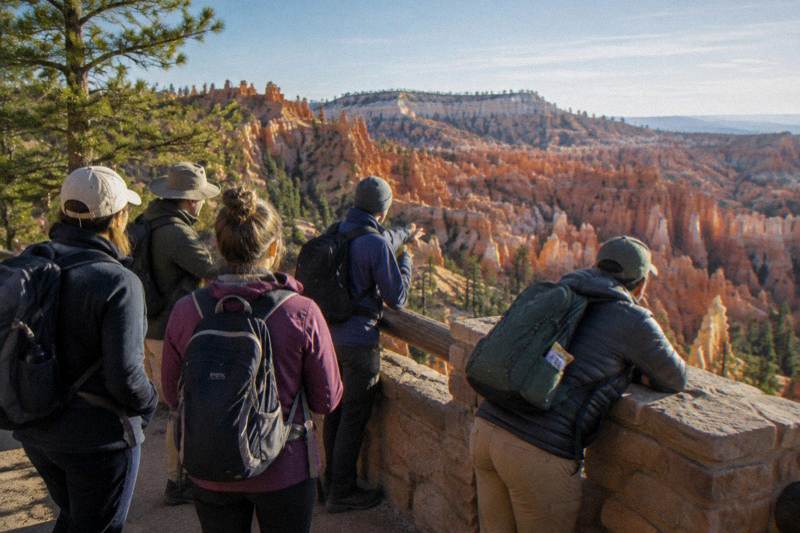
Bryce Canyon Elevation And Altitude: What 8,000 Feet Does To Your Visit
Bryce Canyon is one of the highest-elevation national parks in the lower 48 states, and that number is not trivia. It shapes your breathing, your water bottle, your sunburn risk and which tour you should book.
Short answer
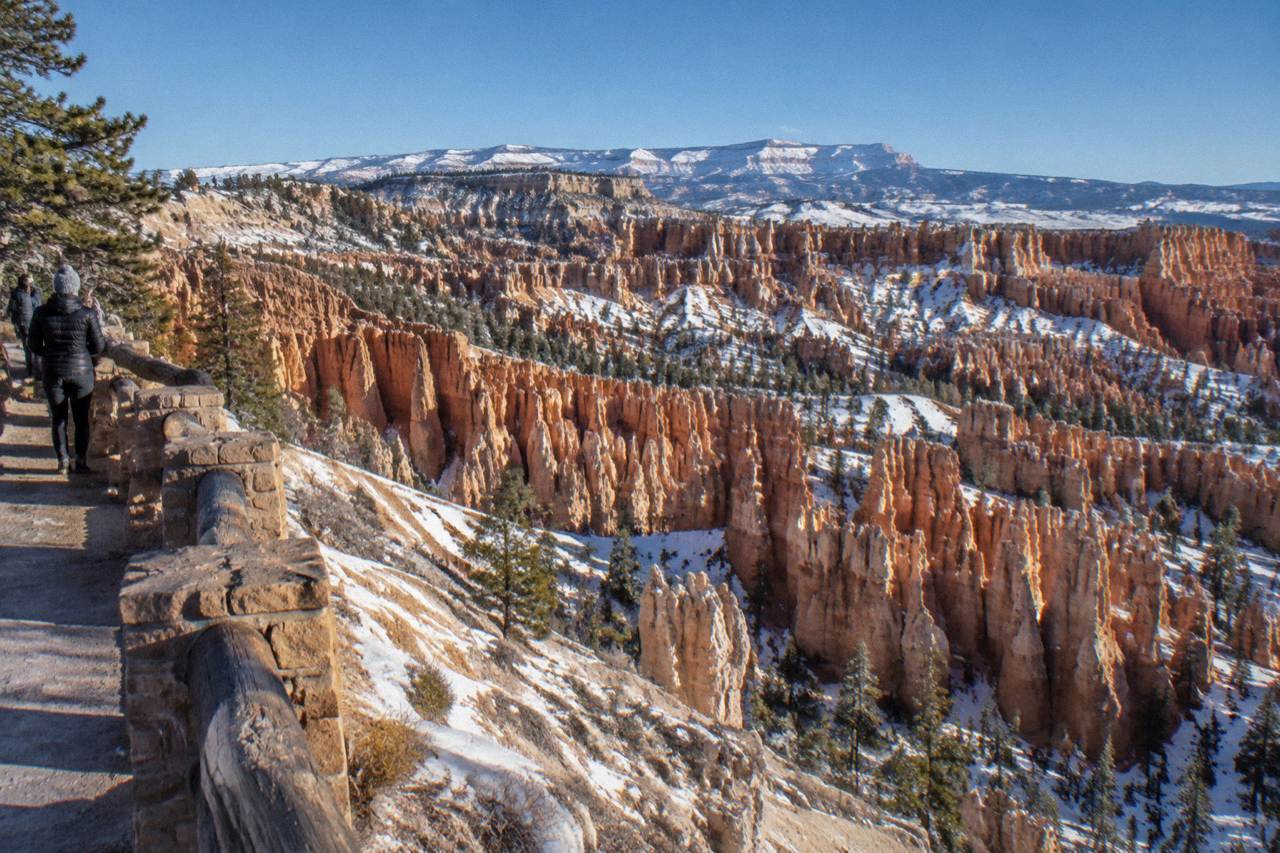
Bryce Canyon's elevation averages about 8,000 feet and reaches 9,115 feet at the park's high points, with the Visitor Center at 7,894 feet. At 8,000 feet the air holds roughly 75 percent of the oxygen available at sea level, so hikers should drink about one quart of water every one to two hours on trail.
Bryce Canyon's rim sits higher than almost any other famous park viewpoint in the American West, and the park service is unusually direct about what that means: elevations average about 8,000 feet, reach over 9,000 feet, and at 8,000 feet the effective oxygen is about 75 percent of what you breathe at sea level. Every trail in the Amphitheater starts with a descent, which means every hike back to the rim is uphill, in thin air, often under a desert sun. That single fact reshapes more itineraries than any other at this park.
This guide walks through the numbers, the oxygen question, hydration, who should take the altitude seriously, and how the elevation interacts with weather and tour choices. It draws on the park service's own pages and on the tour listings on this site, and it sticks to practical planning rather than medical advice.
What Is The Elevation Of Bryce Canyon?
Bryce Canyon National Park stands between roughly 8,000 and 9,115 feet above sea level. The park service states that elevations average about 8,000 feet and reach over 9,000 feet, with specific high points at 9,115 feet. The Visitor Center sits at 7,894 feet, so even the lowest-traffic parts of a visit happen well above mile-high cities like Denver.
The park occupies the eastern edge of the Paunsaugunt Plateau, and the terrain steps upward as you drive south along the 18-mile scenic drive. The Amphitheater overlooks that most visitors come for, Sunrise Point, Sunset Point, Inspiration Point and Bryce Point, cluster in the first three miles and sit near the middle of the elevation range. Farther south the road climbs, and by Rainbow Point at the end of the drive you are standing at the top of the park's elevation ladder.
Why does the spread matter for planning? Because the difference between the Visitor Center and Rainbow Point is more than 1,000 vertical feet, and weather can differ meaningfully between them. The park service notes that snow levels near the Visitor Center run about half of what accumulates at Agua Canyon, a SNOTEL site nearly 1,000 feet higher. A clear morning at the rim can coexist with a snow-squall afternoon at the south end.
| Location in the park | Approximate elevation | Notes |
|---|---|---|
| Visitor Center | 7,894 ft | Park headquarters area, shuttle Stop 6 |
| Bryce Amphitheater overlooks | around 8,000 ft | Sunrise, Sunset, Inspiration, Bryce Points |
| Plateau average | about 8,000 ft | Park service figure for park-wide average |
| Rainbow Point area | 9,115 ft | Southern end of the scenic drive, Bristlecone Loop |

For comparison, Zion National Park's main canyon floor sits far lower, which is one reason the two parks feel so different on the same road trip. Our comparison of Bryce Canyon versus Zion covers the tradeoffs in detail, and it is worth reading before you commit to a combined itinerary.
How Does Altitude Affect You At Bryce Canyon?
At 8,000 feet, the park service calculates effective oxygen at about 75 percent of sea level. Visitors commonly feel more breathless on climbs, tire faster on the uphill return from Amphitheater trails, and notice a faster heartbeat during normal walking. These are ordinary responses to moderate altitude for most people, not signs of illness, though anyone with symptoms that worry them should seek medical advice.
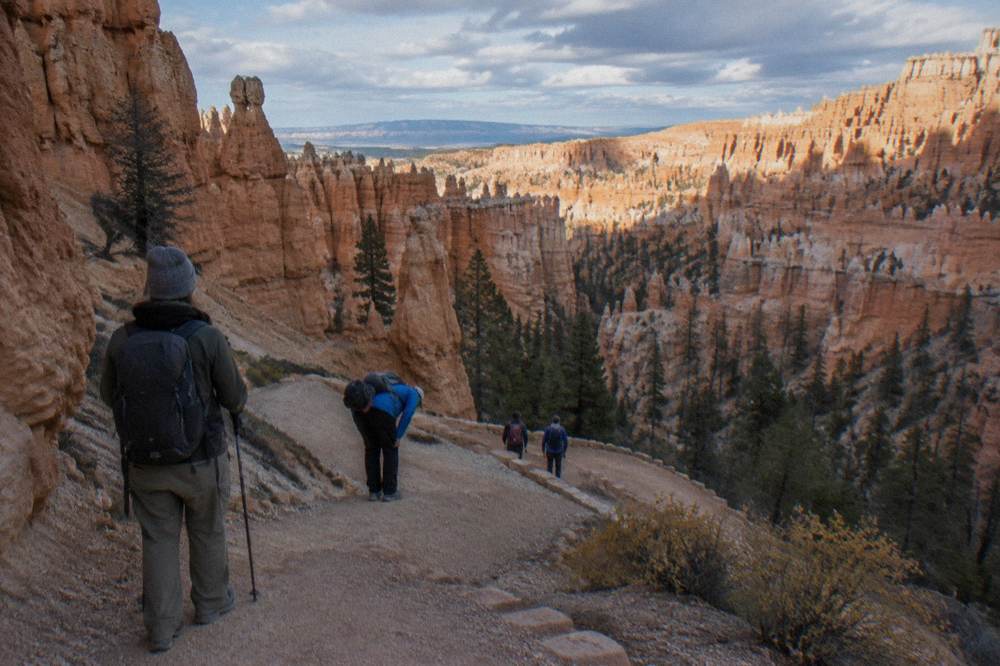
The mechanism is simple: the air pressure is lower, so each breath delivers less oxygen than your body is used to. Your system compensates by breathing a bit faster and working the heart a little harder, which is why a staircase that would be trivial at home can feel like effort at the rim. The park's trail design compounds this. Because hikes like the Queen's Garden and Navajo Loop descend first, the easiest part of the walk comes at the start and the steepest sustained effort comes at the end, when you are already tired.
Guided hikes here are built around that reality. The private guided hike and picnic run by Cedar & Sage Boutique Trekking spends four to six hours on routes including the Queens Garden Loop, Sunrise Point, Sunset Point and Thor's Hammer, with trekking poles included, which many hikers at altitude appreciate on the climb out. Good Trip Adventures runs a full-day small group tour and hike rated for six to eight hours with a medically trained, naturalist guide, and its listing includes park entry fees and snacks.
Altitude also amplifies two other factors that have nothing to do with fitness. The sun is stronger because there is less atmosphere above you, so sunburn arrives faster than many visitors expect. And dry high-desert air pulls moisture out of you even when you never feel sweaty, which is why dehydration, not breathlessness, is the more common complaint rangers hear.
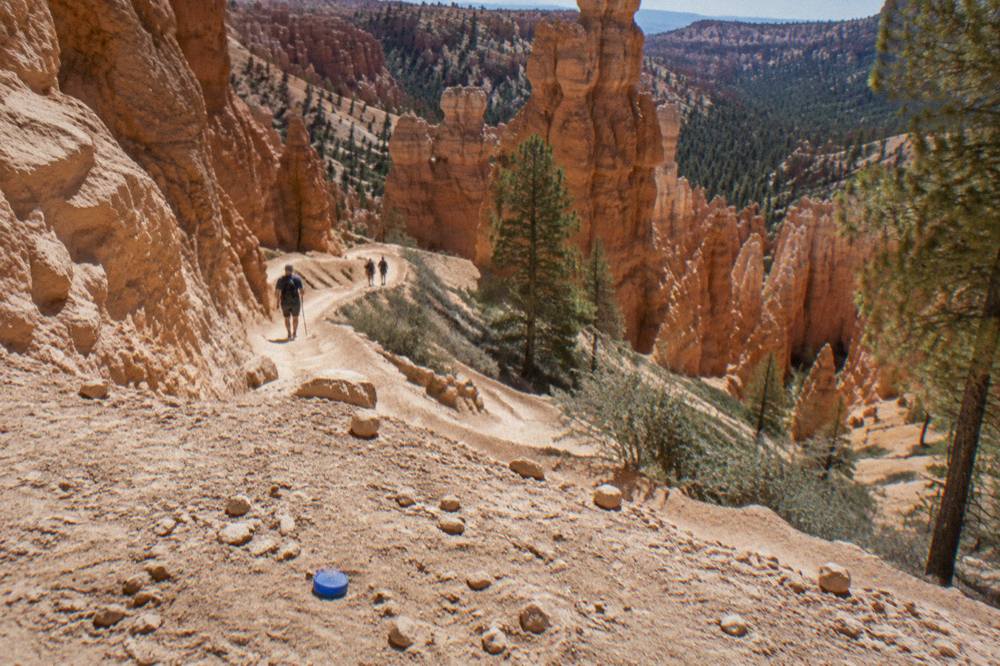
If you would rather let someone else manage the pace, the tours below were compared for exactly this situation: seeing the park's elevation range without treating the day as a workout.
The 3-hour Scenic Tour of Bryce Canyon from Bryce Canyon Scenic Tours, from $84.81 per person with 4.9 across 1,215 reviews, keeps you at rim level with water and snacks included. The guided sightseeing tour that starts in Fairyland Canyon includes the park entrance fee in its $109 per person price and reaches the Natural Bridge, Inspiration Point and the Cathedral. And the self-guided driving audio tour at from $16.99 per group of up to 4 turns your own car into the guide, useful when you want to control every rest stop.
How Much Water Do You Need At Bryce Canyon's Elevation?
The park service recommends drinking about one quart, roughly one liter, of water every one to two hours while day hiking at Bryce Canyon. That guidance applies to the Amphitheater trails in particular, where the return climb is sustained and the air is dry. On non-hiking days visitors should still carry and sip water regularly rather than waiting for thirst.
One quart per one to two hours sounds like a lot, and it is, but the figure comes straight from the park's day-hiking guidance. The dry air means you lose moisture with every breath, and the altitude suppresses the obvious sweat cues your body uses at lower elevations. Many hikers feel fine at the turnaround point and hit the wall halfway up the Navajo Loop ascent, which is a hydration and fuel story as much as a fitness story.
Practical habits that work well here:
- Start drinking before you reach the trailhead, not at the first water fountain.
- Carry more than you think you need; the tours that include water, like the small group park tours, supply only a bottle or two.
- Treat the descent as the easy half and the ascent as the real hike, and pace accordingly.
- Add salty snacks on longer hikes, since plain water alone does not replace what you sweat out.
Several listings on this roster handle hydration for you. The Las Vegas day trip run by National Park Express includes two complimentary bottles of water plus a granola bar, with an explicit note to bring additional water if needed. The private guided hike and picnic from Cedar & Sage includes bottled water, lunch, snacks and trekking poles in its from $699 per group price for up to four people. Knowing what is included lets you size your own refill plan honestly.
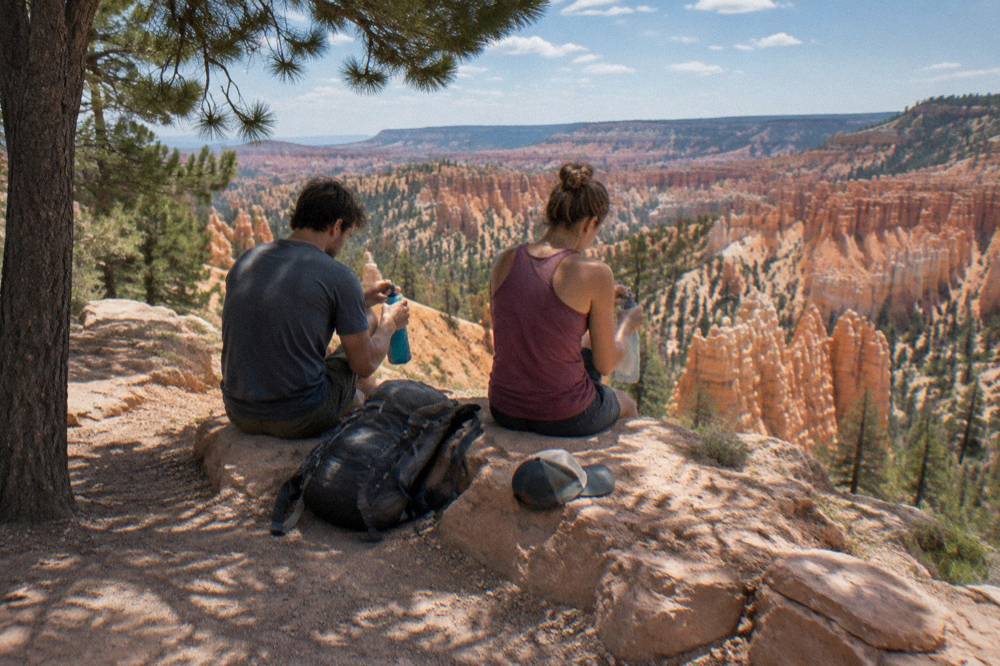
If the arithmetic of water, uphill exits and thin air sounds like more logistics than you want, a guided option shifts the planning onto the operator. You can check the guided tour options or go straight to Check availability on the operator's live listing for the Scenic Tour of Bryce Canyon.
Who Should Be Careful At High Altitude In Bryce Canyon?
General practical guidance applies to anyone with a heart or lung condition, anyone who lives at sea level and jumps straight into strenuous hiking, pregnant visitors, young children and older adults: take the elevation seriously, go slower than usual, and favor rim-level activities on day one. This article offers planning advice only, not medical claims. Visitors with health conditions should ask a doctor before traveling to 8,000 feet.
The honest framing is that most visitors to Bryce Canyon do fine, and the park's most popular walk, the Queen's and Navajo combination loop, is rated moderate rather than strenuous. But the park service is clear that every trail exit is uphill, and the combination of altitude, dry air, sun and a climb catches out people who are reasonably fit at home. Sea-level residents arriving by air or after a long drive from Las Vegas, about 270 miles away, are starting the hike on their first plateau day.
Sensible adjustments, none of them medical:
- Spend the first hours at overlooks rather than below the rim; the views from the rim are the park's signature anyway.
- Shorten the first hike and add a second only if the first felt easy.
- Hike in the morning, when temperatures are lower and afternoon thunderstorms have not built, especially in July and August.
- Build in a rest day or a low-altitude day, such as Zion or Red Canyon, before your biggest Bryce hike.
If below-the-rim hiking is off the table for your group, the alternatives are strong. The scenic overlook tour keeps the entire experience at rim level. The helicopter flights from Bryce Canyon Airport, 15 minutes from $175 per person and 30 minutes from $309 per person, put the elevation to work for you, flying over the formations rather than climbing through them. Note that helicopters may not land inside the park; the flights depart the airport and overfly it. And the stargazing sessions at a private dark-sky site near Bryce Canyon City, from $59.04 per person, involve sitting in chairs with blankets, telescopes and hot beverages rather than exertion.
The private guided hike and picnic deserves its own mention for cautious groups: at from $699 per group for up to four, with 33 reviews at 5.0, it bundles a guide, lunch, snacks, water and poles, and the private format means the pace is yours. On a day when the altitude question is really a confidence question, that control matters.
How Does Elevation Change The Weather At Bryce Canyon?
Bryce Canyon's altitude produces cold nights, sudden summer thunderstorms and snow that can fall from October through spring. The park service reports below-freezing temperatures nearly every night from October through May, average January highs of just 37 degrees Fahrenheit, and afternoon lightning storms as a routine July and August pattern. Winter storms can close the main road past mile marker 3 until plows clear it.
The monthly averages tell the story plainly. Summer daytime highs sit in the 70s to around 80 degrees Fahrenheit, which surprises visitors expecting desert heat, while summer nights drop into the 50s. Winter flips the picture: average December highs are 36 degrees with lows around 15. Layering is not a slogan here, it is the difference between a good viewpoint stop and a miserable one, particularly at sunset, when the park service suggests arriving about 1.5 hours before sunset at Inspiration Point or Paria View and the temperature falls throughout that window.
| Month | Average high (F) | Average low (F) | What the altitude adds |
|---|---|---|---|
| January | 37 | 15 | Coldest, snowiest stretch of the year |
| April | 64 | 29 | Heavy spring snowstorms still possible |
| June | 75 | 45 | Comfortable days, cold nights |
| July | 80 | 53 | Afternoon thunderstorms and lightning |
| September | 70 | 42 | Storm season tapering off |
| October | 58 | 32 | Snowstorms are not unusual |
The July and August storm pattern matters for hikers specifically: ranger programs are cancelled when lightning is within 10 miles, and the same logic should end your below-the-rim hike too, since the Amphitheater's exposed rock is a poor place to be in an electrical storm. Morning hiking solves most of this. The trade-off at altitude is that summer mornings are cold, so pack the layers you would not pack for Zion's canyon floor. Our month-by-month breakdown in Bryce Canyon weather by month extends this table across the whole year.
Winter has its own rules. The Fairyland Point and Paria View roads close to vehicles for the season once snow requires plowing, and the main scenic drive can temporarily close at mile marker 3 after storms, typically for a day or more, while the Amphitheater area stays accessible. Winter full moon hikes become snowshoe hikes when snowpack exceeds 16 inches. The winter tours guide covers what still runs in the cold season, and the answer is more than most people expect, including horseback riding in Red Canyon on the east side and stargazing year-round.
Which Bryce Canyon Tours Suit You Best At This Altitude?
The best-fit tour depends on how much uphill you want at 8,000 feet. Rim-level scenic tours, from $84.81 to $109 per person, involve no climbing. Full-day guided hikes, from $427 per person, are for visitors who want the trails with support. Audio driving tours, from $16.99 per group, suit independent travelers who set their own pace and stop whenever the altitude calls for a rest.
Comparing the roster by physical demand gives a clearer picture than price alone. Note the review counts: ratings on small pools, like 5.0 from 5 reviews, are printed here as the roster states them and are too thin to treat as a verdict.
| Tour | Format | Price | Physical demand |
|---|---|---|---|
| Scenic Tour of Bryce Canyon | 3-hour small group park tour | from $84.81 per person | Minimal, rim-level |
| Guided Sightseeing of Bryce Canyon | 3-hour small group park tour, fee included | from $109 per person | Minimal, rim-level |
| Self-guided driving audio tour | Audio drive in your own car | from $16.99 per group of up to 4 | You decide |
| Full Day Small Group Tour and Hike | 6 to 8 hour guided hike | from $427 per person | Strenuous |
| Private guided hike and picnic | 4 to 6 hour private hike | from $699 per group of up to 4 | You set the pace |
| Helicopter flight over the park | 15 or 30 minute flight | from $175 per person | None |
Two fee notes belong with this comparison. Several listings include the park entrance fee, notably the guided sightseeing tour and both Good Trip Adventures full-day hikes, while the Scenic Tour of Bryce Canyon lists park admission as an exclusion. And non-US residents age 16 and over owe a $100 per person nonresident fee on top of entry unless covered by an applicable pass; the $250 nonresident annual pass covers the holder plus up to three nonresident adults in a commercial tour group. Our full breakdown of entrance fees and passes explains the arithmetic.
For visitors who want the trails but not the solo risk, the full-day small group tour and hike pairs a medically trained naturalist guide with park entry fees and snacks across a six to eight hour day, from $427 per person. Its listing carries 5.0 from 5 reviews, a pool too small for a standing claim either way. Lunch is excluded, so pack accordingly, and remember that the same one quart per one to two hours water rule applies with a guide standing next to you.
How Should You Adjust Your Bryce Canyon Plans For Altitude?
Plan to arrive the evening before your big hike, sleep at elevation when possible, keep day one at overlook level and split long drives with stops. Ascend gradually if your itinerary allows, hydrate on a schedule, and book tours with free cancellation so weather, energy or altitude symptoms can change your plan without penalty. Every tour listed here comes with free cancellation.
The single most effective adjustment is timing. A visitor who drives up from Las Vegas or flies into Salt Lake City, both about 270 miles away, and hikes the same afternoon is asking their body to perform at 8,000 feet on zero acclimatization. A visitor who sleeps in Bryce Canyon City or Tropic, spends the next morning at Sunrise and Sunset Points, and saves the below-the-rim loop for day two has given their body a full plateau night to adjust. Neither approach guarantees anything, but the second simply gives physiology more time to work.
A sample altitude-aware first 48 hours:
| Timing | Activity | Why it fits the altitude |
|---|---|---|
| Arrival afternoon | Scenic drive to Rainbow Point and back by car | Maximum elevation exposure, zero effort |
| First evening | Stargazing session near Bryce Canyon City | Seated, telescopes and blankets provided |
| Morning two | Rim Trail between Sunrise and Sunset Points | Flat half-mile stretch, tests the legs gently |
| Midday two | Below-the-rim hike if the morning felt easy | Uphill exit comes with a night of acclimatization behind you |
That first-evening stargazing slot is a genuinely good altitude fit: the sessions run at a private dark-sky site near Bryce Canyon City, with chairs, blankets and hot beverages included, and the standard session is from $59.04 per person with 4.5 across 69 reviews. The late-night session at from $106.28 per person runs 90 minutes as well, with hotel pickup listed. Neither involves a staircase in the dark.
Booking with flexibility matters at altitude precisely because altitude days are unpredictable. Every tour on this site comes with free cancellation, so a plan built on a morning hike can be reshaped into a scenic drive or a stargazing night without losing the booking. That flexibility is the quiet advantage of a tour over a rigid independent itinerary, and it is the reason this site, Bryce Canyon National Park Tours, organizes its comparisons around bookable, cancellable options rather than a single "best" answer.
For road-trippers combining parks, the Zion and Bryce self-driving bundle from $24.99 per group of up to 4 pairs audio commentary for both parks, 8 to 9 hours of content, and the flexibility to pause whenever the elevation or the light demands it. The Zion east entrance is 78 miles from Bryce, a manageable hop that lets you sleep a night or two at each elevation before your hardest hike. The site's guide to the Zion and Bryce Canyon tour options covers combined itineraries in more depth.
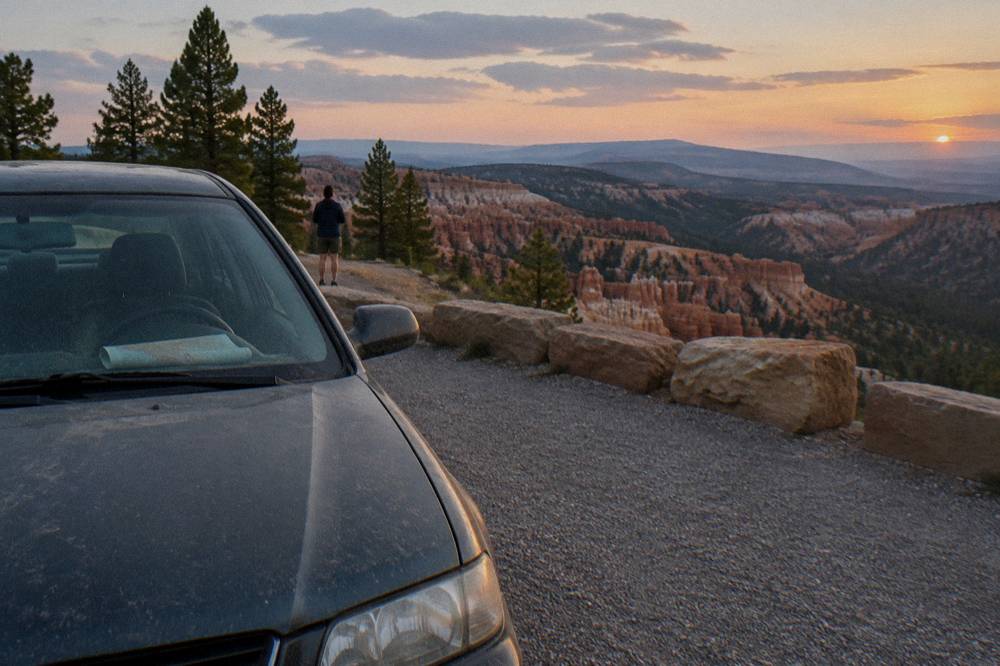
One last elevation note for drivers: the park's altitude means engines, radiators and humans all work a little harder on the climb between the entrance station and Rainbow Point. The oversize-vehicle rules during shuttle season, restricting vehicles 23 feet and longer from Amphitheater-area parking in miles 1 to 3, exist partly because of how tight that high-country road and its lots are. The scenic drive and map guide explains the layout, including which pullouts reward a stop and where the shuttle, free with admission through mid-October, saves you the parking hunt entirely.
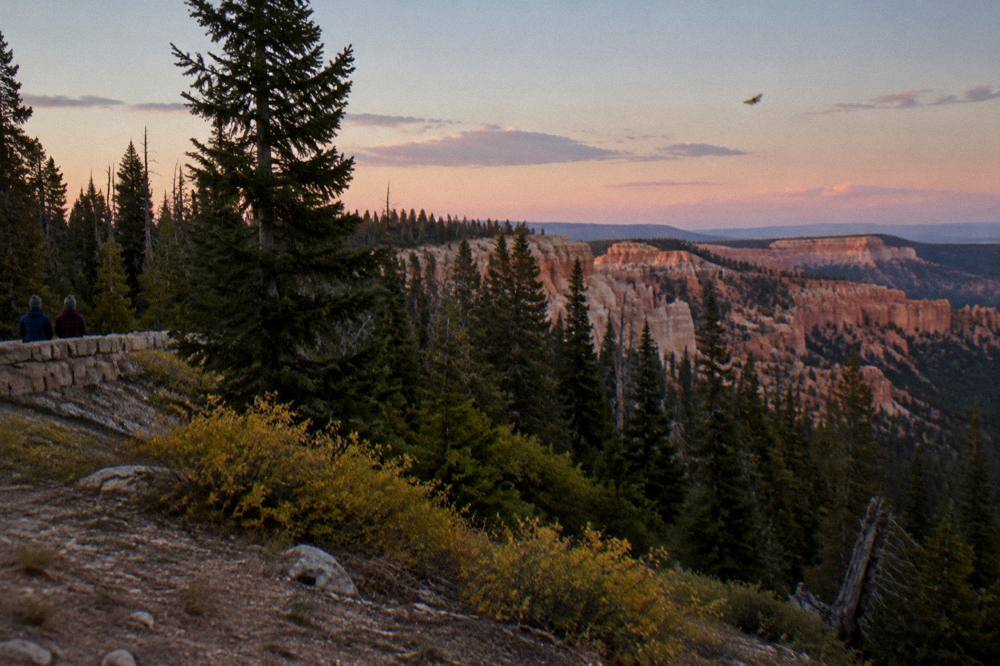
Elevation is the lens that makes everything else about Bryce Canyon make sense: why the hikes feel different, why the water bottle matters, why the weather swings, and why a rim-level tour and a full-day hike are genuinely different products rather than different prices for the same thing. Plan for the air you will actually be breathing, and the rest of the itinerary tends to fall into place. These three options cover the main ways to experience the park at whatever effort level the altitude allows.
Common Questions About Bryce Canyon Elevation
What Is The Elevation Of Bryce Canyon National Park?
Elevations average about 8,000 feet and reach 9,115 feet at the park's high points. The Visitor Center sits at 7,894 feet, and Rainbow Point at the south end of the scenic drive marks the top of the range.
Does The Altitude At Bryce Canyon Make Hiking Harder?
Yes, for most sea-level visitors. At 8,000 feet effective oxygen is about 75 percent of sea level, and every Amphitheater trail ends with an uphill climb back to the rim. Hikers commonly feel more breathless and tire faster than they would at lower parks.
How Much Water Should I Drink At Bryce Canyon?
The park service recommends about one quart, or one liter, of water every one to two hours while day hiking. The dry air suppresses the usual sweat and thirst cues, so drinking on a schedule works better than drinking when thirsty.
Who Should Be Careful At Bryce Canyon's Altitude?
As general planning advice, visitors with heart or lung conditions, sea-level residents jumping straight into strenuous hikes, pregnant visitors, young children and older adults should go slower than usual and favor rim-level activities on day one. Anyone with a health condition should ask a doctor before visiting 8,000 feet.
Does It Snow At Bryce Canyon Because Of The Elevation?
Yes. Snowstorms can occur in October, below-freezing nights are typical from October through May, and the park averages roughly 100 inches of snowfall a year at headquarters. Winter storms can close the main road past mile marker 3 until plows finish.
Which Tours Are Best If I Want To Avoid Strenuous Hiking At Altitude?
The 3-hour Scenic Tour of Bryce Canyon from $84.81 per person and the guided sightseeing tour from $109 per person both stay at rim level. Helicopter flights from $175 per person overfly the park, and the stargazing sessions from $59.04 per person are seated experiences with telescopes and blankets.