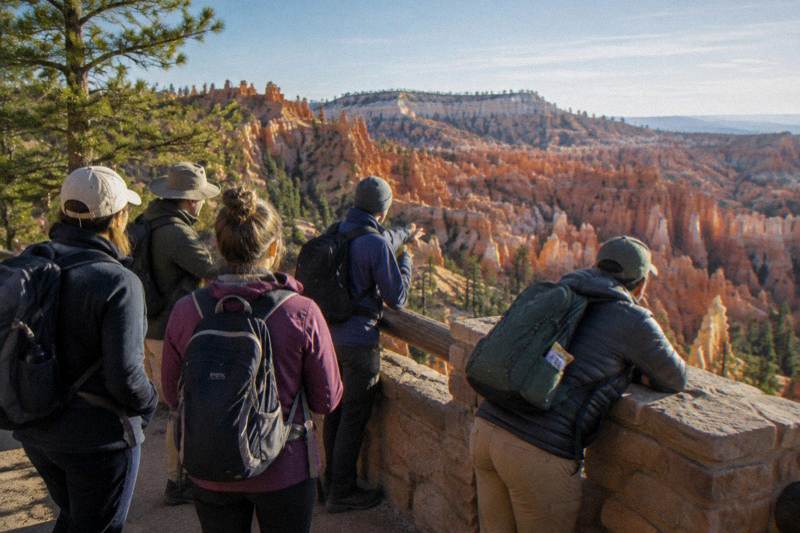
Is Now A Good Time To Visit Bryce Canyon?
A clear answer to whether now is a good time to visit Bryce Canyon: mid-October 2026 conditions, shuttle and visitor center hours, seasonal trade-offs, and which tours are still running.
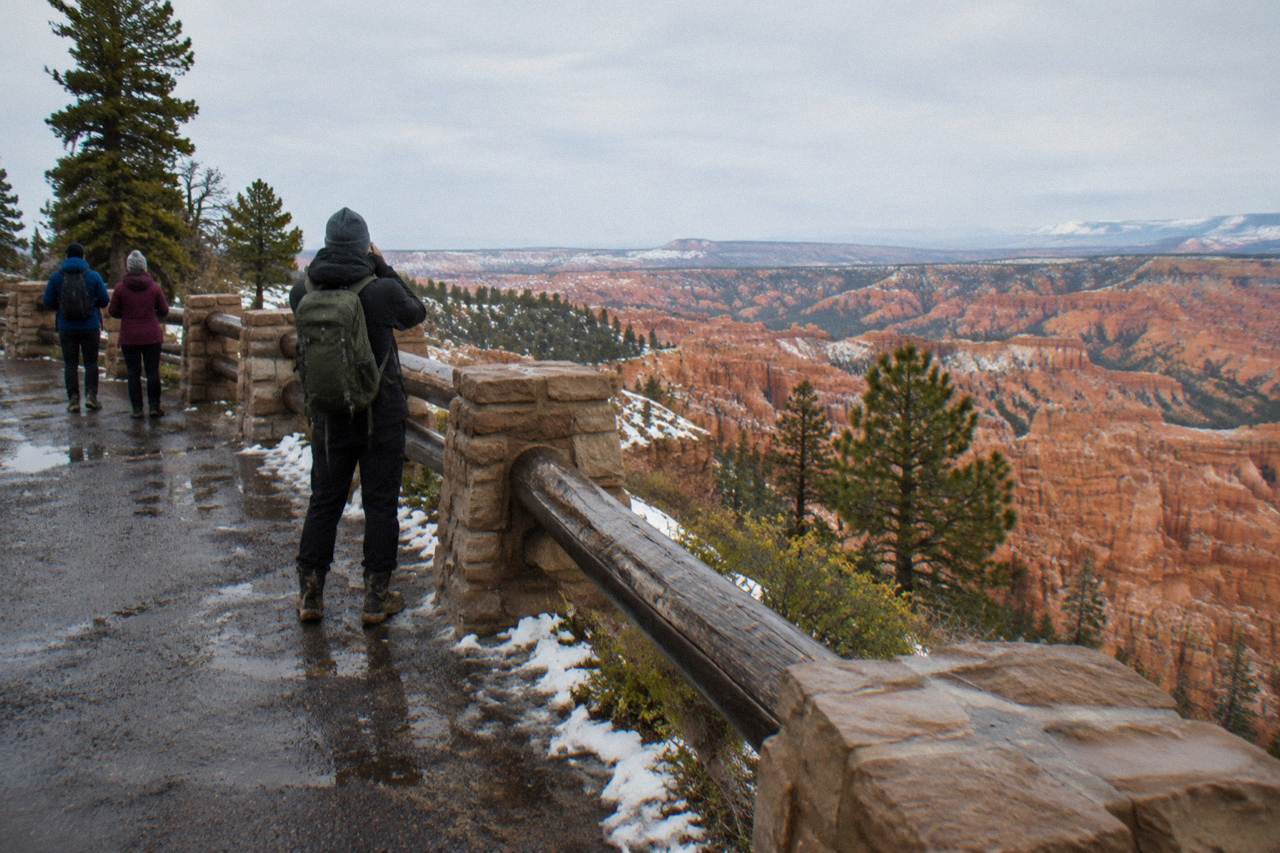
Yes, for most travelers, with two adjustments. The park is open 24 hours a day year-round with no timed entry, crowds are well past their May-to-September peak, and every guided product on this site, from the 3-hour Scenic Tour of Bryce Canyon at $84.81 per person to the stargazing sessions, is bookable. The adjustments: the shuttle season ends October 20, and snowstorms in October are, in the park service's own words, not unusual.
That pairing, thin crowds and possible snow, is the whole story of a mid-October or shoulder-season visit in two lines. The National Park Service keeps the gate open around the clock every day of the year, so there is no date on which the park itself is closed, and no reservation is needed to drive in. What changes through the year is the machinery around the edges: the free shuttle, the Visitor Center hours, which campground loops are open, which trail sections are safe, and how cold the nights get.
For tour shoppers the timing question is mostly practical. The operators that run the small group park tours, the Las Vegas day trips, the Red Canyon horseback rides and the stargazing sessions all list free cancellation, so a shoulder-season booking carries less risk than it might appear. This site's own comparison of the listings, in how to choose a Bryce Canyon tour, walks through which products fit which travel style, and the timing layer sits on top of that choice rather than replacing it.
What Mid-October Conditions Look Like At Bryce Canyon
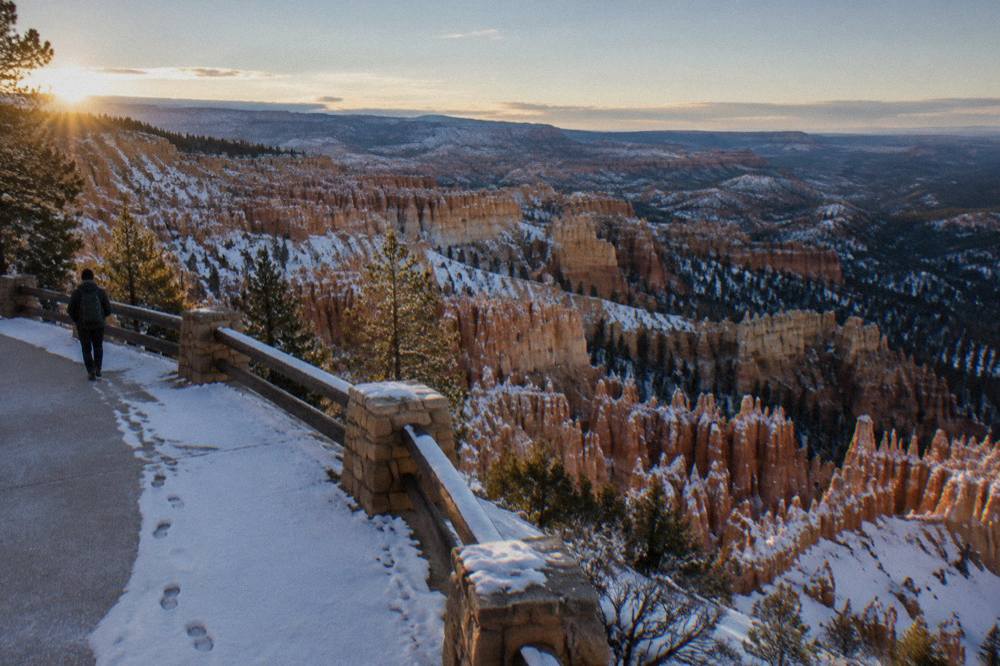
Expect daytime highs near 58 F and overnight lows near 32 F, with snow possible at any time. October's average high is 58 F and its average low 32 F, the park reports below-freezing nights nearly every night from October through May, and its weather page states plainly that October snowstorms are not unusual. The main park road can close temporarily at mile marker 3 after storms until plows clear it.
Those are averages, not promises, and the park sits high enough that the numbers swing hard. Elevations across the park average about 8,000 ft and reach past 9,000 ft, and the Visitor Center itself stands at 7,894 ft. Snow that falls near the rim can be roughly double what accumulates at the higher southern viewpoints, so a light dusting at Sunrise Point may mean real accumulation at Rainbow Point. Anyone asking how Bryce Canyon weather behaves month by month should treat October as the first winter-capable month, not the last summer one.
The operational knock-on effects are specific. After a storm, plows prioritize the first three miles of the scenic drive, the Bryce Amphitheater overlooks, so those stay reachable even when the southern road is gated at mile marker 3, typically for a day or more. The Fairyland Point road and the Paria View road close to vehicles for the whole winter season once snow requires plowing, though both stay open on foot, skis or snowshoes. And the Wall Street section of the Navajo Loop is closed until further notice under a park service alert issued September 29, 2026, after recent rains, on top of its usual seasonal winter closure. The Queen's Garden trail itself remains the park service's most recommended first hike, paired with the Navajo Loop's open section back to Sunset Point.
| What changes in mid-October | The detail |
|---|---|
| Shuttle | Season ends October 20; after that, visitors drive the scenic road themselves |
| Visitor Center | October 4 to 31, daily 8 a.m. to 6 p.m.; November 1 to April 3, daily 8 a.m. to 4:30 p.m. |
| Sunset Campground | Typically closed from November into April; North Campground stays open all year |
| Wall Street (Navajo Loop) | Closed until further notice per the September 29, 2026 alert |
| Fairyland Point and Paria View roads | Closed to vehicles for the winter season; open on foot, skis or snowshoe |
| Road after storms | Temporary closure at mile marker 3 possible until plowing finishes |
None of that argues against going. It argues for going with the right shape of day: overlooks and shorter trails in the morning, a warm-up break at midday, and a night-sky program or a stargazing session after dark, which is where Bryce Canyon outperforms almost every other park in the country. The park holds Gold Tier International Dark Sky status, and roughly 100 astronomy programs run each year, with the best viewing in the week of or just before a new moon.
Which Bryce Canyon Tours Are Running Right Now
All the core products run year-round or deep into the shoulder season. The 3-hour Scenic Tour of Bryce Canyon operates from Bryce Canyon City at $84.81 per person with free cancellation, the stargazing sessions run in 1 hour 30 minute slots at $59.04 and $59 per person, and the Red Canyon horseback ride is a 3-hour trip at $130 per person. The ATV season is the exception, closing around mid-October.
The distinction that matters most is inside the park versus around it. The Scenic Tour of Bryce Canyon and its sibling, the Guided Sightseeing Tour from $109 per person, drive into the park itself to the Amphitheater overlooks. The horseback ride from Rubys Inn Adventures runs through Red Canyon and Losee Canyon in Dixie National Forest, outside the boundary, at $130 per person with a water bottle and guide included, rated 4.7 across 252 reviews. The ATV and RZR rides also run outside the park, on national forest and private land, because off-highway vehicles are prohibited on all park roads and areas under the park's compendium, and the operator's season for those runs April 1 through around October 18, weather permitting.
Inside the park, Canyon Trail Rides holds the concession for guided horse and mule rides down into the Amphitheater along the Peekaboo Loop, typically April through October 31, weather permitting. That gives in-park riding roughly a two-week overlap with the ATV season's end, and after October 31 the horseback options near the park narrow to the Red Canyon ride, which is why that product is the one this site features for cooler months. Neither ride is "in the Amphitheater" in the same sense: one descends into it, one looks at the rim country from the forest above.
| Tour | Runs from | Season note | Price |
|---|---|---|---|
| Scenic Tour of Bryce Canyon (3 hours) | Bryce Canyon City | Bookable through the off-season; free cancellation | From $84.81 per person |
| Guided Sightseeing Tour (3 hours) | Bryce Canyon City | Starts at Fairyland Canyon; park entrance fee included | From $109 per person |
| Stargazing Adventure (1 hour 30 minutes) | Bryce Canyon City | Runs after dark year-round in clear conditions | From $59.04 per person |
| Red Canyon horseback ride (3 hours) | Bryce Canyon City | Outside the park in Dixie National Forest | From $130 per person |
| ATV/RZR ride (1 hour) | Bryce Canyon City | Season runs to around October 18 | From $145 per group up to 2 |
The sky products deserve their own word. Bryce Canyon Stargazing runs three sessions: the standard Stargazing Adventure at $59.04 per person, 4.5 across 69 reviews, with hotel pickup; the Stargazing Experience at $59 per person, 4.4 across 63 reviews, with telescopes, laser pointers, chairs, blankets and hot beverages at a private dark-sky site; and a Late Night session at $106.28 per person with pickup, 4.9 but across only 9 reviews, too few a pool for a star claim. All three run at a private dark-sky site near Bryce Canyon City rather than inside the national park, and all list free cancellation.
For visitors basing the trip out of Las Vegas, the day-trip products keep running through the shoulder season too. The 13-hour Bryce and Zion small group day trips from National Park Express list from $219 and from $234 per person, and the 14-hour Adventure Photo Tours version from $321.99 per person includes breakfast, a boxed lunch and all entrance fees for US residents. Non-US residents should note the extra fee below before comparing those prices.
How The Fee Picture Affects Timing
US residents pay $35 per private vehicle for seven days; non-US residents aged 16 and over pay an additional $100 per person on top of entry, even inside commercial tour groups, unless covered by a pass. The $250 nonresident America the Beautiful annual pass covers the holder plus up to three nonresident adults traveling in a commercial tour group, which can flip the math for a family.
That fee structure, effective January 1, 2026, is the single biggest change to trip budgeting since last season, and it interacts directly with the timing question. A group of four nonresident adults on a guided small group tour faces $100 per person in nonresident fees unless one of them holds the $250 pass, in which case the whole group's fee is covered inside a commercial tour. Some listings already include park admission for US residents, such as the Guided Sightseeing Tour and both Las Vegas day trips from the National Park Express roster, while the Scenic Tour of Bryce Canyon excludes admission and asks international travelers to pay the additional fee or hold an America the Beautiful pass, valid for entry for up to 4 adults. The full index of guides sits on Bryce Canyon National Park Tours.
| Entrant type | Standard entry | Nonresident fee | Notes |
|---|---|---|---|
| US resident, private vehicle | $35 per vehicle, 7 days | None | Covers all occupants, 15 passengers or fewer |
| Non-US resident, age 16+, individual | $20 per person entry | $100 per person | Applies in commercial tour groups too |
| Nonresident annual pass holder | Pass covers fee | Covered for holder plus 3 adults in a tour group | $250 pass, from January 1, 2026 |
| Mini-bus commercial tour (16 to 25 seats) | $60 per vehicle | Per-person fee still applies to nonresidents | Valid day of purchase plus 6 days |
None of this is timing-dependent in the sense of a deadline, but two remaining 2026 fee-free days matter for US residents reading this in mid-October: October 27 and November 11. Those days waive standard entrance fees for US citizens and residents, and a late-October trip built around one of them pairs neatly with the thinner crowds described above. Nonresident fees are not waived on fee-free days.
How Mid-October Compares With Every Other Season
Mid-October trades summer's full services for elbow room and night skies. May to September brings the longest programs, the shuttle at full hours and both campgrounds open, but also the July and August monsoon, with frequent afternoon thunderstorms and lightning that cancel ranger programs. Winter brings deep quiet, snowshoe hikes and roughly 100 inches of average annual snowfall, with the coldest, snowiest stretch from December through February.
Each season has a real signature. Summer's rainy season runs July and August, and the park service cancels outdoor ranger programs when lightning is within 10 miles, so a summer afternoon plan should be built around a morning hike. Winter flips the calculus entirely: ranger-led snowshoe hikes run when snow depth and staffing permit, with free snowshoes and poles provided for participants aged 8 and up, and full-moon hikes become snowshoe hikes when snowpack passes 16 inches. Spring storms can still dump heavy snow in March and April, which surprises visitors who assume the park thaws with the calendar.
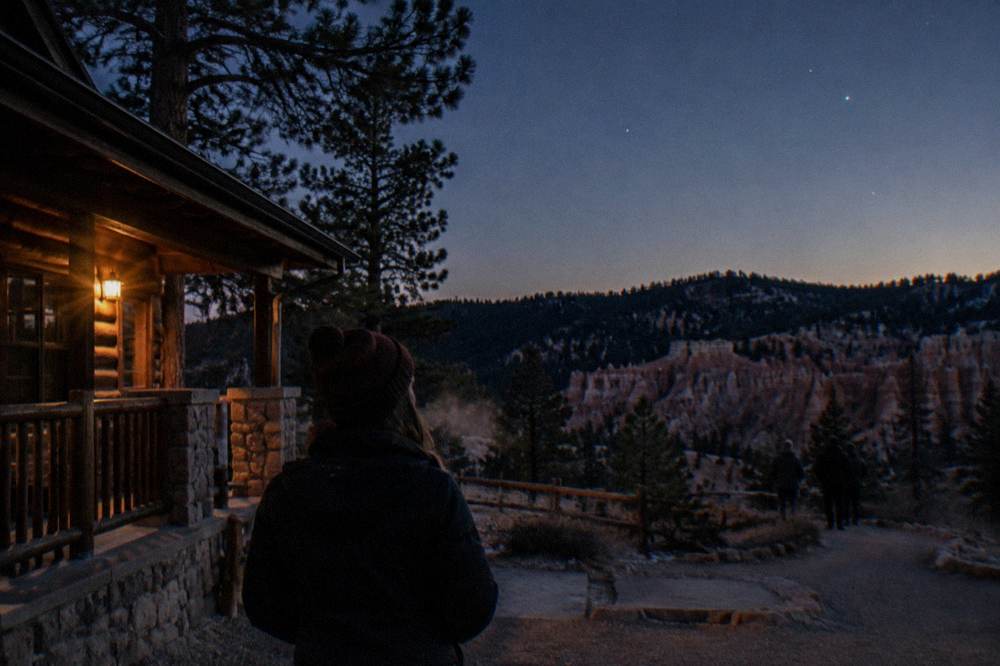
Against those, the shoulder weeks around mid-October offer a distinctive bundle: the astronomy program calendar is still active before winter staffing cuts, the Shared Use Path's final 2.7-mile segment was completed in September 2026, giving a now-continuous paved route from Red Canyon through the Visitor Center and the main points, and the hiking trails hold firm footing most days between storms. Visitors weighing how many days are needed in Bryce Canyon will find that shoulder-season days are shorter and slower, which argues for adding a day rather than cutting one.
The honest counterargument is service loss. Between October 20 and the following April there is no shuttle, so every overlook visit is a car trip, and oversize-vehicle parking restrictions lapse with the season. The Bryce Canyon Lodge closes for winter, typically November through March. Anyone whose dream Bryce evening is a lodge dinner followed by a ranger telescope program at Sunset Point should aim earlier in the year, and anyone whose dream is a quiet rim walk under stars should aim exactly here.
What The Park Has Changed For Late 2026
Three changes define this season: the Shared Use Path is now complete at 24 miles end to end, Wall Street is closed until further notice, and the shuttle season ends October 20 after which visitors self-drive the scenic road. None of the three closes the park, and the first is a genuine upgrade for cyclists and anyone staying outside the gate.
The path completion is the under-reported one. The final 2.7-mile segment, finished in September 2026 after construction running since May 2025, connects the Visitor Center, Sunrise, Sunset, Inspiration and Bryce Points, the campgrounds and Red Canyon into a single paved corridor open to pedestrians, cyclists, low-speed e-bikes and wheelchair users. Bicycles remain restricted to park roadways and this path, not the Rim Trail or overlooks, but a family staying in Bryce Canyon City can now reach the main viewpoints without touching the scenic drive at all, which is a meaningful decongestion option in shuttle-less months. The park service's own hours and seasons page is the place to confirm current operations before a trip.
The Wall Street closure deserves one honest paragraph because it changes the region's most photographed hike. The Navajo Loop's Wall Street slot, the switchbacks between Sunset Point and the canyon floor, has been closed since the September 29, 2026 alert, and it closes for the winter season by default regardless. The Two Bridges side of the loop has also seen closures. Hikers can still descend Queen's Garden from Sunrise Point, widely called the best first hike in the park, and connect to what remains open, but anyone picturing the classic Wall Street photograph this winter should recalibrate toward Sunset Point panoramas and Thor's Hammer views instead. Current status lives on the park conditions page.
For guided-tour travelers, these changes mostly simplify the picture. The 3-hour park tours hit the overlooks, not the closed trail section. The full-day guided hike with Good Trip Adventures, from $427 per person, walks the Amphitheater's open routes with a medically trained naturalist guide and park entry fees included. And the private guided hike and picnic from Cedar & Sage, from $699 per group for up to four people, covers Queens Garden Loop, Sunrise Point, Sunset Point and Thor's Hammer, all of which remain accessible. The one thing no operator can currently deliver is Wall Street itself.
The Verdict On Going Now
Go, unless the trip depends on the shuttle, the lodge or Wall Street. The park is open around the clock with no reservations, the summer crowds and monsoon have passed, night-sky conditions are near their annual best, and every headline tour on this site remains bookable with free cancellation. Pack for freezing nights, drive yourself after October 20, and check the park alerts the morning of the visit.
That is the same conclusion this site's reporting reaches across its planning pages, and it holds whether the visit is a self-drive weekend or a fully guided week. The Audio driving tours, from $16.99 per group for the single-park version, suit a self-driven shoulder-season day especially well, since the app-based commentary works offline with GPS-triggered stories and one purchase covers the whole car. Travelers coming from Zion, 78 miles from the park's east side, can find the routing detail in the Zion and Bryce Canyon tour guide.
Bryce Canyon rewards the traveler who matches expectations to season rather than to the brochure photo. Mid-October and the months around it deliver silence, stars and accessible hoodoos to anyone dressed for it, and the operator listings reviewed here, all with free cancellation, make the commitment a soft one.
Common Questions About Visiting Bryce Canyon Now
Is Now A Good Time To Visit Bryce Canyon?
For most travelers, yes. The park is open 24 hours a day year-round, crowds are past their May-to-September peak, and guided tours including the 3-hour Scenic Tour of Bryce Canyon and the stargazing sessions remain bookable. Trade-offs: the shuttle season ends October 20, nights drop to freezing, and snowstorms are possible in October.
Does The Bryce Canyon Shuttle Run In Late October?
The 2026 shuttle season ends October 20. Through the season buses ran roughly every 15 minutes between the Shuttle Station in Bryce Canyon City and the Visitor Center, free with park admission. After October 20, visitors drive the scenic road themselves, and no 2027 start date has been published yet.
Is Wall Street Open At Bryce Canyon?
No. The Wall Street section of the Navajo Loop is closed until further notice under a park service alert dated September 29, 2026, and it closes for the winter season by default. The Queen's Garden trail from Sunrise Point remains the park service's most recommended first hike.
Do Non-US Residents Pay Extra To Enter Bryce Canyon?
Yes. Non-US residents aged 16 and over pay a $100 per person nonresident fee in addition to standard entry, including inside commercial tour groups. The $250 nonresident America the Beautiful annual pass covers the holder plus up to three nonresident adults traveling in a commercial tour group.
Are The Horseback And ATV Rides Inside The National Park?
The ATV and RZR rides run in Dixie National Forest and on private land outside the park, and off-highway vehicles are prohibited on all park roads and areas. The Rubys Inn Adventures horseback ride runs through Red Canyon and Losee Canyon in Dixie National Forest. Inside the park, Canyon Trail Rides holds the concession for rides into the Amphitheater, typically through October 31.