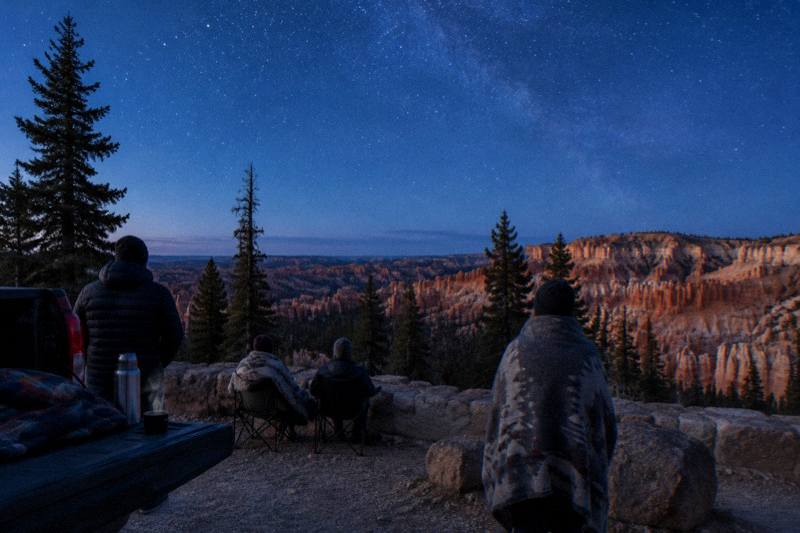
Is Bryce Or Zion Better For Stargazing?
A direct comparison of Bryce Canyon and Zion for stargazing, covering Bryce's Gold Tier dark sky status, guided stargazing sessions, astronomy programs and how to plan the trip.
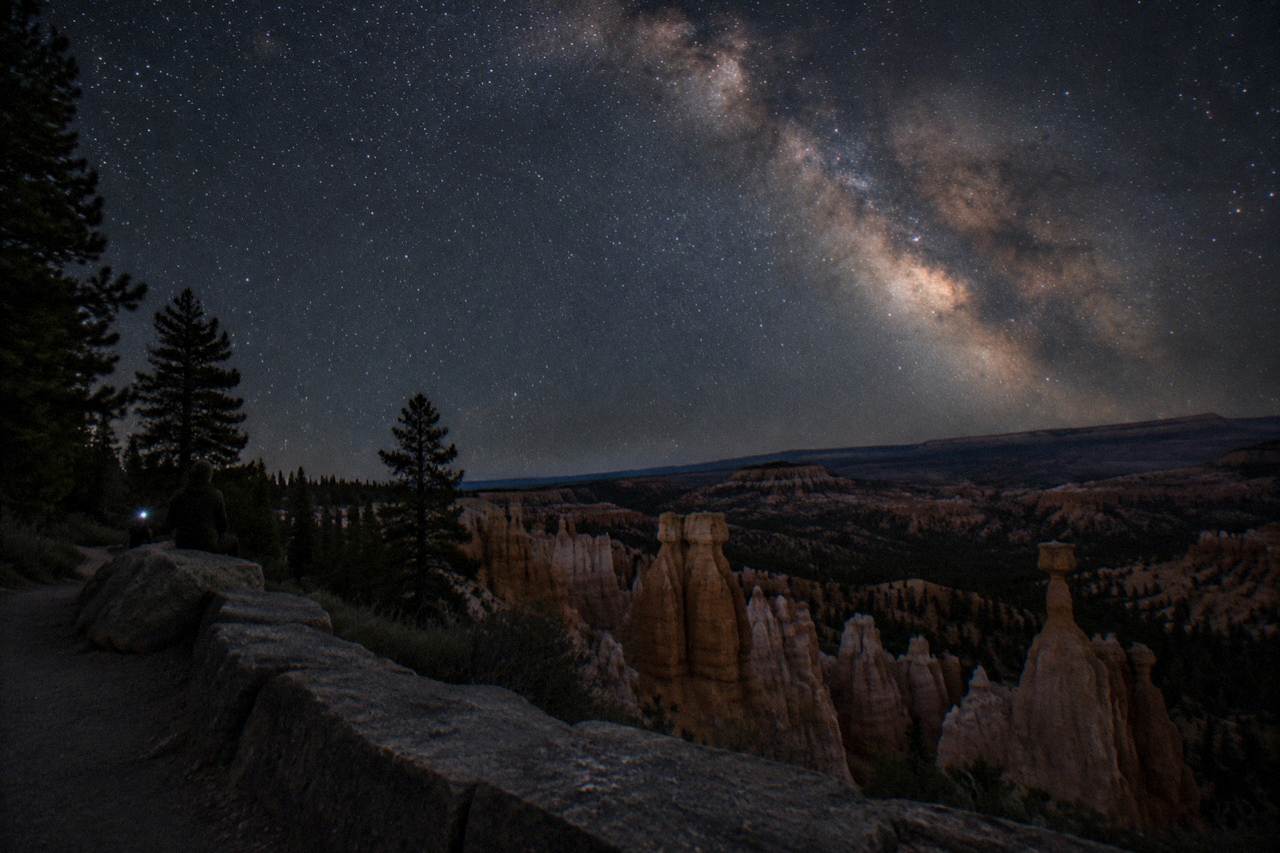
Bryce Canyon is the stronger stargazing park of the two. It has held Gold Tier International Dark Sky Park status since 2019, hosts roughly 100 astronomy programs a year, and sits above much of the haze at an average elevation of about 8,000 feet. Zion offers fine night skies, but Bryce has the darker credentials, the bigger program calendar and the dedicated guided sessions.
That is the short version. The longer version is that the two parks reward different kinds of night-sky visitors, and the right answer depends on what you want from the evening.
Bryce Canyon's case rests on three pillars. First, the designation: the park was named an International Dark Sky Park at the Gold Tier level in 2019, the strictest tier, which recognizes exceptionally dark skies and a park commitment to protecting them. The National Park Service's own night skies page documents the status. Second, the programming: about 100 astronomy programs run each year, from telescope sessions at Sunset Point to limited-ticket Full Moon Hikes, concentrated around summer but not limited to it. Third, the elevation: the park averages around 8,000 feet with terrain reaching over 9,000 feet, which puts you above a meaningful slice of the atmosphere and its moisture.
Zion's case is different rather than weaker in every respect. The canyon walls that make Zion famous by day also constrain the horizon by night, and the main canyon floor is where most visitors find themselves after dark, since the shuttle schedule and parking shape the evening. What Zion does not have here is a stargazing tour to book. Bryce Canyon has three. If a guided night out with a telescope is what you are after, Bryce is where the supply is.
The comparison also has a practical wrinkle: the two parks sit close together. Zion's east entrance is 78 miles from Bryce Canyon, so a single trip can sample both and let the sky decide. Many visitors pair a day in Zion with a night at Bryce, which is roughly the itinerary the Las Vegas day trips run, and it works.
Why Bryce Canyon Holds A Gold Tier Dark Sky Rating
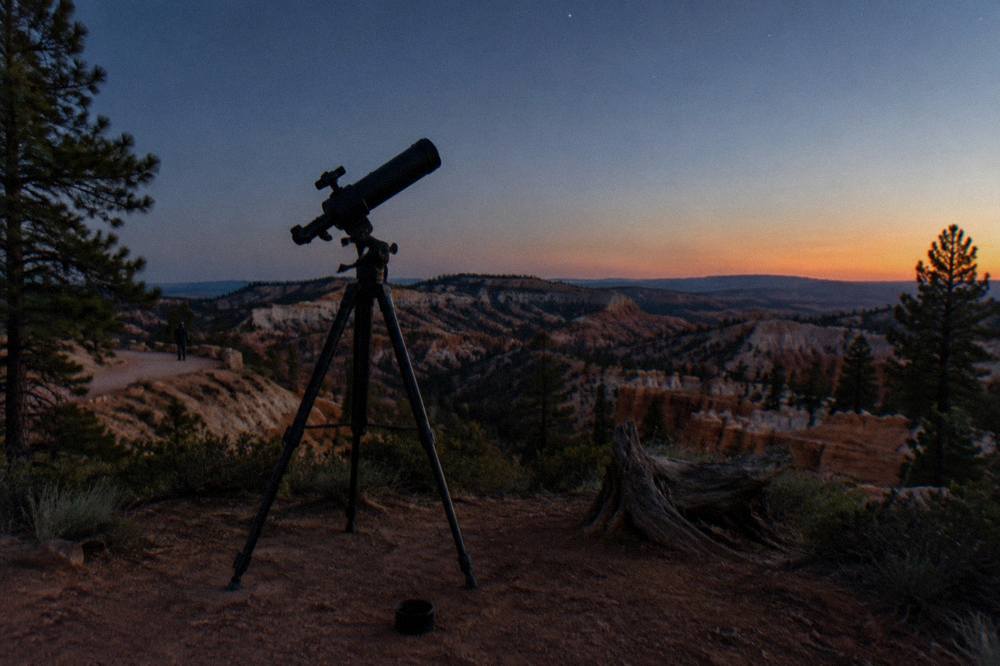
Bryce Canyon earned International Dark Sky Park status at the Gold Tier level in 2019, the highest tier the program awards. The park backs it up with about 100 astronomy programs a year, a four-day summer Astronomy Festival, and lighting policies that keep the Amphitheater skies exceptionally dark. Few national parks combine the designation with this much public programming.
The International Dark Sky Park program, run by the International Dark-Sky Association, tiers its awards, and Gold Tier marks parks whose night skies are both naturally dark and actively protected. Bryce Canyon qualified in 2019 and has leaned into the identity since. The park service's astronomy pages describe the year-round rhythm: telescope programs clustered in summer, Full Moon Hikes on nights near the full moon, and a full festival each June built around the new moon.
The elevation does quiet work here too. At 8,000 feet the air is thinner and drier than at lower desert parks, which means less light scattering and steadier star images through a telescope. The park service notes that effective oxygen at this altitude is about 75 percent of sea level, a detail that matters more for hikers than for stargazers, but the same thin air rewards the view upward. Summer high temperatures sit in the 70s to low 80s Fahrenheit, so a night outside is comfortable where lower parks stay hot.
The program calendar is the part many first-time visitors miss. A park can have dark skies and nothing to do with them, but Bryce schedules astronomy into the visitor experience. In peak summer you can walk to Sunset Point on a Thursday, Friday or Saturday evening and look through telescopes with a ranger, then come back on a near-full-moon night for a guided hike where the moon itself is the light source. The Full Moon Hikes require lug-soled traction footwear, serve ages 8 and up, and sell out because tickets are limited; reservations run through Recreation.gov in phases. In winter, when snowpack exceeds 16 inches, the same hikes may become snowshoe outings.
That programming density is the clearest differentiator against Zion, where the equivalent calendar is thinner and the guided night-sky economy lives mostly outside the gate. Bryce is simply organized around the sky, and it shows in everything from the festival to the flashlight policy on moon hikes.
What Zion Offers For Night Sky Watching
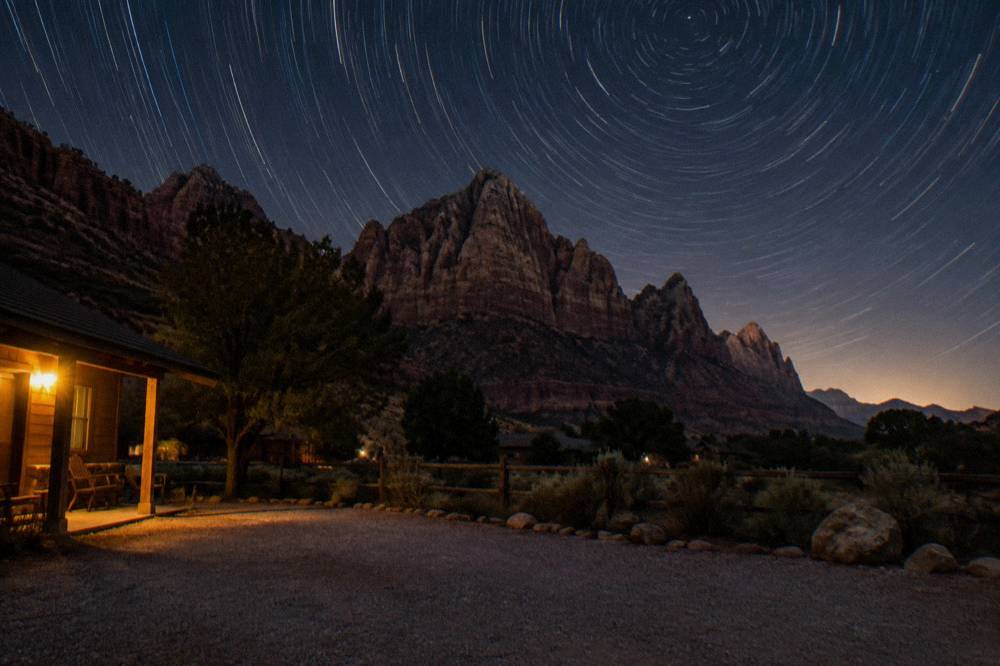
Zion delivers genuinely dark desert skies, especially away from Springdale and the canyon floor, but it lacks Bryce Canyon's Gold Tier designation and its roughly 100-program astronomy calendar. The canyon's depth limits horizon views, and you won't find a bookable stargazing session at Zion to match Bryce's three. Zion is a good clear-sky park, not a dedicated one.
None of this makes Zion a bad place to look up. On a clear night far from the lodge and Springdale's glow, the Milky Way shows plainly, and the Kolob Canyons section sits farther from development than the main canyon. The honest comparison point is structural: Bryce Canyon was certified for its darkness and staffed for astronomy, while Zion's night sky is a bonus of a day-hiking park rather than an attraction with its own calendar.
Access logistics also differ after dark. Zion's canyon shuttle is the main artery through Zion Canyon, and its schedule shapes when visitors can realistically be in the park at night; the park service publishes current seasons and hours on its Zion Canyon Shuttle page, and winter service pauses and holiday resumptions are listed there. Bryce Canyon's shuttle, by contrast, runs only to mid-October, but Bryce's key viewpoints sit on a drive-anytime road, and the park is open 24 hours a day year-round with no timed entry. For a self-planned midnight session, Bryce asks less of you.
There is a case for Zion worth stating fairly. If your trip centers on Zion, adding a separate night at Bryce means 78 miles of driving each way from the east entrance, and a late-night return is not everyone's idea of fun. In that situation, a dark pullout on the Kolob Terrace or the upper reaches of the park beats a bleary round trip. The stargazing decision and the lodging decision end up being the same decision.
The natural compromise, and the one many Las Vegas itineraries use, is to sleep between the parks.
Wondering whether to lock in a guided session before your trip? The Bryce Canyon Stargazing Adventure can be cancelled free of charge if your plans shift, and payment options on the listing let you reserve ahead.
The Stargazing Tours You Can Book Near Bryce Canyon
Three guided sessions operate near Bryce Canyon City, all from the same operator family: the Bryce Canyon Stargazing Adventure from $59.04 per person for 1 hour 30 minutes with hotel pickup, the Stargazing Experience from $59 per person without pickup, and the Late Night Stargazing session from $106.28 per person. All run at a private dark-sky site, not inside the national park.
The listing details matter here, so it is worth reading them carefully. None of the three sessions actually takes place inside the park boundary. The operator runs a permanent private stargazing site near Bryce Canyon City on Utah 63, in the dark country just outside the gate. Functionally that costs you little: the site sits in the same dark-sky region the park is certified for, with high-powered telescopes, laser pointers for constellation tours, chairs, blankets, restrooms and hot beverages. But a reader expecting a telescope on the Rim Trail should recalibrate. More of these guides are collected on Bryce Canyon National Park Tours.
| Session | Price | Duration | Pickup | Rating and reviews |
|---|---|---|---|---|
| Bryce Canyon Stargazing Adventure | from $59.04 per person | 1 hour 30 minutes | Hotel pickup listed | 4.5 across 69 reviews |
| Bryce Canyon Stargazing Experience | from $59 per person | 1.5 hours | Not included; optional shuttle from Ruby's Inn for $10 | 4.4 across 63 reviews |
| Late Night Stargazing | from $106.28 per person | 1 hour 30 minutes | Hotel pickup listed | 4.9 from a small pool of 9 reviews |
The entry-level choice is the Bryce Canyon Stargazing Adventure, the session this site features on its stargazing pages. At 1 hour 30 minutes it covers telescope time, a laser-guided constellation tour and hot drinks, with hotel pickup listed so you are not driving after a long day. Free cancellation is listed on the booking page. For a fuller planning picture, the site's dedicated guide to Bryce Canyon stargazing sessions walks through all three options in more depth.
The Stargazing Experience is the pickup-free sibling: the same 1.5-hour format from $59 per person, with 4.4 across 63 reviews. The listing includes telescopes, guides, chairs, blankets, restrooms and hot beverages, and notes an optional shuttle from Ruby's Inn and nearby lodging at an extra $10. If your lodging is walkable to the meeting point anyway, this is the cheaper path to the same sky.
The premium option is the late session. It starts later, runs under a darker sky further from twilight, and lists hot chocolate, tea and coffee alongside the same pickup convenience. Its rating of 4.9 comes from just 9 reviews, a pool too small to treat as a verdict, but the format itself is the draw: a smaller, later, quieter night. At $106.28 per person it is nearly double the standard session, which buys you the deeper-dark hours rather than a longer program.
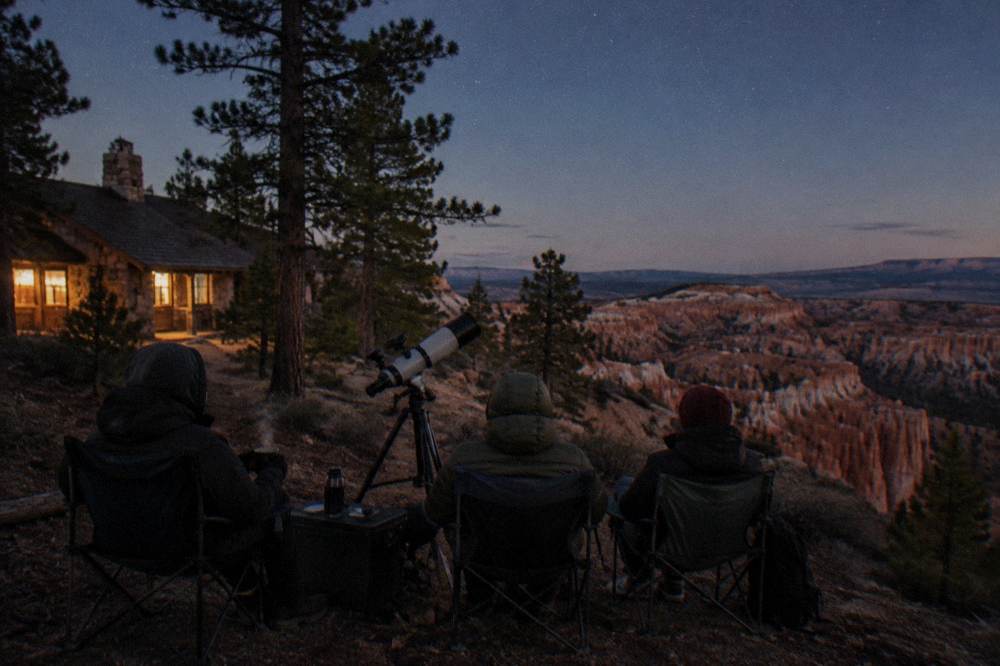
Two practical notes apply to all three. First, the sky cooperates on its own schedule: these are dark-sky sites, not weather-proof domes, and cloud cover or storms can end a session, so check the cancellation terms when you book. Second, dress for 8,000 feet at night, even in summer. Average July lows sit in the low 50s Fahrenheit at park headquarters, and a session that starts comfortably can end cold. Blankets are provided at the site, but layers are the better bet.
Best Time Of Year For Stargazing At Bryce Canyon And Zion
For pure darkness, plan around the new moon: the park service itself names the week of or just before the new moon as the best stargazing window, and the June Astronomy Festival is timed to it. June through September offers the warmest nights and the busiest program calendar. Winter delivers the darkest, longest nights but with freezing conditions and snow risk.
The moon is the single biggest variable you control. Around the new moon, faint objects like the Milky Way's structure and distant galaxies come into view; around the full moon, the landscape is luminous but faint stars wash out. Bryce Canyon builds its year around this cycle: telescope programs cluster in June and July, the Astronomy Festival lands on the June new moon, and Full Moon Hikes deliberately use the opposite phase, when moonlight replaces flashlights on a guided 1 to 2 mile walk.
Seasonality follows the moon logic. Summer brings warm nights, daily programs and the widest choice of tours, at the cost of the biggest crowds and the July to August rainy season, when afternoon and evening thunderstorms can cloud a night. Spring and fall are shoulder sweet spots: the sky is dark, the shuttle still runs through mid-October, and the program calendar is thinner but not empty. Winter is the connoisseur's pick, with long nights and crystalline post-storm air, though the park service notes snowstorms are not unusual in October and temperatures drop below freezing nearly every night from October to May.
| Window | Sky quality | Comfort | Programs and access |
|---|---|---|---|
| June to August | Excellent near new moon; storm risk in July to August | Mild nights, lows in the 40s to low 50s F | Peak season: telescope programs Thu to Sat, Astronomy Festival in June, all tours running |
| September to mid-October | Very good; earlier darkness | Cooling nights, October lows near freezing | Shuttle runs through mid-October; programs taper; fall color by day |
| November to March | Longest, darkest nights | Cold: below freezing most nights, heavy snow possible | Full Moon Hikes may become snowshoe hikes; road can close at mile marker 3 after storms; lodge closed for winter |
| April to May | Good; check moon phase | Cold nights, warming days; spring snowstorms possible | Programs restart; shuttle returns in early April |
For Zion, the same moon rules apply, and the shuttle season matters if you plan to be in the main canyon late. One structural note favors Bryce for early risers and night owls alike: Bryce's park road is open around the clock with no timed entry, and its highest viewpoints stay reachable by car when programs end, while Zion's canyon logistics after dark take more planning. Neither park requires a reservation to enter, which keeps spontaneous night visits possible at both.
How To See The Bryce Canyon Sky Without A Tour
You do not need a tour. The park is open 24 hours a day year-round with no entry reservation, about 100 free-with-admission astronomy programs run annually, and viewpoints like Sunset, Sunrise and Bryce Points sit a short drive from the gate. Bring warm layers, a red flashlight if you have one, and check the moon phase before you go.
The free route starts at the Visitor Center, where the ranger program schedule is posted. In June and July that typically includes Night Sky Telescope Programs on Thursdays, Fridays and Saturdays at Sunset Point, starting around 9:45 p.m. and running 60 to 75 minutes, weather permitting; the park service cancels programs when lightning is within 10 miles. Arrive early enough to park, because Amphitheater lots fill in summer and the free shuttle, running every 15 minutes or so from Bryce Canyon City and the Visitor Center, is the park service's recommended alternative through mid-October.
The other free flagship is the Full Moon Hike: 1 to 2 miles, 2 to 3 hours, ages 8 and up, no flashlights allowed, lug-soled footwear required, tickets limited and released in phases through Recreation.gov. It is the most distinctive night program in either park, and it costs nothing beyond admission. Beyond the scheduled events, any clear near-new-moon night at an overlook works: park at Sunset Point, let your eyes adjust for 20 minutes, and the Milky Way does the rest. The park service's astronomy pages list the full program menu at Bryce Canyon astronomy programs, and the park's night skies page explains the Gold Tier designation and why the darkness is protected.
Admission itself is worth a line because it is not nothing. A private vehicle pass costs $35 and covers everyone aboard for seven days, and the park takes card only, no cash. Non-US residents aged 16 and over pay an additional $100 per person nonresident fee unless admitted with a qualifying pass, and the park service states this applies to visitors in commercial tour groups too; the $250 nonresident annual pass covers the holder plus up to three nonresident adults traveling in such a group. The guided stargazing sessions at Bryce Canyon City do not include park admission, so a tour-only evening can skip the fee entirely by staying outside the gate.
For the wider planning picture, including which nights pair best with daytime hikes, the site's guide to the best time of year for Bryce Canyon tours breaks the calendar down month by month, and the question of whether Bryce runs colder than Zion matters more than most visitors expect once the sun drops.
If your dates are still flexible, the trio of guided sessions remains the lowest-friction way to guarantee telescope time on a Bryce night:
Common Questions About Bryce And Zion Stargazing
Is Bryce Or Zion Better For Stargazing?
Bryce Canyon. It holds Gold Tier International Dark Sky Park status from 2019, runs about 100 astronomy programs a year, and averages 8,000 feet of elevation under dry air. Zion has genuinely dark desert skies, but it lacks the designation, the program calendar and the bookable guided sessions that Bryce Canyon City offers.
Can You See The Milky Way At Bryce Canyon?
Yes. On clear nights near the new moon the Milky Way is visible to the naked eye from Bryce Canyon's overlooks, and the park service schedules its telescope programs and its June Astronomy Festival around those dark windows. The listing for the local stargazing sessions also names the site as a dark sky international location.
Are The Bryce Canyon Stargazing Tours Inside The Park?
No. The three guided sessions run at a private dark-sky site near Bryce Canyon City on Utah 63, outside the national park boundary. The listings include high-powered telescopes, laser pointers, guides, chairs, blankets and hot beverages, and two of the three list hotel pickup.
How Much Does A Stargazing Tour At Bryce Canyon Cost?
The Bryce Canyon Stargazing Adventure starts at $59.04 per person for 1 hour 30 minutes with hotel pickup, the Stargazing Experience starts at $59 per person without pickup, and the Late Night Stargazing session starts at $106.28 per person. All three listings include free cancellation.
When Is The Best Month For Stargazing At Bryce Canyon?
June through September offers the best combination of dark new-moon nights, mild temperatures and a full program calendar, including the four-day Astronomy Festival timed to the June new moon. Winter nights are darker and longer but bring freezing cold and the chance of road closures after storms.
Do I Need A Reservation To Stargaze At Bryce Canyon?
No reservation is needed to enter the park, which is open 24 hours a day year-round. Admission is $35 per private vehicle, good for seven days. Only the ticket-limited Full Moon Hikes require advance booking through Recreation.gov, and those sell out.